Spring Wind Over a Thousand Miles, Yangzhou Road, Part Six: Jinshan Temple in Zhenjiang
Inside the main hall of the Little Golden Mountain at Slender West Lake, there hangs a couplet inscribed by Weng Tonghe of the Qing Dynasty. The second line reads: "Small as a fist, yet even Golden Mountain has deigned to cross the river." It's saying that though this little mound is barely the size of a clenched fist, the Jinshan Temple across the river was willing to come over and become this Little Golden Mountain. On the surface, it's praising Slender West Lake's Little Golden Mountain, but really it's saying the Jinshan Temple across the river is the real deal. Yangzhou and Zhenjiang are separated only by the Yangtze. In the old days, you'd stare across the river with a sigh, having to take a boat to cross, or else detour through Nanjing. Now there's a Yangtze River bridge between them that doesn't carry trains—doesn't matter, as long as cars can cross, right? It's called the Runyang Bridge. Why not the Zhenyang Bridge? Surely because Yangzhou didn't want to be "subdued" by Zhenjiang. In the Sui and Tang dynasties, Zhenjiang was called Runzhou, so Yangzhou chose "Run" to represent Zhenjiang—sounds nicer, like moisture nourishing Yangzhou.
Since Weng Tonghe strongly hinted that Jinshan Temple outshines the Little Golden Mountain at Slender West Lake, I figured I had to see it for myself. I'd heard that Su Shi once admired the moon and danced at Jinshan Temple, singing: "The merchant from Jiangdong in his cotton robe, the feast dispersed, moonlight fills the tower at Golden Mountain. At midnight the tide comes and the wind is ripe, lying down I play my flute all the way to Yangzhou." He must have been lying in a small boat playing his flute, arriving in Yangzhou by the time the tune ended. I'm doing the opposite—he lay in a boat, I ride in a bus; he went to Yangzhou, I'm headed to Runzhou. From the hotel doorstep, I hopped on the intercity bus between the two cities, and an hour later I was right at the foot of Jinshan in Zhenjiang. See? Couldn't be more convenient.
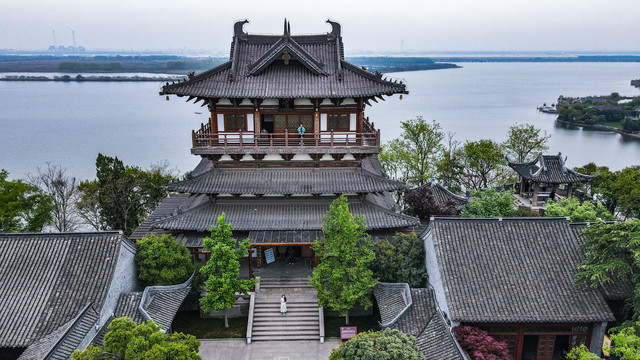
Back in ancient times, Jinshan was an island in the middle of the Yangtze. After the river leaves the Three Gorges, it widens, and by the time it reaches the Jianghan Plain it's even broader, with slower currents. By the time it flowed past Nanjing and Zhenjiang, it was slow enough that it simply split around Jinshan on both sides. Only during great floods—or when immortals worked their magic—did the river water climb over the mountain. Back then, the southern bank had stone dikes while the northern bank was earthen, so the north shore kept eroding and collapsing bit by bit. The water then crowded north of Jinshan, and gradually, the channel south of Jinshan dried up entirely. By the Guangxu reign, Jinshan was fully connected to the southern bank, no longer an island. Climbing Jinshan now, you no longer get that view of "gazing at clouds meeting water on all four sides."
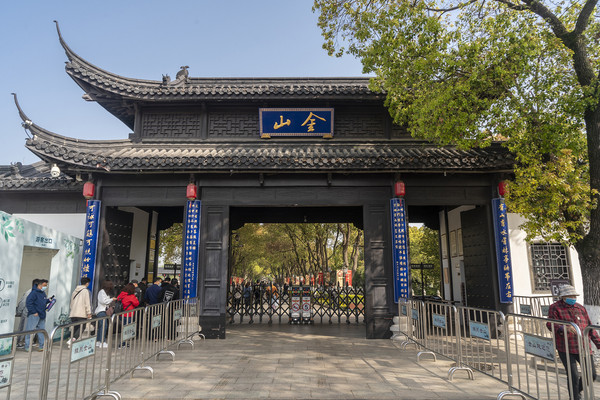
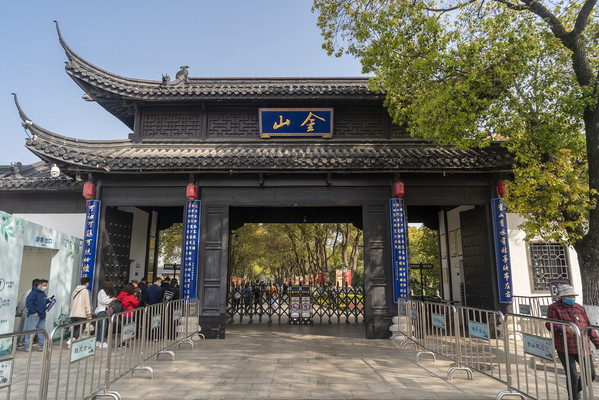
Step through the gate of Jinshan, and you're a person of the mountain. The main road doesn't lead to heaven, and there's no trace of river at your feet. Strolling along the shaded path by the water, a patch of green lawn to your right, a stretch of blue waves to your left. On the waves, there's a bridge.
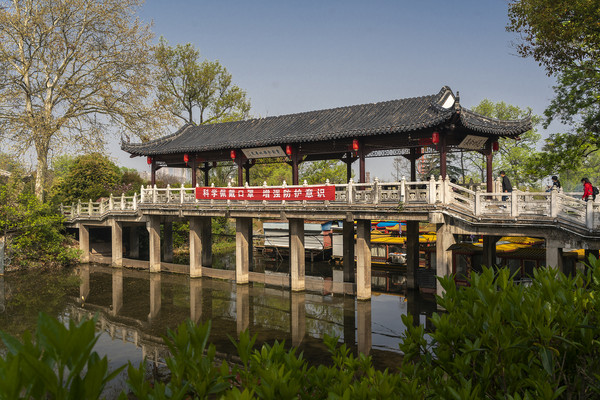
This is the Jinquan Bridge. To its left is Baihua Islet, with its cold spring amidst the flowers. A stone-slab covered bridge, with a sign on the railing reading "Wear masks scientifically" and another under the eaves reading "This land excels in scenic beauty." The Song Dynasty poet Liu Yong once praised, "This land excels in scenic beauty, metropolis of the three Wu, misty willows and painted bridges, wind-blown curtains and emerald drapes, a hundred thousand households scattered about"—but he was describing "the age-old prosperity of Qiantang."
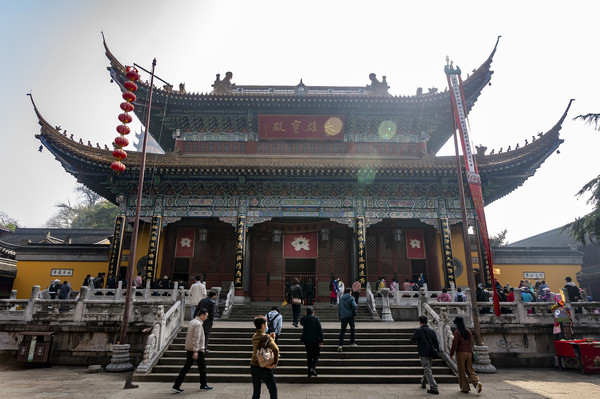
Though I'm in no hurry, I won't linger here just yet. First, I want to see what the old saying refers to: "South gold, north silver." The "south gold" is Jinshan Temple here; the "north silver" is Yinshan Temple in Beijing. It wasn't far before I reached the gate of Jinshan Temple.
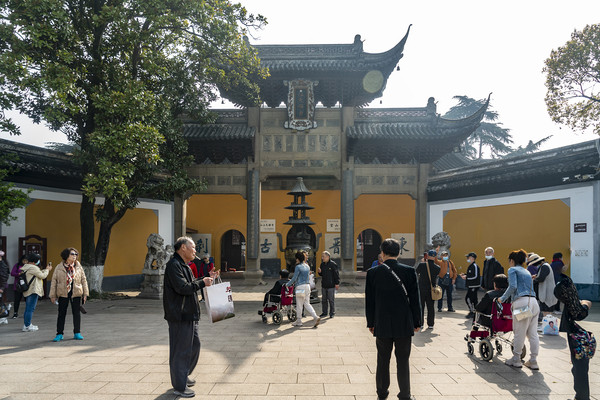
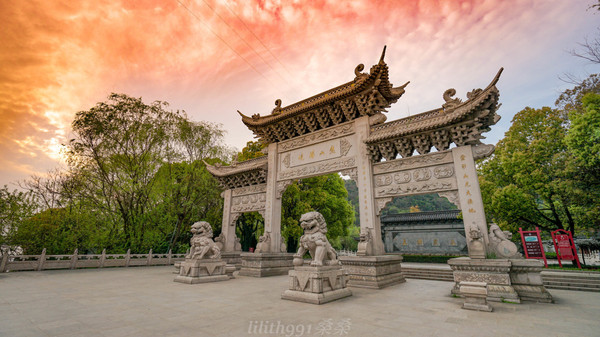
The temple gate faces west. They say it's to face the Western Paradise of Ultimate Bliss, but I figure it's simply because that orientation best takes advantage of the mountain's slope for gradual ascent. The Buddha doesn't insist on which direction a temple faces—as long as the Buddha is in your heart, you can worship in any direction. In front of the gate stands an eight-character screen wall, and in the middle of the screen wall is a four-pillar, three-story archway—quite an unusual layout. Directly opposite the gate is another bridge. Is that the one Su Shi referred to when he wrote, "The bridge faces the temple gate, the pine path narrow"? Certainly not!
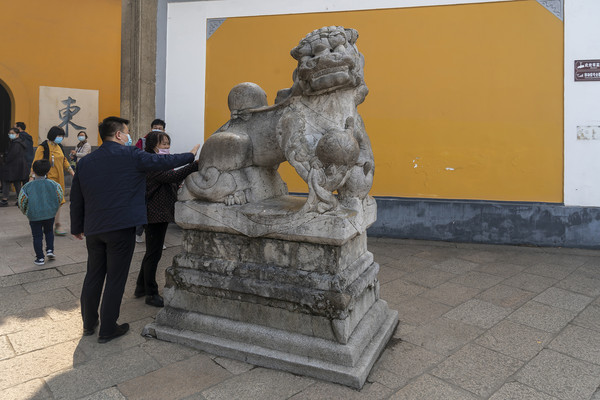
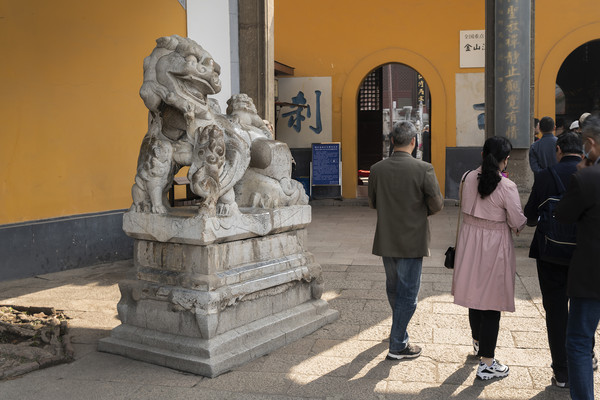
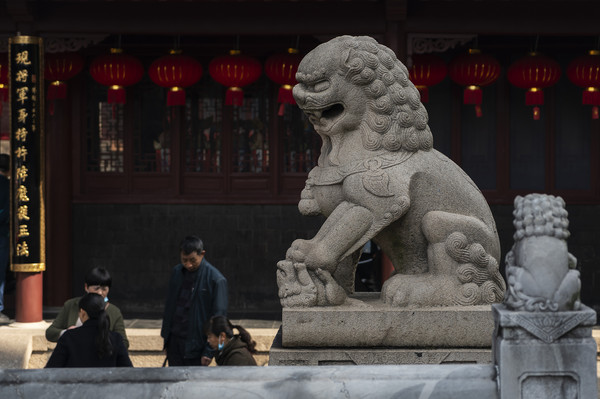
Take a look at the guardian lions under the archway—these are southern lions, distinctively southern. The male lion plays with a cluster of balls; the female cradles a litter of cubs.
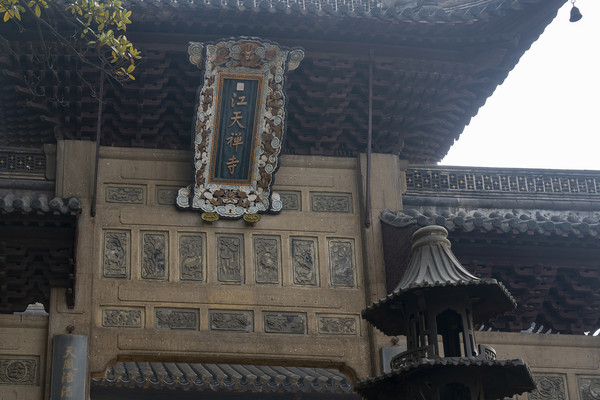
On the archway's horizontal beam hangs a plaque bearing the characters "Jiangtian Chansi" (River-Sky Zen Temple), inscribed by Emperor Kangxi of the Qing Dynasty. When he made his southern tours, this temple still stood in the middle of the river.
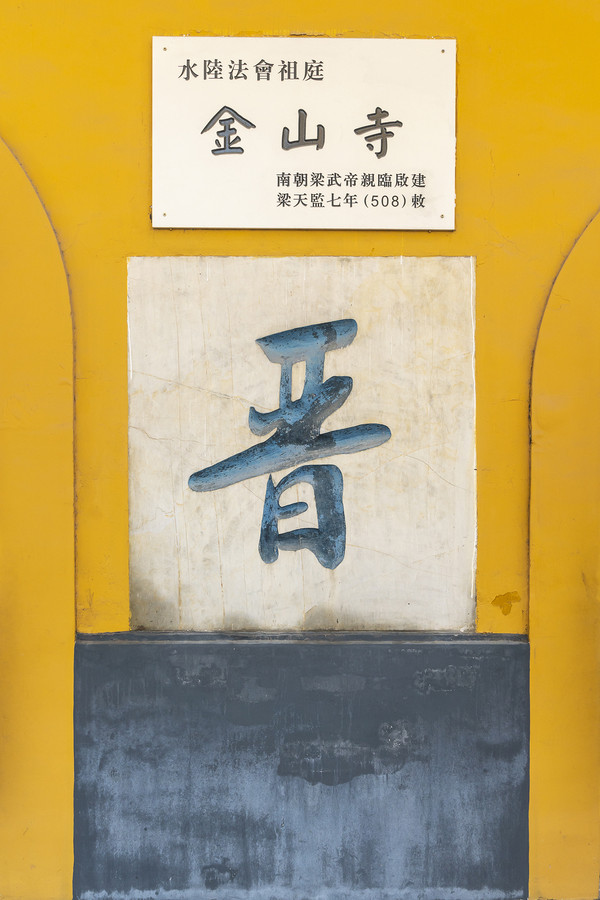
The eight-character screen wall outside the gate isn't connected to the gable walls; there's a gap between them. On the gate wall is written a large character "Jin" (晋), along with smaller text explaining the temple's origins.
That "Jin" refers to the Eastern Jin Dynasty, specifically around the Tai'ning reign of Emperor Mingdi, Sima Shao—roughly 325 AD. That's 1,700 years ago. Emperor Ming of Jin was a capable ruler. In the late Western Jin, the court was nearly destroyed by powerful ministers and aristocratic clans, sparking the War of the Eight Princes and bringing on the Sixteen Kingdoms of the Five Barbarians. Emperor Yuandi, Sima Rui, had no choice but to flee south to Jiankang and establish the Eastern Jin. Sima Shao was the emperor who quelled internal strife and stabilized the dynasty—though he died young. As the south gradually settled, the light of Buddhism began to shine. Someone came to this island in the river and built a temple. Since it was surrounded by water as far as the eye could see, they named it Zexin Temple—"Heart of the Marsh." A hundred-odd years later, the Northern and Southern Dynasties took shape. At that time, Tuoba Hong of the Northern Wei led an army against the Southern Qi, but was defeated by General Xiao Yan. Xiao Yan's fame soared, and he eventually replaced Qi and established the Liang Dynasty, becoming Emperor Wu of Liang—the founding emperor—in the second year of Zhongxing of Southern Qi (502 AD). After taking the throne, Emperor Wu sought to pacify the realm, and in the seventh year of Tianjian (508 AD), he came to Zexin Temple to hold a Water and Land Dharma Assembly, praying for Buddha's blessings and for the deliverance of the last emperor of Southern Qi whom he had killed. Zexin Temple's reputation spread far and wide. By the Tang Dynasty, a lama came from the south, holding a toad in his hand. He lodged at Zexin Temple's guest hall to worship Buddha. With nothing else to do, this monk dug in the mountain and ate the earth—and somehow, he dug up a big lump of gold. With money, he became a great monk. How he managed to get the abbot of Zexin Temple to yield his seat—nobody knows. After he took over, a new broom sweeps clean. His first fire was to rebuild the temple. His second was to rename it Jinshan Temple, in memory of his miraculous discovery of gold in the earth. What was the third fire? I've forgotten.
From then on, the world knew only Jinshan Temple, and the winds from all directions before didn't matter. In the Ming Dynasty, a storyteller named Wu Cheng'en made up a tale that a son of Chen Guangrui drifted on a wooden plank to Jinshan Temple, where the monks raised him and named him Xuanzang. Wu Cheng'en couldn't stop spinning yarns, weaving gods, ghosts, and bodhisattvas into the tale until it became *Journey to the West*.
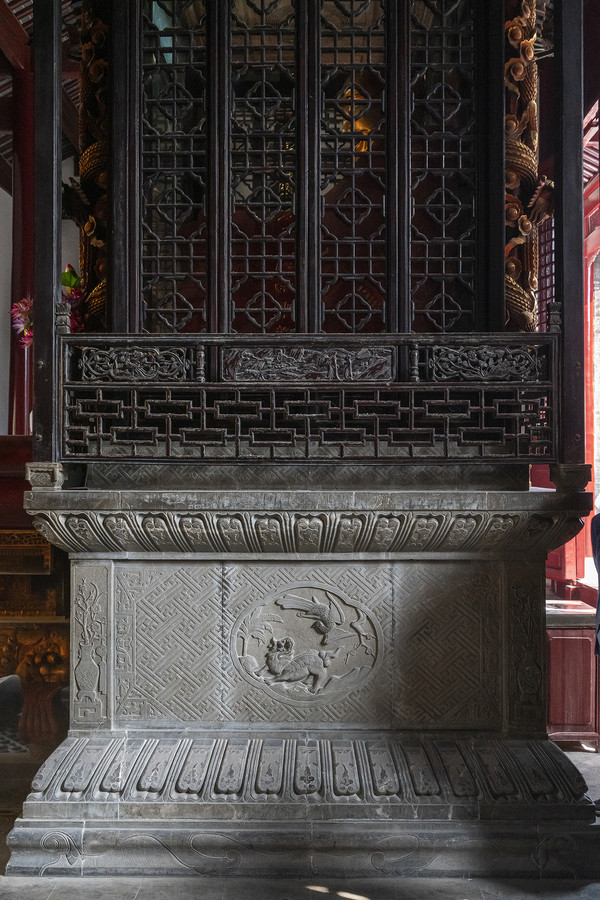
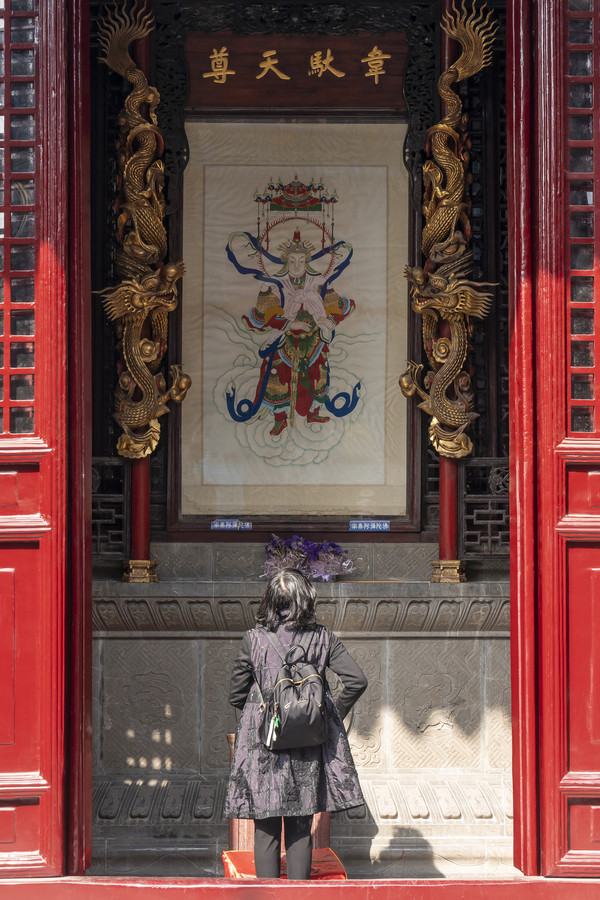
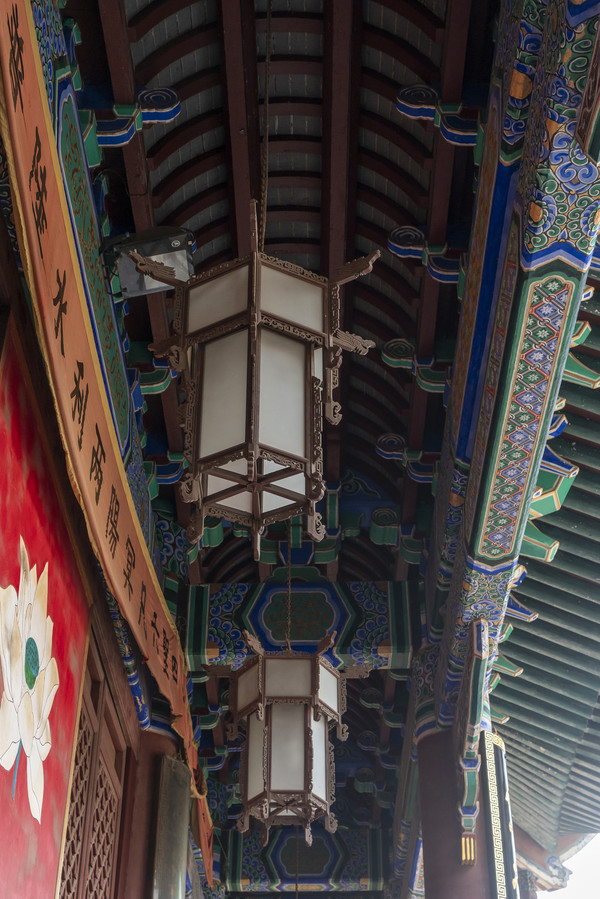
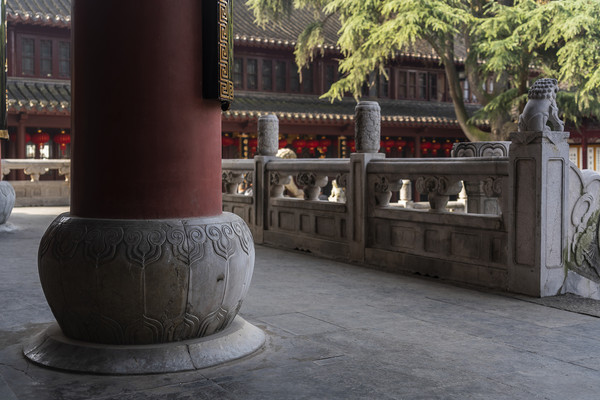
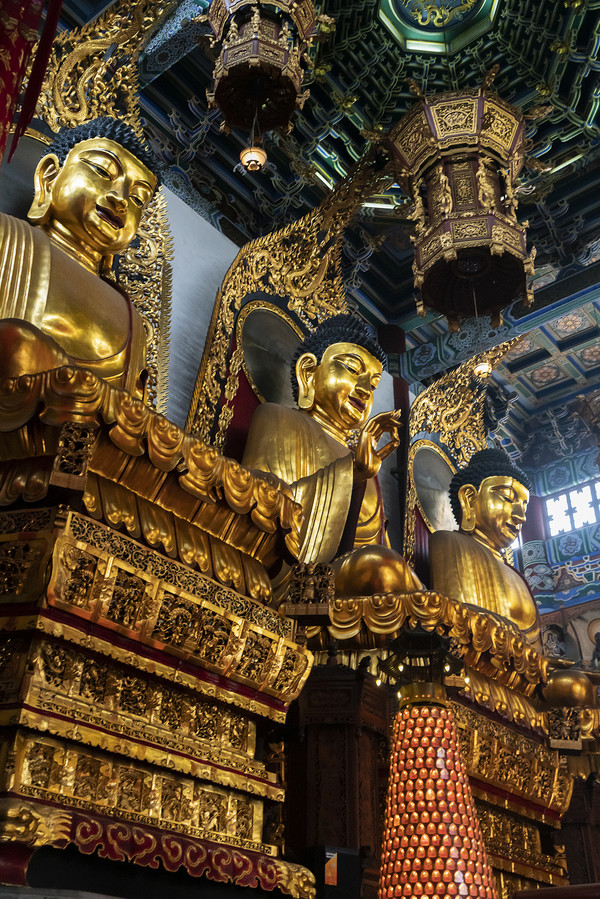
Let's enter the temple gate and have a proper look at Jinshan Temple. The gate I just saw is also the Hall of Heavenly Kings, housing Maitreya Buddha with the Four Heavenly Kings as guards on either side. Maitreya's shrine is something else—the stone Sumeru throne at the base is exquisitely carved, and the wooden shrine above is even more finely worked, with intricate openwork carving.
Turn behind Maitreya, and lo—here the Weituo (Skanda) is neither gilded nor bronze, not even clay—it's made of paper. Let me