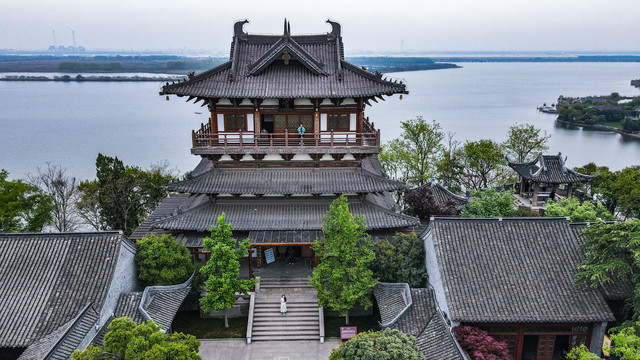
The Three Kingdoms, the Flood, and All of History: Two Nights and Three Days in Zhenjiang
The Yangtze rolls eastward, its waves washing away the heroes of old. Right and wrong, success and failure—all turn to nothing in the blink of an eye. The green hills remain, and the setting sun has reddened the sky countless times. A white-haired fisherman and woodcutter, out on the riverbank, have long grown used to the autumn moon and spring breeze. A pot of wine, a happy reunion—how much of history, ancient and modern, dissolves into laughter and talk. Yang Shen's "Immortal by the River" opens Luo Guanzhong's *Romance of the Three Kingdoms*, and almost everything we know about that era comes from that novel. Zhenjiang's history, for a long stretch, is bound up with the Eastern Wu kingdom. To come to Zhenjiang is to be a traveler, as people have always been—and also, perhaps, a keeper of history's watch.
**Getting There**
Zhenjiang sits on the Shanghai–Nanjing rail line, with direct high-speed trains, making it remarkably easy to reach. The train is the way to go—it might even save you time compared to driving. From Shanghai, it's about an hour and a half by bullet train; from Nanjing, just twenty minutes, with frequent departures. If you do drive from Shanghai: take the Wuhan Road/Outer Ring Road to the Shanghai–Nanjing Expressway (toll about ¥130), exit onto Guantangqiao Road, head into the city, follow Changjiang Road for about 4.9 kilometers, and you'll arrive at Xijin Ferry (on the right side of the road). Total drive time is roughly two hours.
**Itinerary**
Day 1: Shanghai → Zhenjiang (check in → Jiaoshan → Xijin Ferry at night)
Day 2: Beigushan → Jinshan
Day 3: Xijin Ferry (old street → Zhenjiang Museum)
---
**Day 1: Shanghai → Zhenjiang (Check-in, Jiaoshan, Xijin Ferry by Night)**
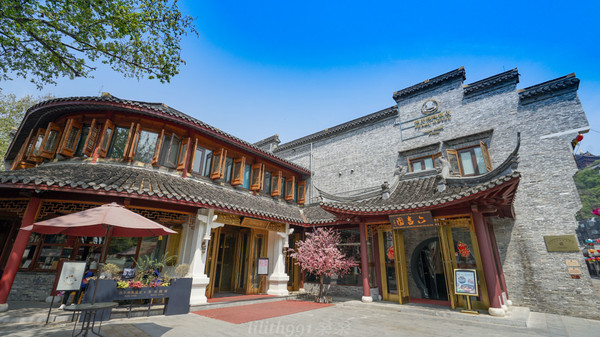
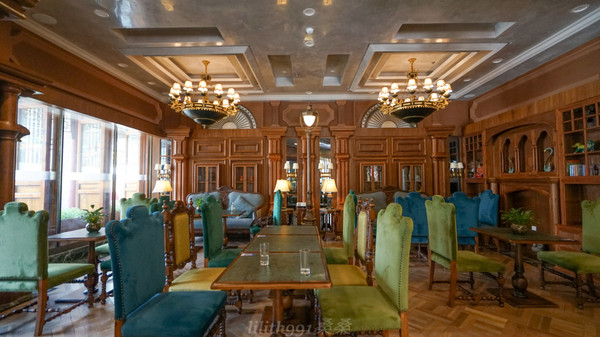
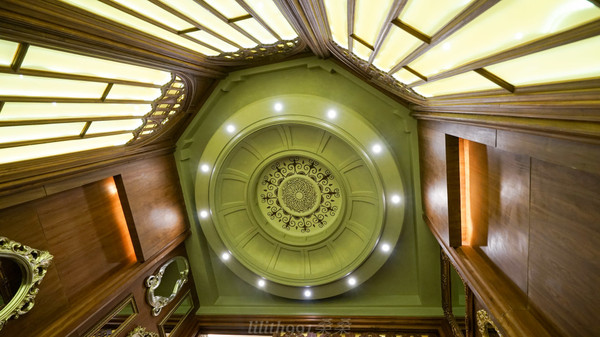
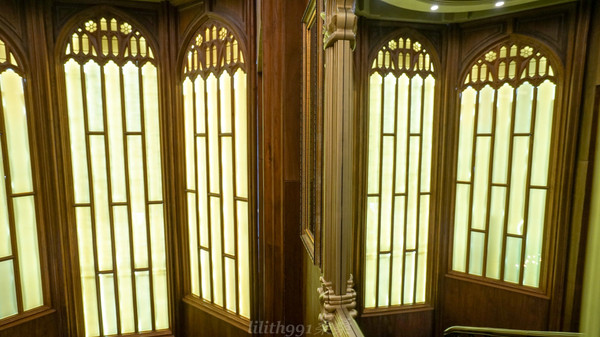
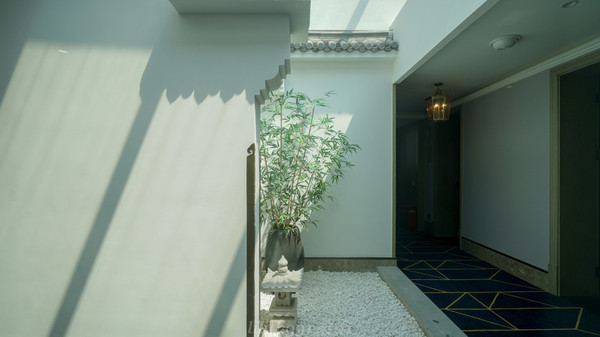
Getting from Shanghai to Zhenjiang couldn't be easier—the high-speed train drops you right in town, and taxis are plentiful, with attractions not too far apart. Since I love Xijin Ferry, I decided to stay right there, and it turned out to be great value for money. The Bour Pearl Hotel at the entrance to Xiaomatou Street blends in perfectly with the surrounding architecture, but inside it leans toward European classicism, with a grand spiral staircase and stained glass that lets light filter through in colors. For a moment, I half-expected to be in a European cathedral. The first night, they left a fruit platter in the room, the minibar was complimentary, and there was even a mini afternoon tea. The hotel has its own coffee shop, and the latte was surprisingly good.
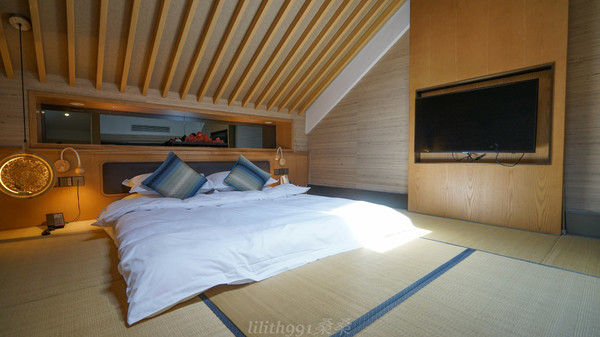
The room was a loft—two levels, up and down. The "star-gazer room" has a small skylight, and on a clear night you can actually see stars.
After dropping off the bags and grabbing lunch, it was off to Jiaoshan. The bus or a taxi both work fine—bus 84 will take you straight to Jiaoshan Scenic Area station.
**Jiaoshan Park**
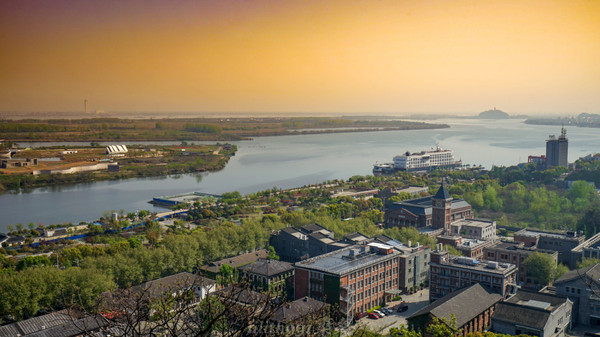
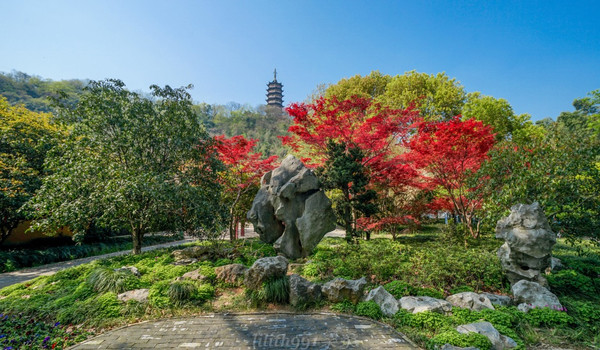
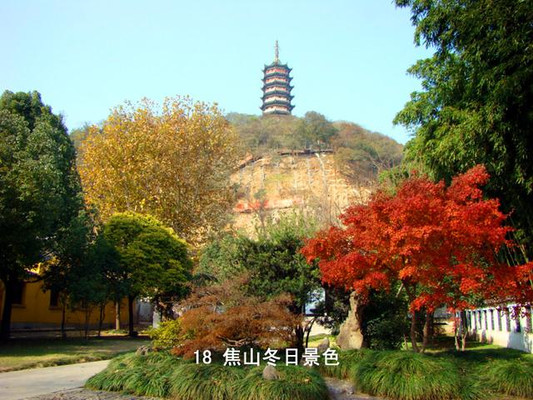
The real draw here is the forest of steles and the cliff-side carvings. They're absolutely breathtaking. If you have any feel for calligraphy, you might find it hard to tear yourself away—this is a must-visit in Zhenjiang. Jiaoshan is the only sightseeing island in the Yangtze that's completely surrounded by water, and one of the "Three Mountains of Zhenjiang" (the others being Jinshan and Beigushan), known for its natural beauty and quiet elegance.
*Entry tips:*
1. Enter through the south gate (there's a bus stop outside). Take the ferry—the boat ride is included in the ticket and takes about 3–5 minutes, dropping you right at the new temple gate. Ferries run every 10 minutes.
2. Enter through the east gate (better for drivers). No ferry needed—you can walk straight onto the island.
Personally, I'd recommend the ferry.
*Opening hours:*
Off-season (Dec–Feb, Jul–Sep): 7:30–17:00 (tickets sold until 16:00)
Peak season (Mar–Jun, Oct–Dec): 7:30–18:00 (tickets sold until 16:30)
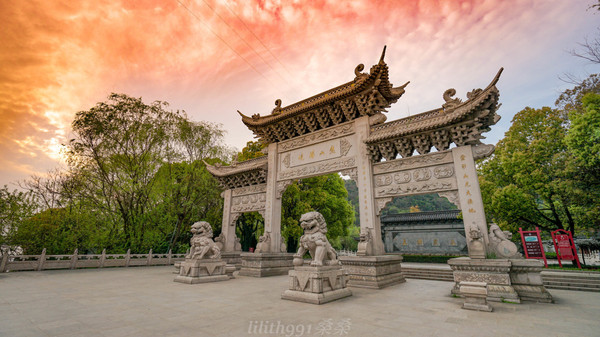
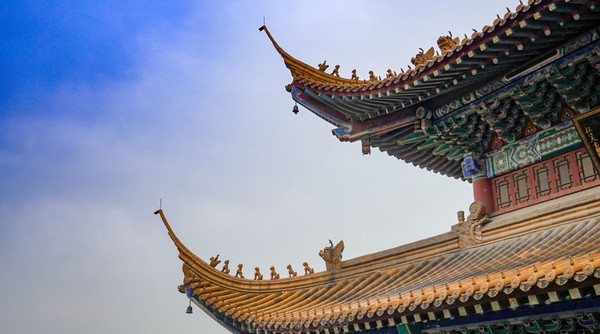
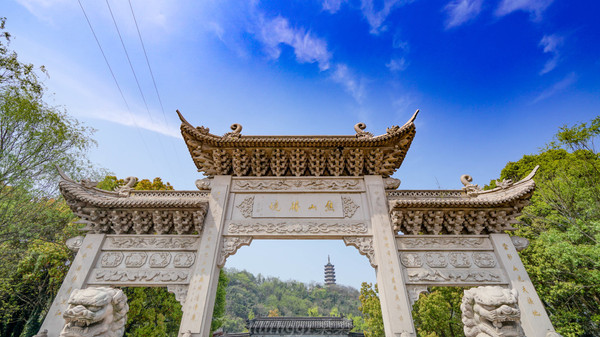
Once you ferry across, the temple gate is right there. Enter and you'll see Dinghui Temple, first built during the Eastern Han under Emperor Xian. Shi Nai'an wrote of it in *Water Margin*: "Jiaoshan has a temple, hidden in the mountain's hollow—you can't see its shape, so they call it the temple wrapped by the mountain." Originally named Puji Temple, it's one of the oldest monasteries in the south. When Emperor Kangxi of the Qing toured south and passed through Jiaoshan, he personally inscribed the temple's name plaque. Outside stand a stele bearing Emperor Qianlong's calligraphy, a pair of ancient ginkgo trees already over four hundred years old, and a bell-and-drum tower.
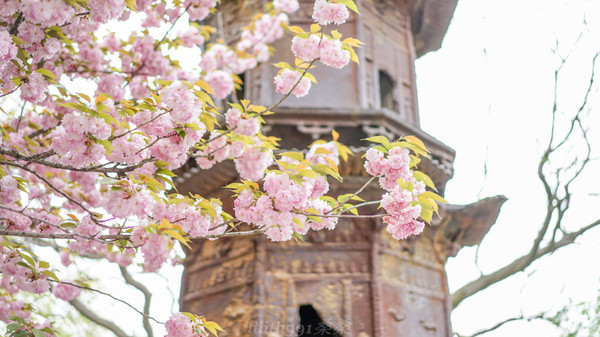
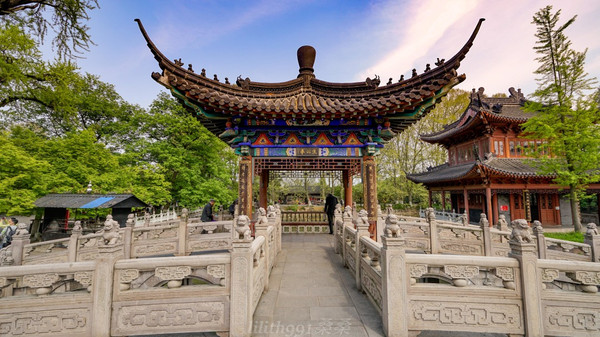
Follow the signs for the smaller sights around the mountain—it's all ornate beams and painted rafters, a delight to wander. The Ten-Thousand-Buddha Pagoda sits at Jiaoshan's summit.
The stele forest is tucked away among the ginkgo trees, easy to miss if you're not paying attention. It stands on the former grounds of several old hermitages. Inside, more than four hundred inscribed steles are preserved—second in number only to Xi'an's forest. The Jiaoshan Stele Forest began in the Northern Song in 1048 and has been famous south of the Yangtze since the Qing dynasty, counted among China's three great stele forests. It's well worth a careful look—the steles are set into corridors and pavilions, including a pavilion for Qianlong's inscription, and hidden among them are works by famous figures like Mi Fu and Su Shi. The collection covers calligraphy, art, historical records, tomb epitaphs, and stone carving, and includes the Wei Fazhu Stele, erected in 677 during the Tang, praised as a rare masterpiece of early Tang craftsmanship—the text intact, the brushwork firm and powerful, a treasure you won't find elsewhere in the country.
Together with the cliff carvings on the western slope, the forest's crown jewel is the *Crane Inscription* (*Yiming*), known as the ancestor of large-character calligraphy and the "king of steles." It's one of China's two most valuable inscriptions—the south has Zhenjiang's *Crane Inscription*, the north has Luoyang's *Shimen Inscription*. Who wrote it remains a mystery: some say Wang Xizhi, the great Eastern Jin calligrapher; others attribute it to Tao Hongjing of the Southern Liang. No one knows for sure. It's one of the most famous stone carvings from the transition period when clerical script was evolving into regular script.
The cliff carvings themselves are reachable by a wooden boardwalk, with about eighty inscriptions dating from the Six Dynasties onward. Tang carvings of the *Diamond Sutra* verses, Song inscriptions by Mi Fu and Lu You's record of viewing the *Crane Inscription* in snow—all are of the finest quality, genuinely precious.
On the way to the carvings, you'll pass Sānzhào Cave—the very place that gave Jiaoshan its name. Legend has it that in the late Eastern Han, a scholar named Jiao Guang, deeply learned and skilled in medicine, was summoned three times by Emperor Xian to serve as an official. He refused each time, earning the name "three summons, no response." In his honor, the mountain was renamed from Qiaoshan to Jiaoshan. To the east stand eight cannon forts built of rammed earth and lime, arranged in a fan facing the Yangtze's mouth—the famous Jiaoshan Artillery Forts, first built during the Opium War era.
By the time I'd finished with the steles, dusk had settled, and the lake-and-mountain views took on a different kind of beauty.
Back at Xijin Ferry, the evening was lively. In Zhenjiang, you can't leave without trying the three treasures: crystal pork (shuijing yaorou), Zhenjiang vinegar, and guogai noodles. There's a trendy spot right on the old street, with an older gentleman out front beckoning customers in. I ordered a bowl of pork-liver and three-delicacy guogai noodles—and sure enough, when they cook these, you can actually see the little lid floating in the pot. Quirky and fun. Served with crystal pork dipped in vinegar, it was a taste fit for the gods.
The street is lined with shops, perfect for a slow stroll to digest. The old opera stage area is the liveliest spot.
Staying right on the ancient street, it was surprisingly quiet at night. I slept soundly.
---
**Day 2: Beigushan and Jinshan**
Breakfast at the hotel was soup dumplings with guogai noodles—utterly satisfying.
**Beigushan**
*After the right and wrong have faded, the years