Dali Story: Summer in Dali Looks Just Like a Scene from a Hayao Miyazaki Film
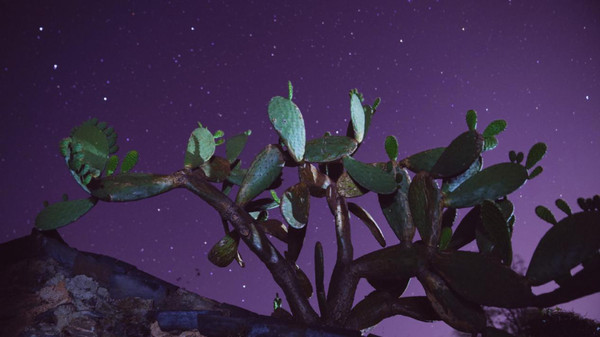
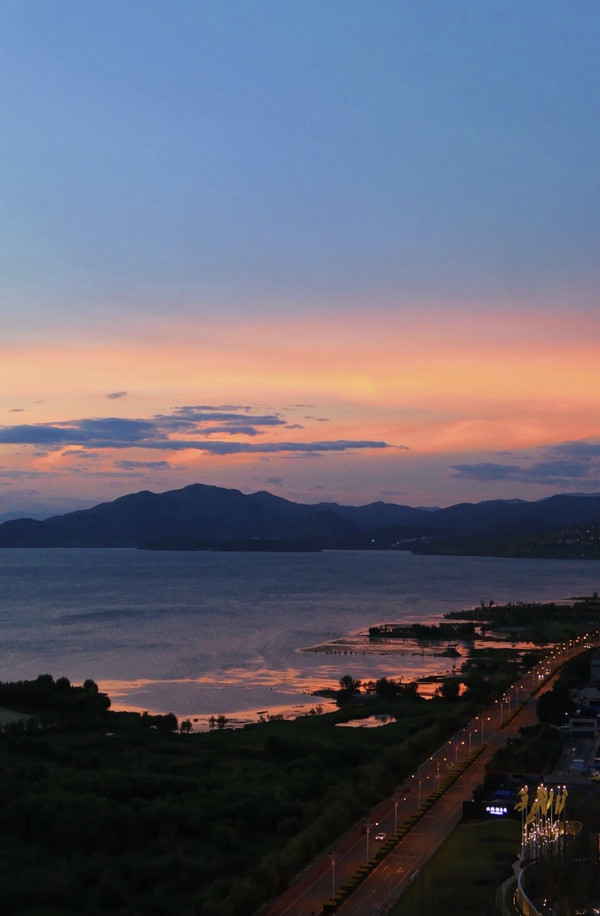
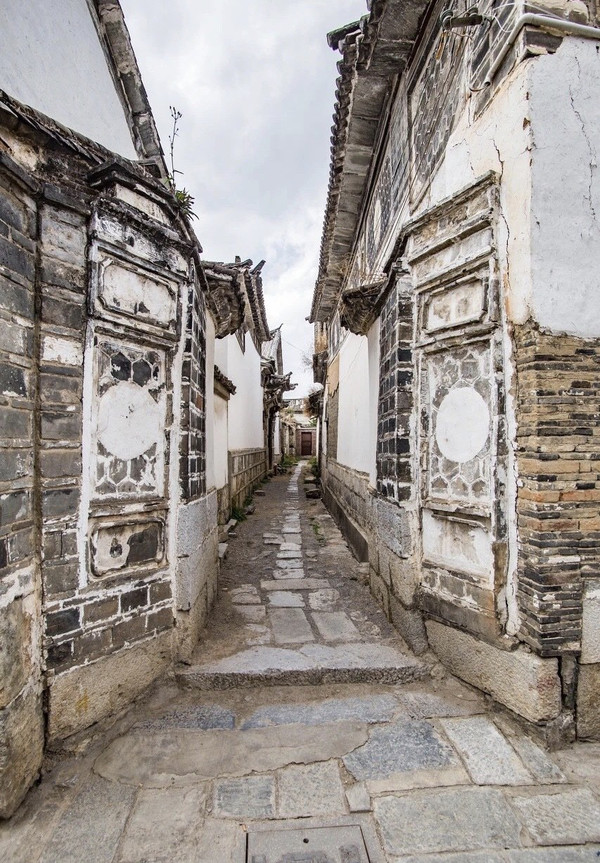
When the last sliver of light at eight in the evening spills across the water, a blue-hour romance rises in the heart. When chimney smoke drifts faintly at the edge of the fields below Cangshan, a quiet warmth wraps around us as we walk through the wheat. When wild purple flowers push up through the rooftops of the old town, even the smallest corner can be breathtakingly beautiful...
Here, summer daylight stretches on endlessly, and I feel like I'm standing inside a Miyazaki film. Tenderness and beauty still set the rhythm of daily life. I know this is summer in Dali.
Itinerary
Transport: Nanjing to Kunming (direct flight, 2h); Kunming to Dali (bullet train, 2h)
Food: mushroom hotpot; sour and spicy fish; grilled milk fan; carved plums; Yangbi rolled rice noodles; smashed chicken feet...
Sights: Erhai Lake; Cangshan; Dali Old Town; Xizhou Ancient Town
-Xizhou-
This Is What Miyazaki's Summer Looks Like
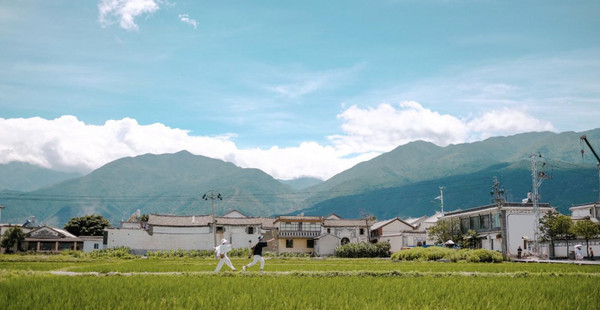
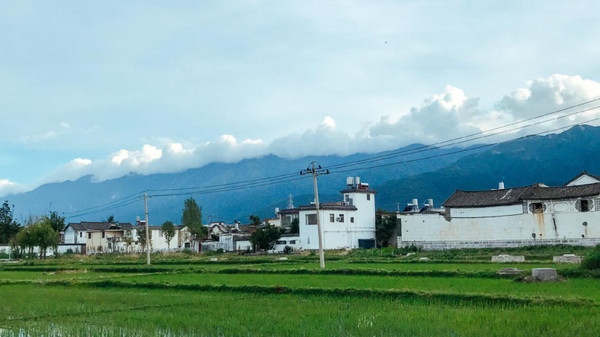
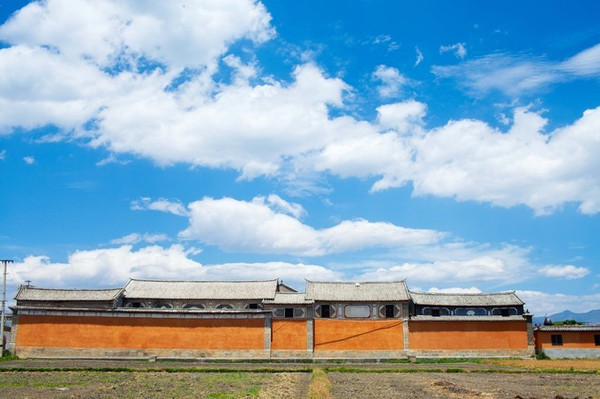
Summer in Xizhou feels exactly like a scene pulled from a Miyazaki film. Summer days, rice paddies, starry skies, hillsides, blue skies, white clouds, tiled roofs... Catch it on a clear day and every single frame in your camera could double as a desktop wallpaper.
Xizhou's summer has a distinctly Japanese feel to it. If I actually lived here, I'd probably wake up every day with the patience to watch clouds roll over Cangshan, and the ease to wander through quiet courtyards without a care.
By the fields on a summer day, throw on a nice hat, walk down a path with a few friends, snap a photo on a whim — it looks like a still from a gentle, warm Japanese film.
You can see why the people of Yunnan love life so much. Those of us living in concrete jungles — who would ever think to paint a courtyard wall such a bright, cheerful color? Under a clear sky, what shines is nothing less than the beautiful fragments of everyday life.
-Cangshan-
Cangshan Is Always There, Best Enjoyed from Afar
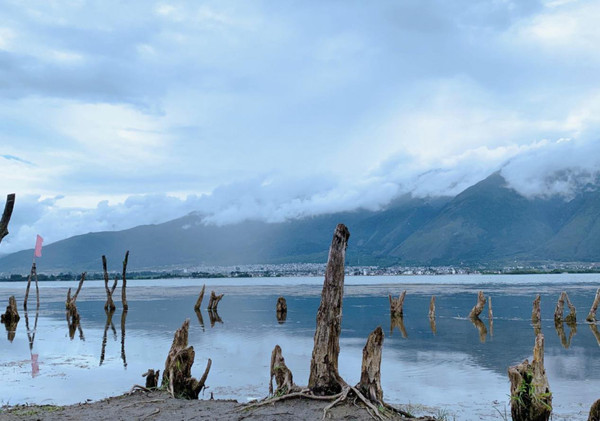
The best angle for viewing Cangshan isn't from deep within it, but from the road between the mountain and Erhai Lake, or from the streets of the old town.
Unlike Yulong Snow Mountain in Lijiang, Cangshan is always draped in green, with clouds and mist wrapped around its waist. It lacks Yulong's jagged edges and carries instead a gentleness, a warmth.
Ride a bicycle along the road by Erhai Lake. On your left, the endless Cangshan range; on your right, the shimmering waves of Erhai. Bai-style houses dot the roadside, along with rice paddies stretching to the horizon. After rain, rainbows sometimes hang between the hills and the fields. This is where Dali's romance is born.
People's Road in the old town faces a valley on Cangshan. After rain, mist drifts down from the mountain and doesn't stop until it reaches the rooftops of the old town. Spirits dwell in the mountains, mortals in the town; mountain and people have lived side by side this way for centuries.
Gazing at Cangshan from afar, travelers who come here can't help but sigh: you have to walk beneath the sunlit foothills of Cangshan at least once. Only then is the trip through this life worth it.
-Erhai-
This Stretch of Water Is Guanyin's Blue Ear, Listening to the World
As you circle Erhai Lake, you can spot the Three Pagodas standing between Cangshan and Erhai from far away. Legend says the pagoda spires were built to subdue a monstrous force in the water. Dali is a famed Buddhist kingdom of fragrance, and the Bai people especially revere Guanyin — they even developed their own distinct Acuoye Guanyin. Guanyin, who observes the world's suffering and delivers its people from sorrow, is the deity closest to ordinary souls in Buddhism.
The long, narrow Erhai Lake looks like a giant ear — listening to Dali's hardships on behalf of Guanyin, helping deliver its people, which is what makes this land purer and more peaceful than anywhere else. The whole city grew up around Erhai. Modern high-rises gaze out at the water, while ancient temples stand eternal, guarding the mountains and rivers.
Standing on the shore at Shuanglang, Yang Liping's home sits directly across the water. She named her house after the sun and the moon. A single dance brought the spirit of a peacock to life with unearthly grace. Only in a place this beautiful and pure could someone like her be born. She must have absorbed Dali's own vitality to become the dancer she is.
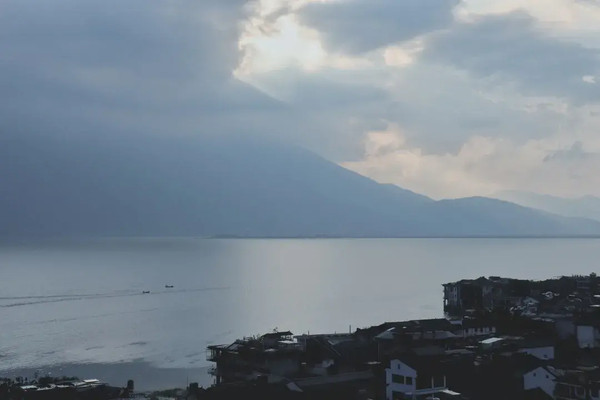
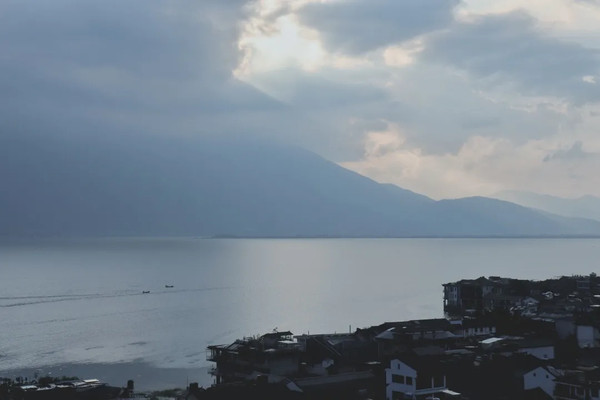
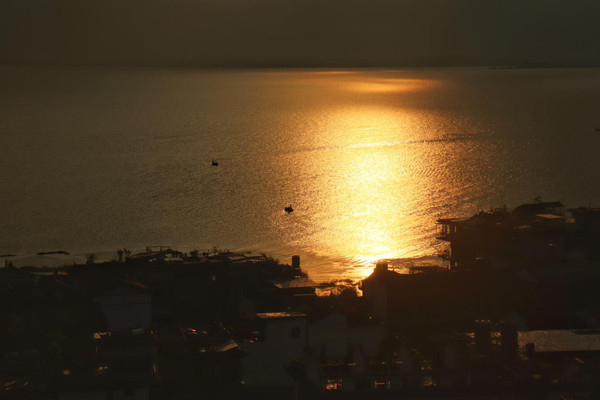
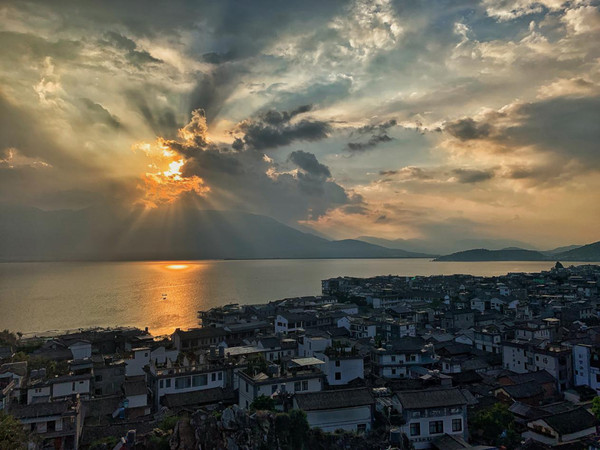
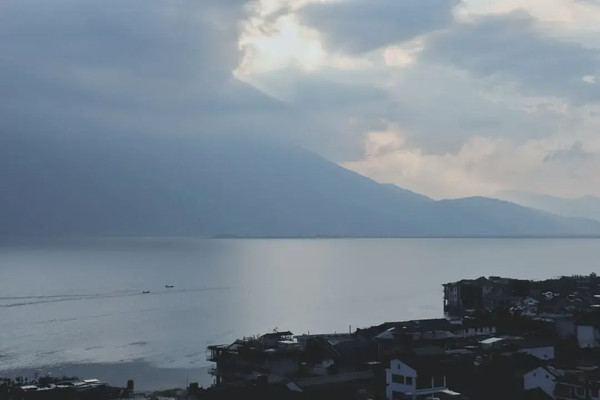
Summer at Erhai has no snow, but it has clouds. A sliver of sunlight isn't Lijiang's exclusive claim — on the shimmering water, beams of light pierce through the clouds like a god's gaze watching over this blessed land. And when sunset comes, the entire lake turns impossibly gentle in warm hues.
-Dali Old Town-
The Fires of History Eventually Die Out, and the Dawn That Follows Is Nothing Short of Dreamlike.
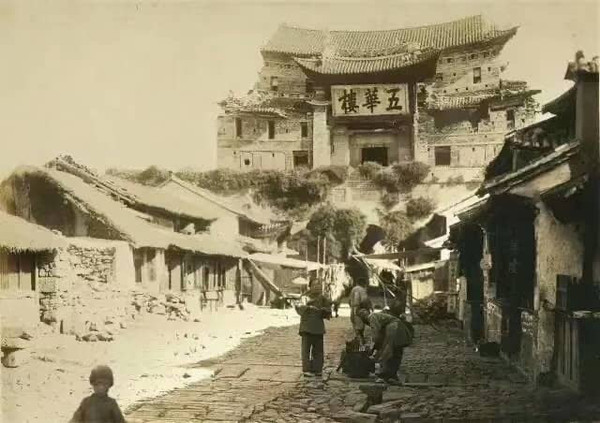
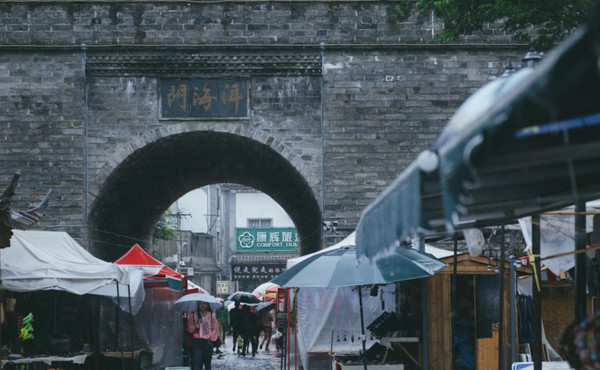
Standing beneath the gate tower, looking back at Dali Old Town's ancient history, the bricks and walls that survived the flames of war are still right there before your eyes. The faces that fought to stay alive through those wars have long since been swept away by the tide of time. Now, beneath the gate tower, sit the most romantic people in the world.
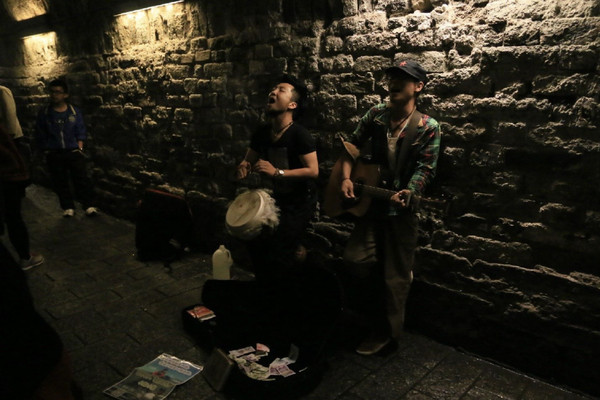
They sing about their ideals late into the night and wander by day. Dali has produced so many children of dreams, creating precious spiritual worlds for this era. This city embraces what the concrete jungle cannot, and teaches its children that even in pain, you must never give up what you believe in.
Summer is already winding down. The temperature is the first to tell us autumn is arriving at full speed. Once night falls, cold air immediately sweeps away the summer feel of daytime in Xizhou. The old town at night feels like a different season entirely. In weather like this, the best thing is to find the right friends and gather around a stove with steaming food. Fill an empty stomach with seasonal vegetables and mountain delicacies; fill an empty will with music that means something. So when you walk into a restaurant with a slogan like this, everything clicks into place.
On the wall of this shop, it says:
"Grand ideals, far from the noise of the world"
In an age that tries to replace human beings with machines, noise is the city's default, and clamor is just the scenery. But a declaration this defiant from a shop owner only makes sense on a street in Dali Old Town — anywhere else, it would be a joke.
Location: No. 498, Lower Section of People's Road, Dali Old Town
Name: I'm Waiting for You in Dali · Ark Fatty's Kitchen
The shop is warm and steamy inside. Kids who've been scraping by in the concrete jungle gather under the warm yellow light to enjoy a moment of flavor gifted by Cangshan and Erhai. Freshness and fragrance sweep across the tongue and hit the brain straight on. This is the one thing you absolutely cannot miss in a Yunnan summer — wild mushrooms. Wilderness and mountain ridges, rivers and trees; clean air, rich nutrients; from these Yunnan pine forests comes a top-tier delicacy like matsutake. A pot of broth, seasoned with precision, brings out the umami of wild mushrooms just right. Add the owner's otherworldly faith, and the night won't feel cold.
Back at the guesthouse, thinking over a day like this, the heart feels genuinely happy and full. From daytime summer scenes to nighttime autumn feasting; from Cangshan's towering green trees to Erhai's soft rippling waves — a full day of running around feels so rich. But even so, the novelty of travel can't quite hold off the exhaustion of the road.
The guesthouse owner invites us to sit. Hot water pours into the gaiwan as he speaks. A good pot of tea lets us feel Dali's warmth even at night. We chat about the day's sights and feelings, and the owner says plainly: your praise isn't real praise. The best praise for Dali is to stay here and become a Dali person. That's why his guesthouse is called "I'm Waiting for You in Dali."
Location: No. 545, Lower Section of People's Road, Dali Old Town
Name: I'm Waiting for You in Dali · Ark Mu Zhai Guesthouse
The tea's fragrance drives away sleepiness, and as we talk with the owner, he becomes more vivid and full in our eyes. Small shops like this — carefully arranged, lovingly run — number in the thousands in Dali. Bright, clean rooms; quiet, classical courtyards; spacious, sunlit terraces...
A guesthouse like this matches every beautiful idea we have about what home should be. The owner isn't smug or showy — just talks with us openly like old friends. I think finding the right restaurant, the right guesthouse, is sometimes far more important than finding the right tourist spot.
Dali's endless vitality comes from this group of people who chose to stay. They're all children who kept their faith, still choosing to embrace their ideals in