How Prosperous Was Chang’an, the Glorious Capital of the Tang Dynasty?
All photos in this article were taken by the author of "Black and White Touches." All rights reserved. Unauthorized use or reproduction is strictly prohibited.
Recommended reading: (The Four Great Ancient Capitals)
Beijing: Where Emperor Chongzhen Hanged Himself, Just a Street Away from "Let's Row the Boat" | With So Many Educated People and Foreigners Visiting, What Exactly Is There to See at Beijing's 798 Art District?
Nanjing: Fifty-two Museums and Over Two Hundred Specialty Exhibits Still Can't Capture the City's Boundless Spirit | Named "Best Global Tourist Destination" by U.S. Media, Night Cruises on the Qinhuai River, Day Trips to Mount Zhong | Beyond Sun Yat-sen Mausoleum and Ming Xiaoling, Nanjing Has Countless Other Historical Sites
Luoyang: How Ancient Is Luoyang, One of the Four Great Ancient Capitals? | How Beautiful Are Luoyang's Peonies, "Unrivaled Under Heaven"?
Xi'an isn't just one of China's four great ancient capitals—it also ranks among the world's four great historical and cultural cities, alongside Rome, Athens, and Cairo. That's because nearly every dynasty that defined Chinese culture made Xi'an its capital: the Zhou, who established rites and music; the Qin, who unified the realm; the Han, who first ushered in an era of good governance; and the Tang, to whom all nations paid tribute.
As Ji Xianlin once said, "Among ancient capitals, Luoyang is the root, Xi'an is the trunk, and Beijing is the crown."
Xi'an may not be as ancient as Luoyang or as illustrious as Beijing, but it's a city that travelers from around the world long to visit. We call ourselves "Han people" because the glorious Han dynasty gave our nation incomparable pride. And to this day, foreigners still call us "Tang people" because the Tang dynasty's prestige spread across ten thousand miles and echoed through a thousand years.
With dreams of returning to the Tang, I came to Xi'an.
**The Never-Sleeping Tang**
Actually, Chang'an in the Tang dynasty wasn't a city that never slept. Like most ancient capitals, it had strict curfew laws.
From the third quarter of the first watch (around 8 PM) to the third quarter of the fifth watch (around 4 AM), curfew was in effect. Except for cases of illness, childbirth, or death, commoners weren't allowed on the streets. Get caught, and it was fifty strokes of the cane, by law.
So on ordinary nights, Chang'an's streets fell silent—"the drums of six avenues ceased, travelers vanished; the nine thoroughfares stretched empty, only moonlight remaining."
But during the Lantern Festival, the curfew was temporarily lifted. The city blazed with lanterns and bustled with activity: foreign merchants, Han traders, performers, acrobats—truly "the east wind blew open a thousand blossoms of fire" and "three hundred palace maidens danced with linked sleeves." Commoners poured into the streets to admire the lanterns, as the saying went: "A thousand doors unlocked, ten thousand lanterns aglow; mid-first-month, the imperial capital stirs."
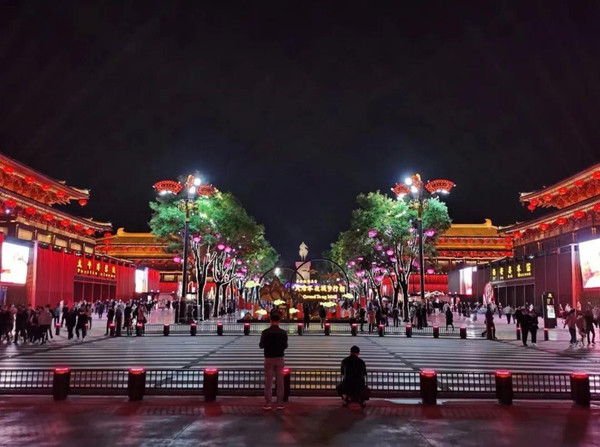
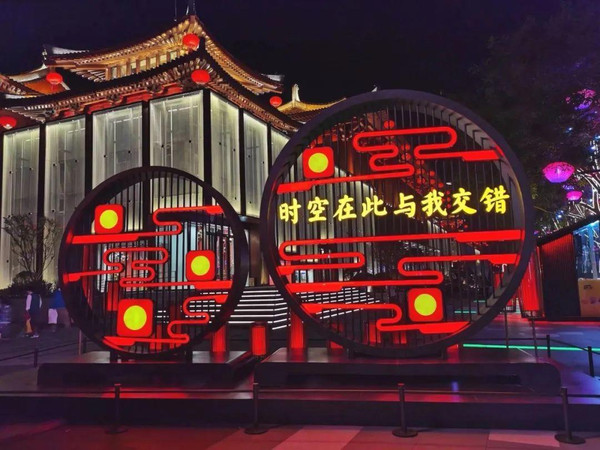
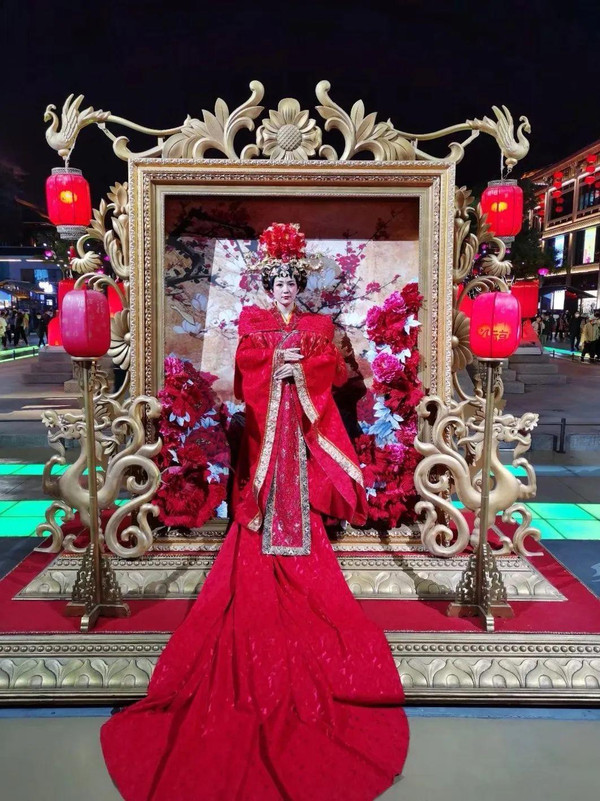
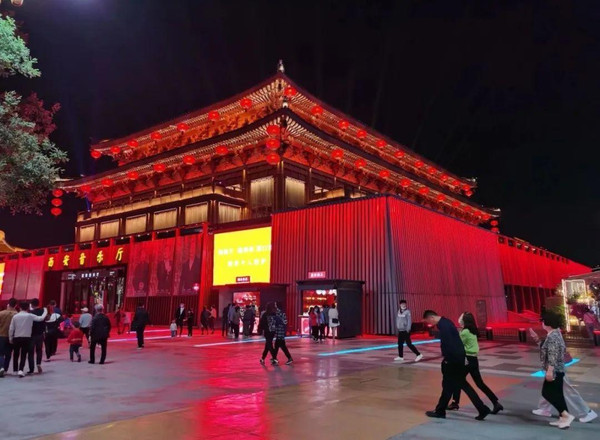
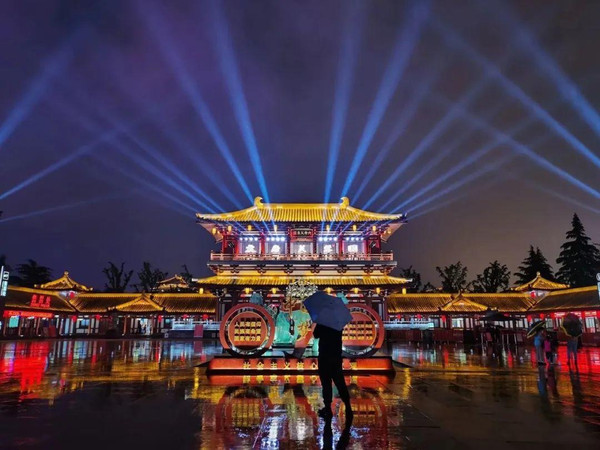
For Tang dynasty residents, this wild celebration happened only once a year. But today, Xi'an's Tang Paradise Never-Sleeping City recreates that splendor every single night—a dazzling collision of time and space that lets you dream your way back to the Tang.
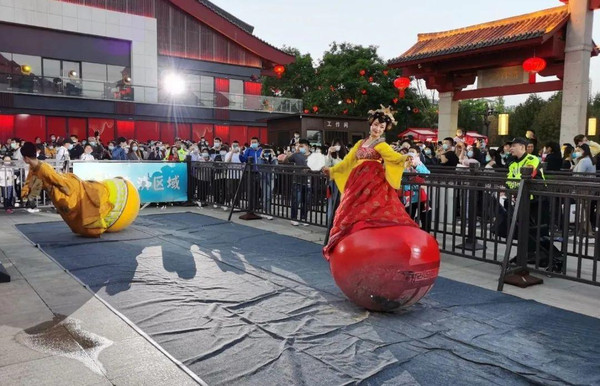
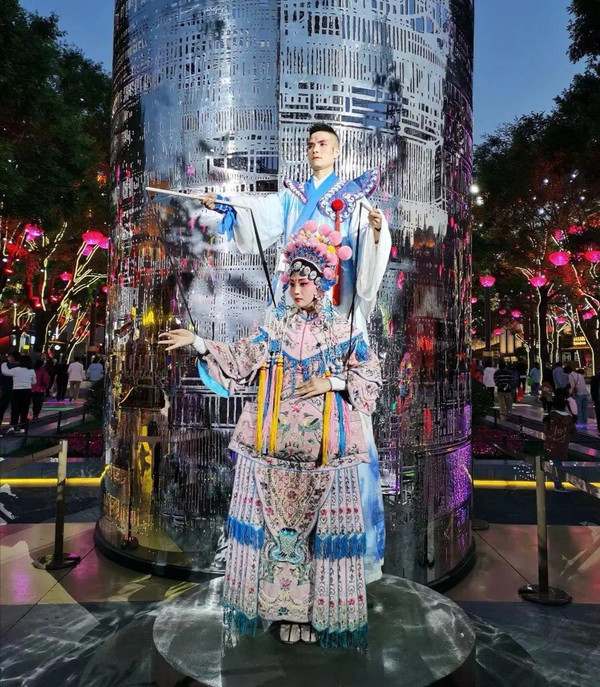
In the Tang paintings displayed in museums, you can see people playing polo, watching foreign dances, listening to court music, and enjoying variety shows—their entertainment was remarkably rich. The performances at the Never-Sleeping City—roly-poly dolls, marionettes, painted canvas girls—are equally colorful and impossible to take in all at once.
Along both sides of the Never-Sleeping City's streets stand Tang-style buildings: the Xi'an Concert Hall, Shaanxi Grand Theater, Xi'an Art Museum, and other cultural venues lined up in a row, all glowing with brilliant lights.
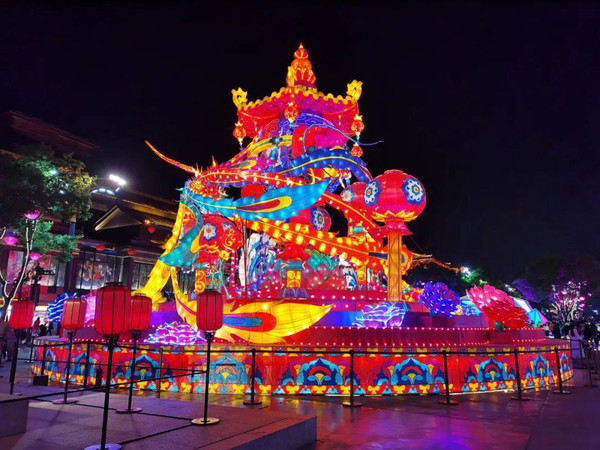
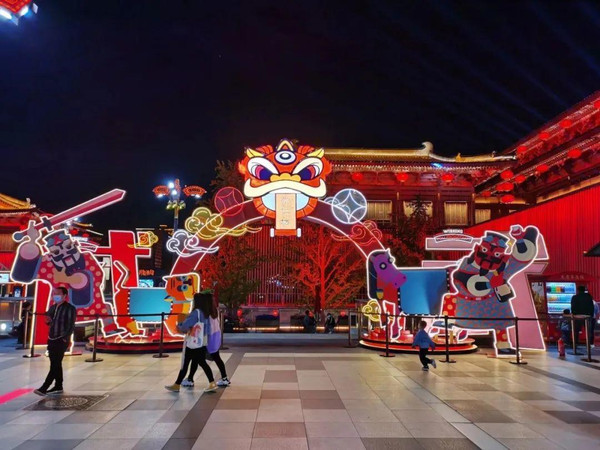
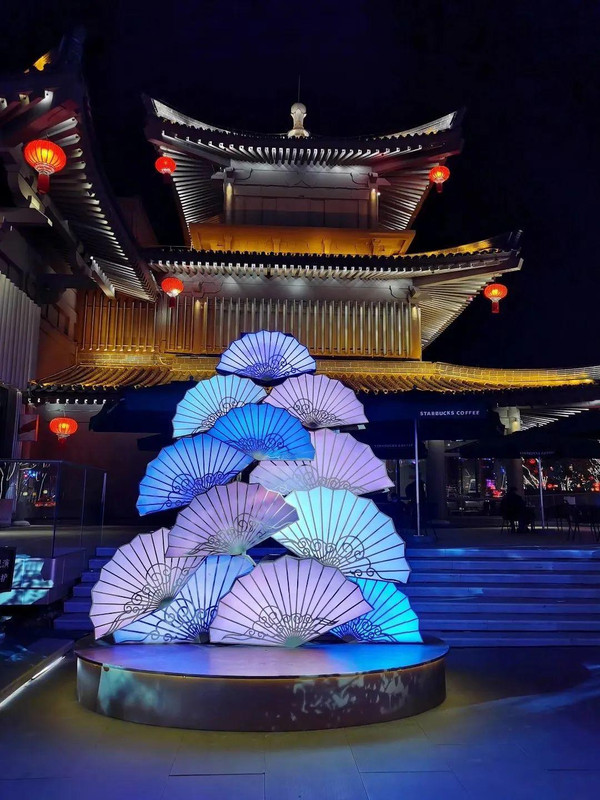
In the middle of the street, you'll spot dazzling decorative installations, vivid and eye-catching.
There are also darker, cooler scenes—romantic and artistic.
Whether moody and profound or resplendent and grand, it all reflects the Tang dynasty's embrace of diversity and coexistence. And the architect of this golden age was Li Shimin, the magnificent emperor whose Reign of Zhenguan laid the foundation, followed by the flourishing Kaiyuan Era.
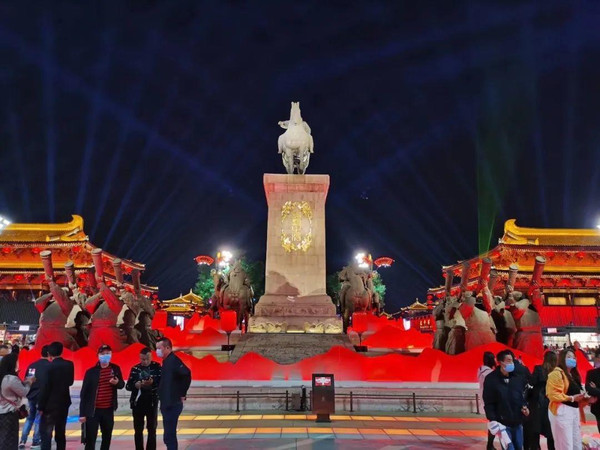
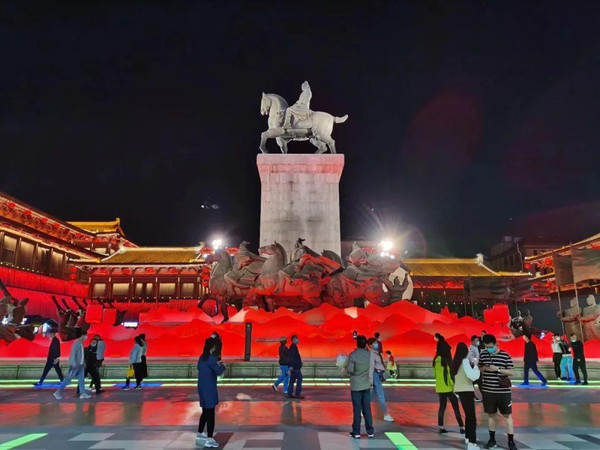
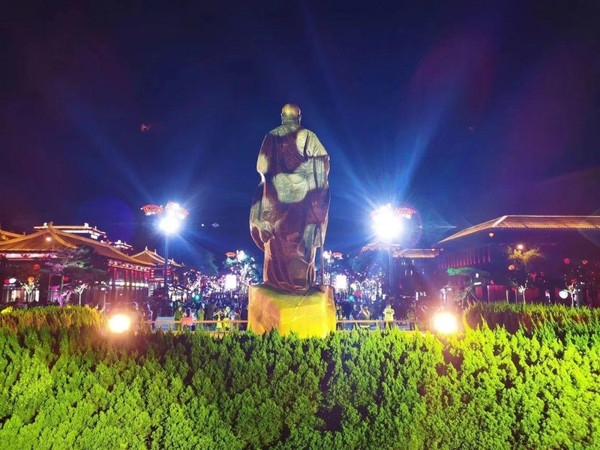
At the center of Zhenguan Square in the Never-Sleeping City stands an imposing group of sculptures: Li Shimin, mighty and majestic atop a tall horse, reins in hand, poised to charge forward with unbridled vigor. Surrounding him are a twenty-four-man honor guard of trumpeters, flag bearers, and drummers, with civil officials and military generals close behind.
This is the landmark sculpture of the Never-Sleeping City—the Zhenguan Monument. The front bears the characters "Reign of Zhenguan," and the back lists the essential records of that era.
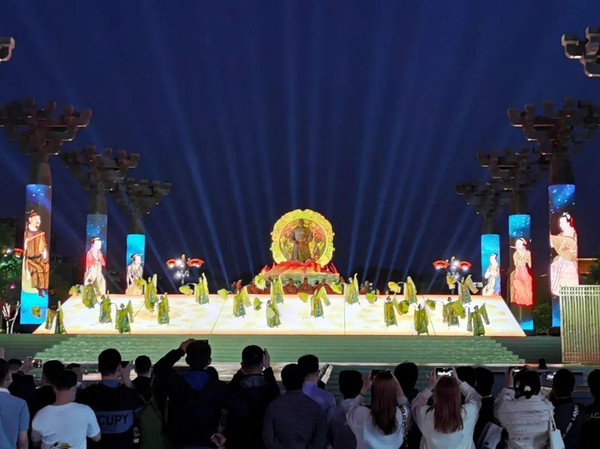
Kaiyuan Square, symbolizing the Kaiyuan Golden Age, sits at the southern end of the Never-Sleeping City. Here stands another sculpture group, "The Kaiyuan Flourishing Era," flanked by eight coiling dragon pillars representing the four directions, four extremes, four quarters, and four seas—signifying connections in all directions. At the center, on a grand base, stands Tang Xuanzong, Emperor Li Longji, the architect of the golden age, posed before a massive circular dragon wall, every inch the emperor. The sculpture group also includes court officials, foreign envoys, and musicians playing various instruments, capturing the joyful, peaceful atmosphere of a prosperous Tang.
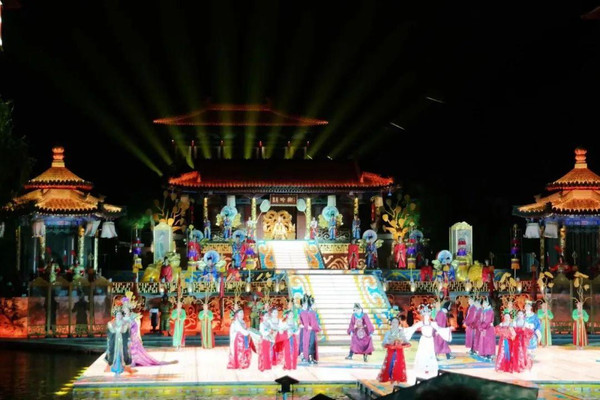
At night, Kaiyuan Square hosts the grand performance "Returning to Chang'an," which showcases both the Tang's splendor and Xi'an's customs, drawing enormous crowds.
A flourishing era breeds a flourishing culture. Throughout the Tang dynasty, from emperors and chancellors to reclusive scholars, everyone was a master of prose. We need not mention the eternally radiant Li Bai and Du Fu—even Emperor Taizong, Li Shimin, and Chancellor Liu Rengui were complete talents who could steady the realm with a brush and conquer it with a sword.
While campaigning across the empire in the early Tang, Li Shimin also established the Hongwen Academy, gathering cultural luminaries from across the land—a practice later rulers emulated. His grandson Li Xian led the compilation of the *Commentary on the History of the Later Han*, which remains historically invaluable to this day.
In the early and high Tang, when both civil and military pursuits were cultivated with equal vigor, a constellation of literary masters emerged. Luo Binwang, one of the Four Great Poets of the Early Tang, wrote a manifesto denouncing Empress Wu Zetian in such blistering, brilliant prose that even as she fumed, she couldn't help but admire him, lamenting: "A talent like this, left to wander among the common folk—that's the chancellor's fault!"
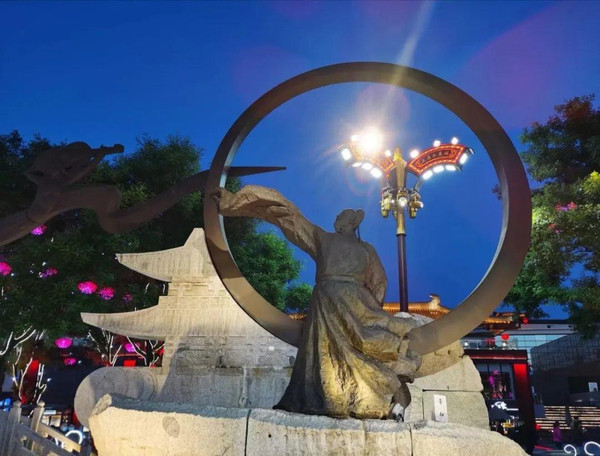
(Sculpture group of poets in the Never-Sleeping City)
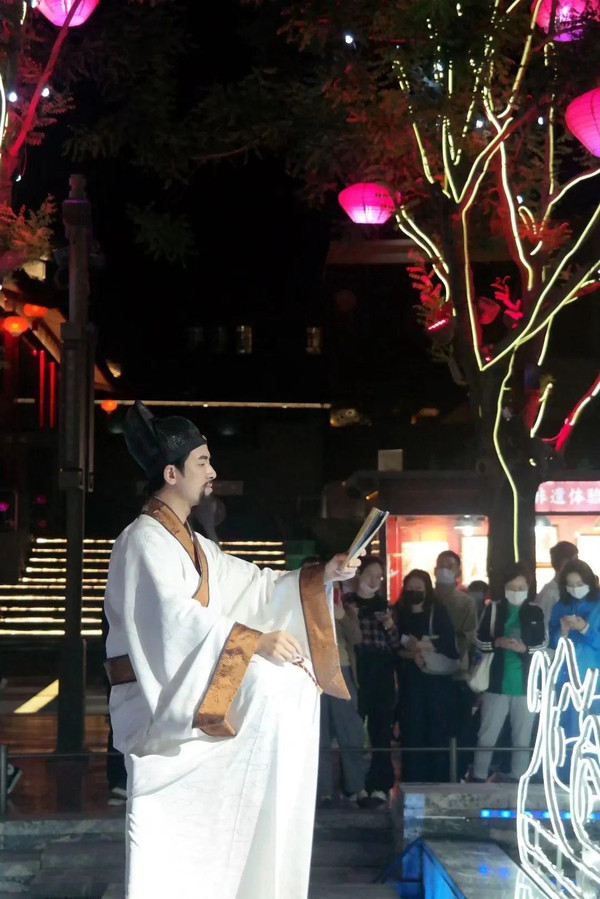
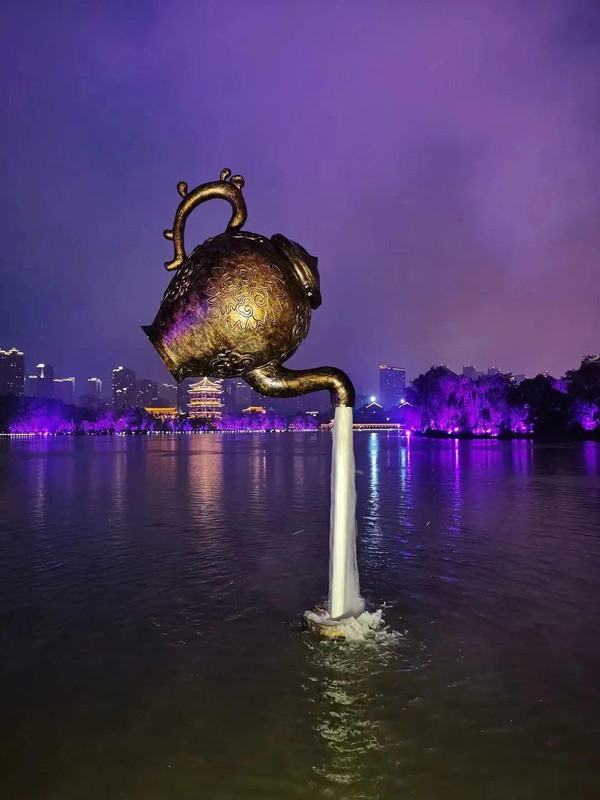
(Floating Li Bai)
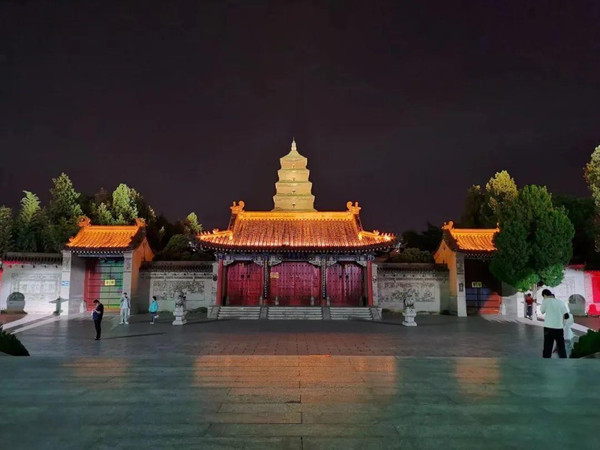
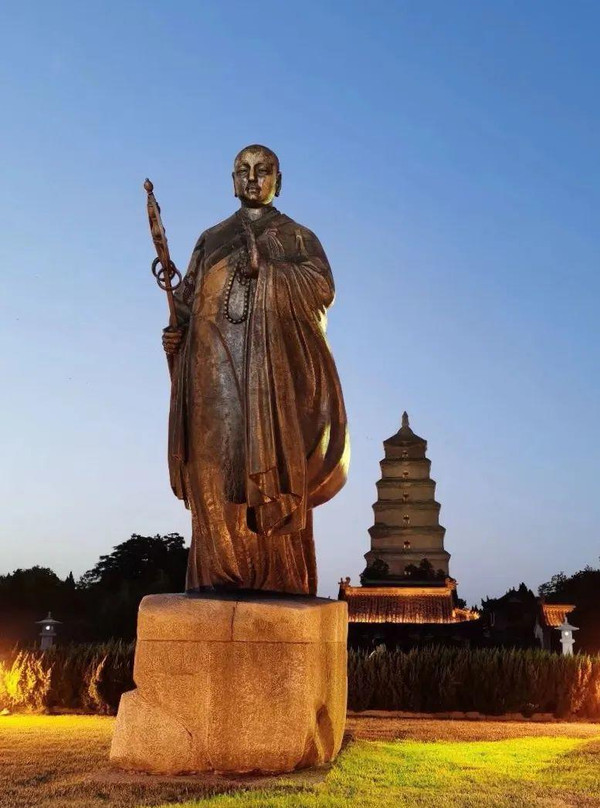
The northern edge of the Never-Sleeping City borders the Great Ci'en Temple, where the famous Giant Wild Goose Pagoda stands—built under the direction of the eminent monk Xuanzang to preserve the sutras and Buddhist images he brought back from India.
In the third year of Zhenguan (629), Xuanzang journeyed fifty thousand li west to India, studying under Shilabhadra at Nalanda Monastery, then traveling across India for seventeen years. He mastered all the major and minor vehicle doctrines of his time, debated with other scholars, and earned fame throughout India. Upon his return, he translated Buddhist scriptures at the Great Ci'en Temple—seventy-five works in total—and founded the Consciousness-Only school of Buddhism.
Xuanzang recorded his western journey in *The Great Tang Records on the Western Regions*, which served as the primary reference for *Journey to the West*, one of China's four great classical novels.
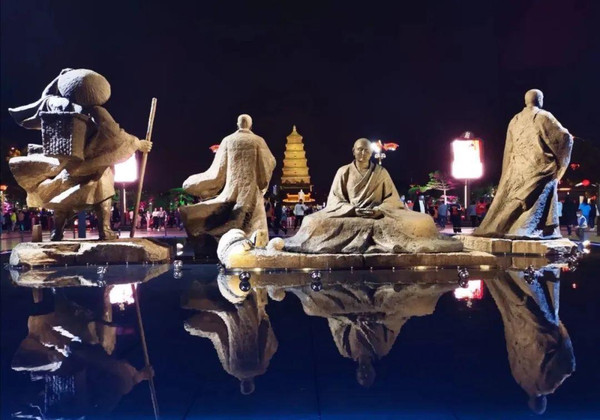
Beyond Xuanzang, the Tang also produced eminent monks like Huineng, Jianzhen, and Kukai.
Huineng was the Sixth Patriarch of Zen Buddhism. Legend has it he was illiterate but possessed extraordinary insight, composing the famous verse: "The bodhi tree is not a tree, the bright mirror is no stand. Originally there is nothing—where could dust settle?"
Jianzhen sailed east to Japan, spreading Buddhist scriptures and Chinese culture, making invaluable contributions to Sino-Japanese cultural exchange.
Kukai was a Japanese monk who came to Tang China to study Buddhism. He learned esoteric teachings in Chang'an, then returned to Japan to found the Shingon school, playing a vital role in disseminating Tang culture in Japan.
(Sculptures of eminent monks in the Never-Sleeping City: from left to right, Kukai, Huineng, Jianzhen, and Xuanzang)
Just east of the Never-Sleeping City lies the Tang Paradise. If the Never-Sleeping City is the bustling marketplace, then Tang Paradise is the grand garden.
Located at Qujiang, this garden was already famous in the Qin dynasty for its beautiful scenery, when the imperial hunting grounds of Yichun Garden were established here.
During the Sui dynasty, Emperor Wen disliked the character "qu" (crooked) in Qujiang, so he renamed it "Furong Garden" (H