Wandering Through Chang'an: Savoring the Legacy of an Ancient Capital of Thirteen Dynasties
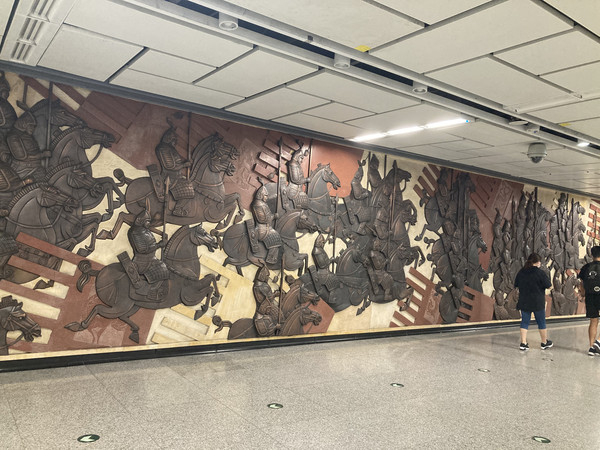
Xi'an served as the capital for thirteen dynasties: the Western Zhou, Qin, Western Han, Xin, Eastern Han, Western Jin (under Emperor Min), Former Zhao, Former Qin, Later Qin, Western Wei, Northern Zhou, Sui, and Tang. On July 17, 2021, at noon, I boarded a train alone in Chengdu bound for Xi'an. Stepping off the train and into the metro, I was struck by the grand murals carved into the walls—a testament to a city that began its reign as an imperial seat over two thousand years ago. They radiated the martial spirit of the Qin lands and a profound cultural depth.
My train arrived at Xi'an North Station. The metro roughly follows the city's central axis heading south, toward the northern gate of the old city. I got off just outside the walls and walked in through the North Gate on foot. I wanted to ease into the experience gradually, savoring the approach.
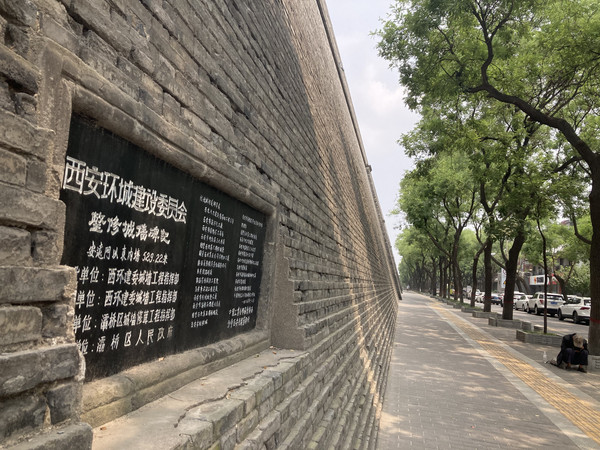
By the way, the current city walls of Xi'an date from the Ming Dynasty.
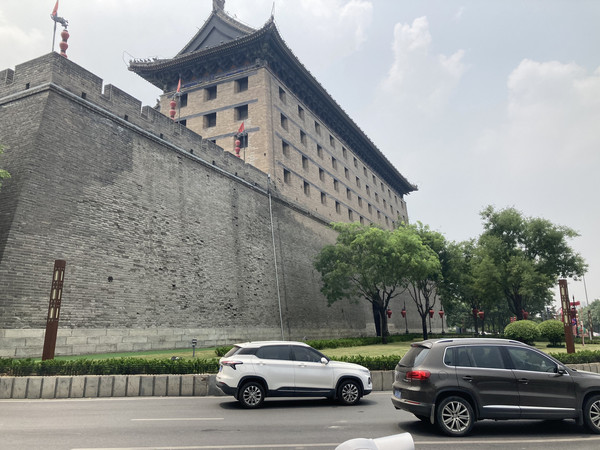
The North Gate is called Anyuan Gate, a name that hints at China's long tradition of using soft power to manage those it considered outsiders. Above it stands a four-story structure riddled with windows—the arrow tower, built for both archery and lookout.
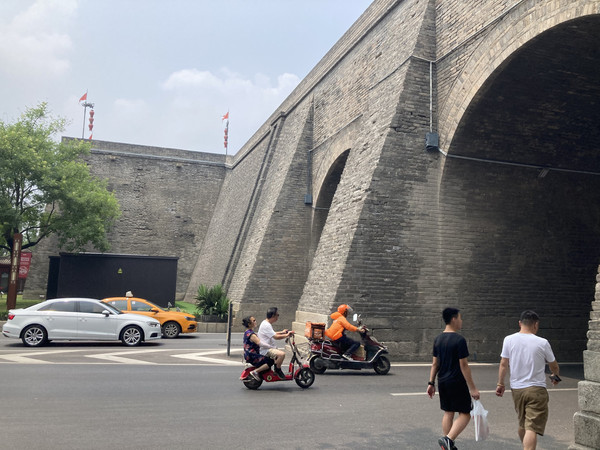
Once through the gate, you're on North Street, which runs perfectly straight north to south. Last year, my friend Shu Fang came to Chengdu, and the TV drama *The Stage*—a story set in Xi'an—was airing that evening. I think some scenes were shot around this very spot. The walls aren't vertical; they're trapezoidal in cross-section, which makes them incredibly sturdy.
Back in 2017, I visited Nanjing and saw its ancient walls, remarkably well-preserved. Xi'an's walls are equally imposing. The moat lies as still as a mirror, reflecting the gray ramparts, the red corner towers, the green weeping willows, the blue sky, and the white clouds. Flocks of birds wheel overhead, the setting sun casts long shadows, and the breeze stirs the banners—every sight is a picture of tranquility. It fills you with peace and contentment. Even in poverty or hardship, you wouldn't feel like a fallen aristocrat without dignity; your heart finds its anchor, its home.
Some folks like to boast about being "city people." But you've got to actually live in a city first. Do you even have city walls where you're from? Where's our city?
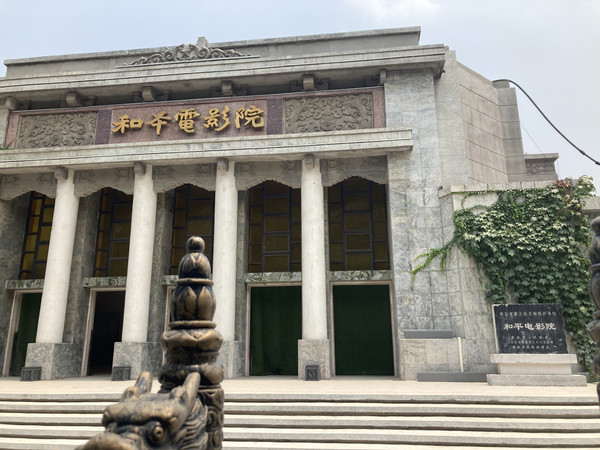
On North Street stands the Heping Cinema, built with Soviet assistance. You can see the Russian architectural influence—it's a protected heritage site now.
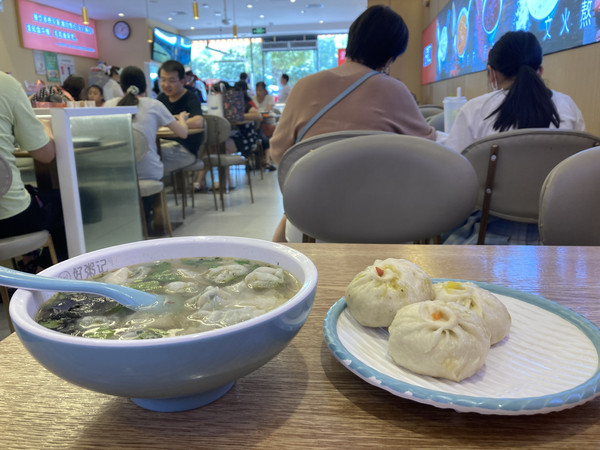
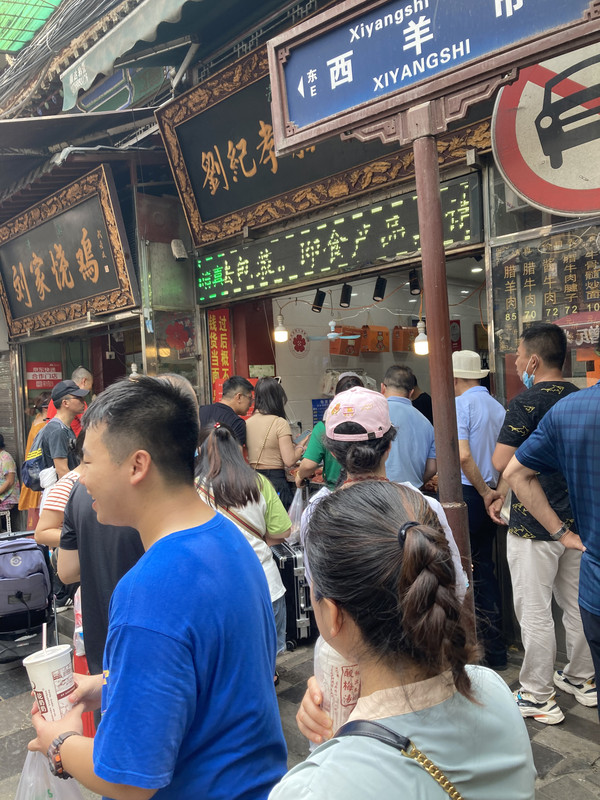
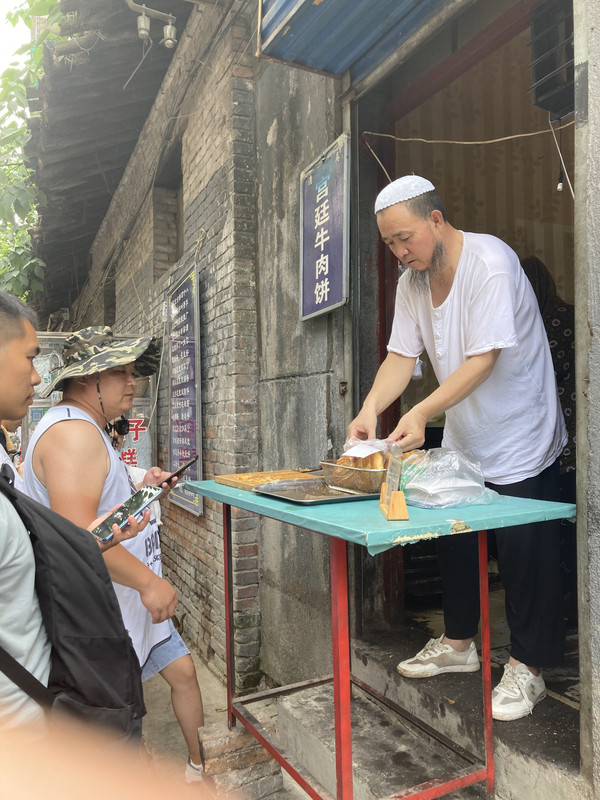
By the time I reached this point, it was past one in the afternoon. I hadn't eaten all day, deliberately saving my appetite to hunt down an authentic Xi'an meal. I've had moments where I nearly fainted from hunger because I couldn't find a place that felt genuinely local. Is that some kind of obsession? Anyway, I found a spot serving buns and wontons—the flavors were spot-on, and I felt completely satisfied. When you're in a new place, just look for where the locals are queuing up. That's always a safe bet.
After those buns, I felt more grounded as I walked the streets, my senses sharper. I'd left Chengdu that morning, cutting through the Bashan mountains and the Qinling range, and now I was back in the North. The wind against my face had a bite to it that you just don't get in Chengdu, where the breeze barely stirs.
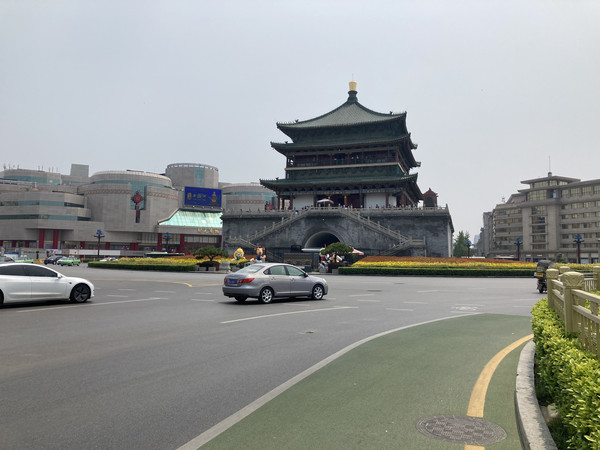
At the intersection ahead stood the Bell Tower. Built in the Ming Dynasty, it marks the very heart of Xi'an, where the four main avenues—East, West, North, and South—converge. The tower rests on a square base, with three tiers of eaves rising above it. My hotel was to the east, but since I still had time, I grabbed a shared bike and headed west to explore first.
Walking, cycling, and taking the bus—that's the best way to truly get a feel for a city. No need for elaborate itineraries. The best discoveries are the ones you stumble upon.
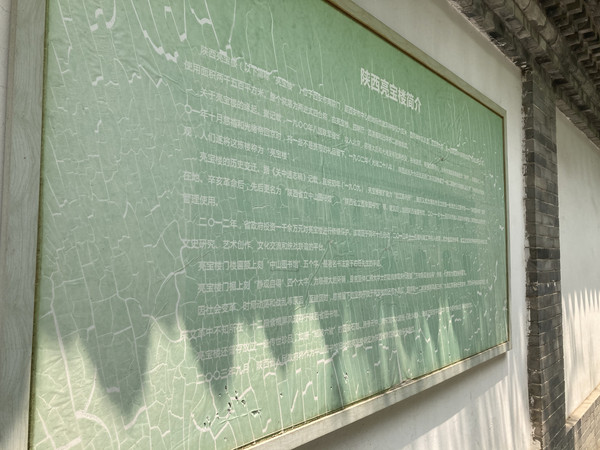
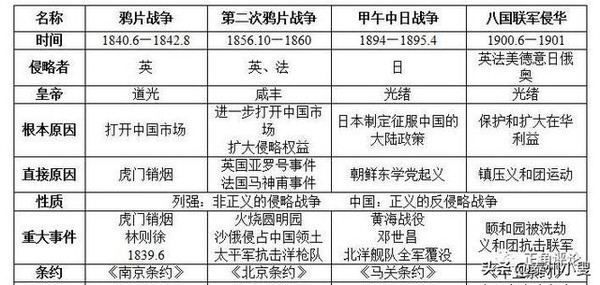
That place up there is called the Liangbao Tower. It ties back to a dark chapter during the Eight-Power Allied Forces' invasion. In 1900, Britain, the US, France, Germany, Russia, Italy, Japan, and Austria-Hungary marched into Beijing under the pretext of suppressing the Boxer Rebellion. It was a clash of industrial civilization against agrarian—there was no contest. Empress Dowager Cixi and Emperor Guangxu fled to Xi'an, leaving the Forbidden City as the Allies' headquarters. They stayed for a year before signing the Boxer Protocol the following year. Over the preceding sixty years, under Daoguang, Xianfeng, and Guangxu, China had signed one unequal treaty after another, slipping into a mode of endurance and survival.
Here's the thing: if you feel bullied, humiliated, or looked down upon—whether by enemies, friends, or family—there's only one reason: you're weak, or getting weaker. It has nothing to do with the other person's character or whether you're in the right. That's the law of the jungle. It applies across all times and dimensions. There's no spiritual problem here; it's all about material power. The sooner you grasp that, the sooner you'll find peace and live wisely.
When Cixi and Guangxu fled to Xi'an, their only thought was survival—survive like animals if necessary. As long as they lived, they remained emperor and empress. And ruling over a nation as docile as chickens and dogs was intoxicating; it gave them a tremendous sense of importance. Dead, everything would be reduced to zero. The Forbidden City became Waldersee's headquarters, and for that year-plus of exile plus the return to Beijing, their upkeep came from tribute offered by officials across the provinces. After all, everyone was in the same leaky boat—if it sank, they'd all drown together. Get through this, and they could all keep enjoying themselves. So treasures poured into Xi'an for Cixi. The next year, she signed the Boxer Protocol. When you live off the land, you live off the land; when you live off the state, you sell the state—it's all perfectly logical. When she finally returned to the Forbidden City, most of the loot went back to Beijing with her, but some items stayed behind. Local officials built the Liangbao Tower to house them.
The tower wasn't open to visitors, so I couldn't go inside. Apparently, it holds a four-character plaque inscribed by Cixi herself: "静观自得" (In Stillness, All Things Are Seen). The phrase comes from a beautiful poem by Cheng Yi of the Song Dynasty:
*Idle, nothing troubles me; I rise to find the eastern window red with dawn.*
*All things, viewed in stillness, reveal themselves; the seasons' joys are shared by all.*
*The Way bridges heaven and earth, beyond all form; thought drifts through wind and shifting clouds.*
*Unmoved by wealth, content in poverty—this is the mark of a true man.*
What a sublime state of mind. For Cixi to bestow such words, she couldn't have been entirely lacking in vision, nor could Guangxu. Perhaps history's scapegoats weren't meant to be them. In truth, there's no such thing as a black pot or a white pot—no pot at all. Dabbling in such distinctions is a waste of time. What we need is to study things through science, understand people through history, and gain wisdom through reflection.
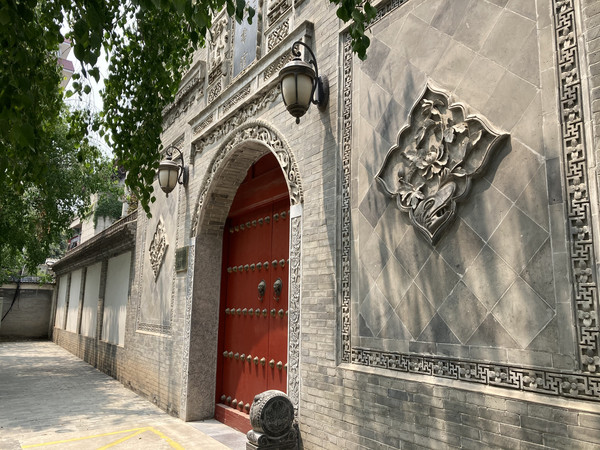
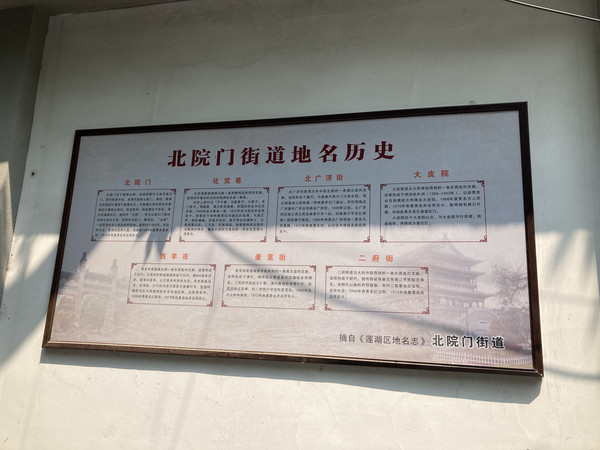
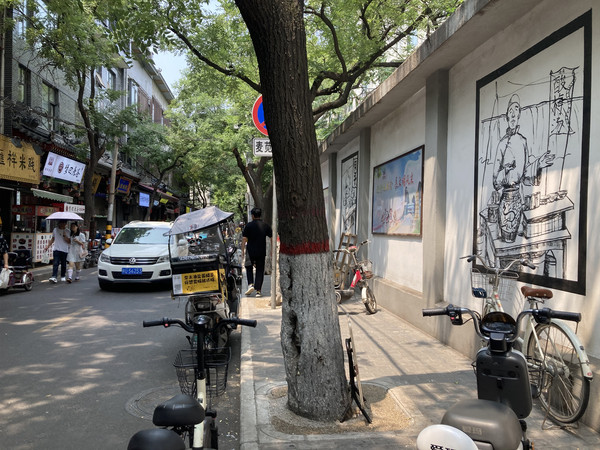
Beiyuanmen lies on the north side of the eastern stretch of West Street, running from West Street up to Xihuamen Street, built in Ming-Qing architectural style. The governor's office at the northern end of this street was called the "North Court" (Beiyuan), which is how the street got its name. Beiyuanmen was originally part of the Tang imperial city. In the 26th year of Guangxu's reign (1900), it became the temporary residence of Cixi and Guangxu during their flight to Xi'an. Over the centuries, it housed the Jingzhao Prefecture in the Song, Fengyuan Circuit in the Yuan, Xi'an Prefecture in the Ming and Qing, the Shaanxi governor's office in the Qing, the Guanzhong Circuit in the Republican era, and after 1949, the Xi'an municipal government—all within this district.
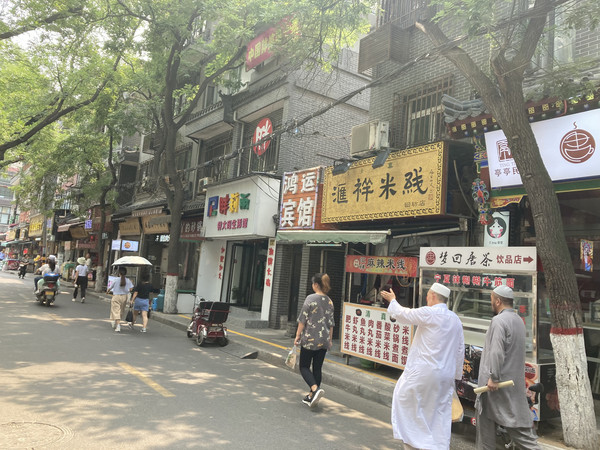
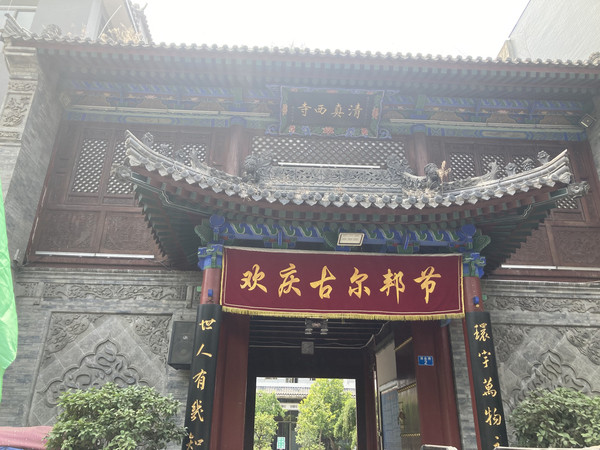
"Eid al-Adha" means "sacrifice" or "offering." It's one of the key rituals of the Hajj pilgrimage, observed on the 10th day of Dhu al-Hijjah, the final day of the pilgrimage season, when pilgrims perform animal sacrifices.
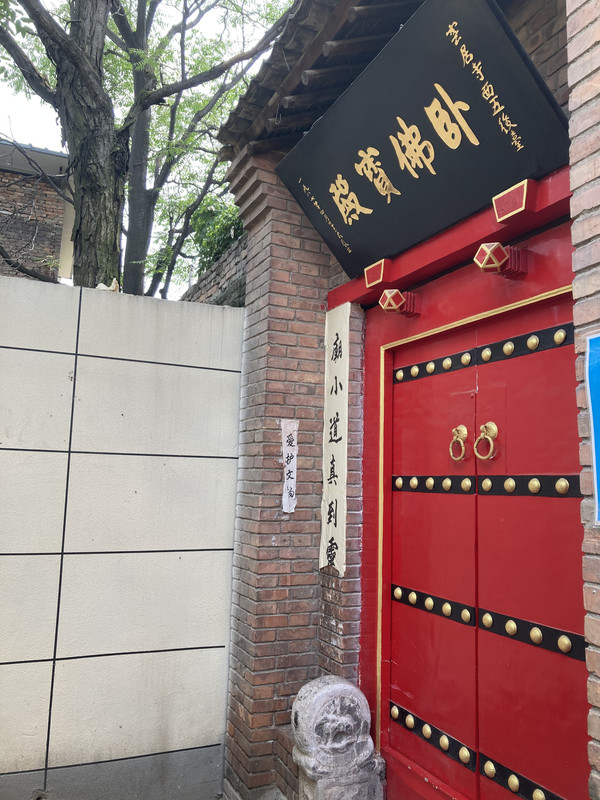
Xi'an's Yunjusi Temple was originally called Anqingsi. Legend has it that Emperor Taizong's mother, Li Shimin, was a devout Buddhist who made several pilgrimages each year to the South Wutai peak of Zhongnan Mountain. The journey exhausted her, so Shimin, to honor his filial duty, built five Buddhist halls west of the Guangyun Gate in the palace compound, modeled on the South Wutai layout, for her to worship without the trek. Because auspicious clouds were said to perpetually linger over the temple, it became known as Yunjusi—