Snowy Season, Romantic Shandong
**Introduction**
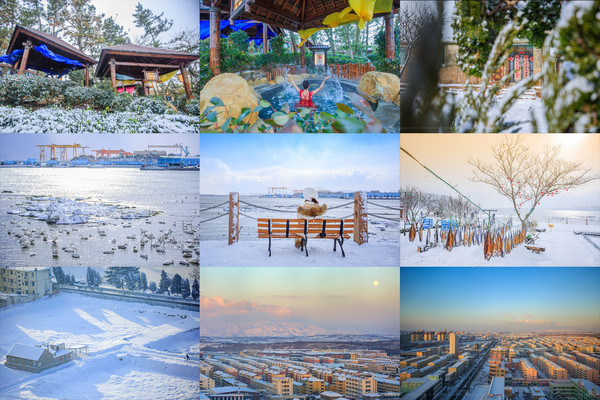
Weihai's islands, Zaozhuang's waters, Tai'an's mountains, Qufu's sacred grounds, Qingdao's seas, Jinan's springs... Every city in Shandong has its own unique beauty, and that beauty goes far beyond scenery—it's woven into centuries of history and culture. Friends had been telling me for ages that winter in Shandong has a special kind of charm. The province's famous hospitality and the warmth of its people only made me more curious to see it for myself. As luck would have it, I ended up catching the biggest snowfall Shandong had seen in years right at the start of the trip. That unexpected snow added a whole layer of fun and beauty to the journey. So just how beautiful is Shandong in winter? Come along and see for yourself—these are the cities whose names alone make your heart feel warm.
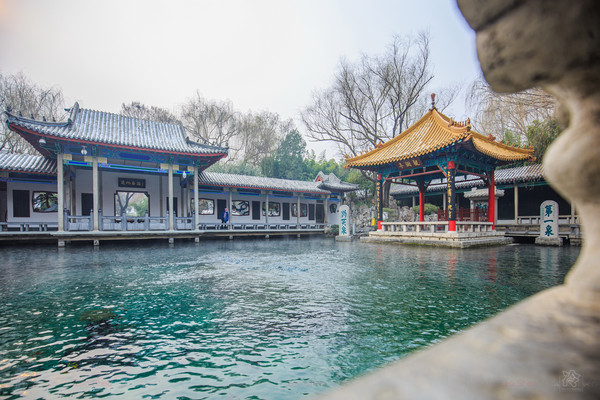
The First Spring Under Heaven—joyful and bubbling
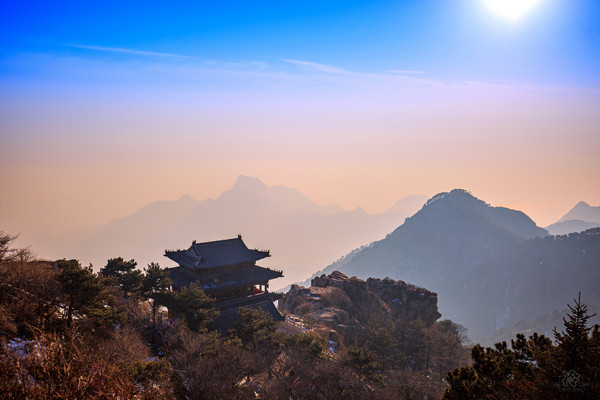
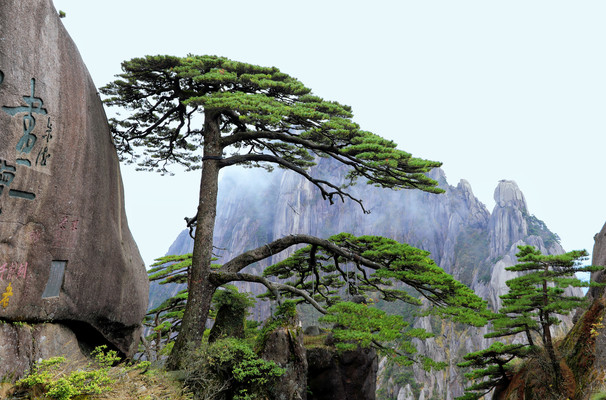
Tai'an's majestic Mount Tai
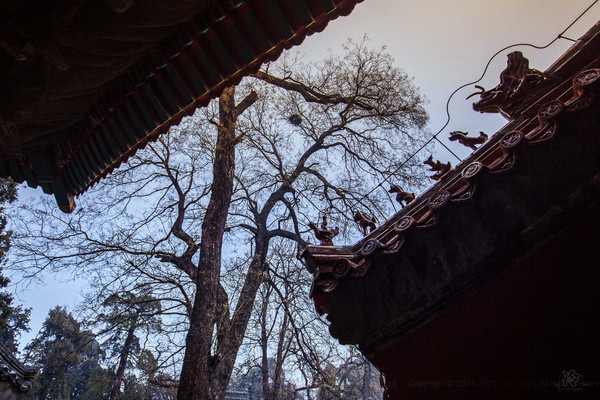
Qufu's Confucius Temple, the heart of Confucian culture
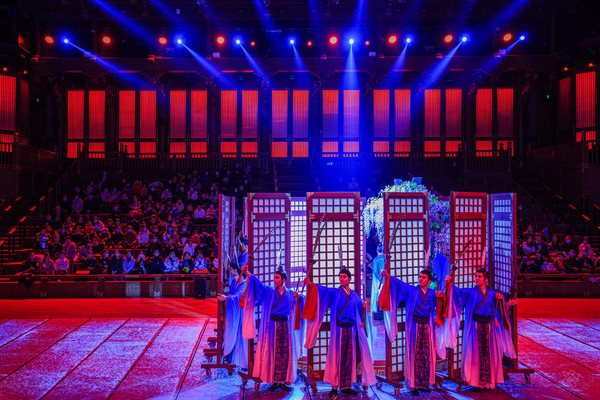
Nishan Sacred Land in Qufu—a visual feast of Confucian elegance
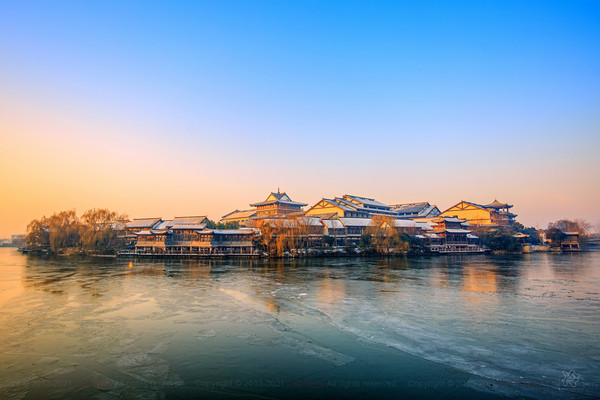
Taierzhuang Ancient City in Zaozhuang, the finest sight under heaven
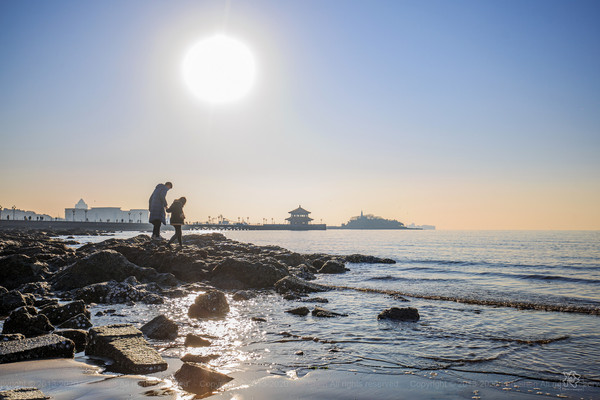
Qingdao's red roofs, yellow walls, and blue seas
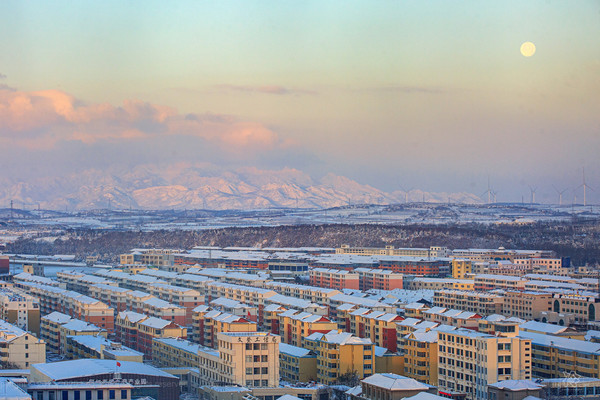
Weihai after the snow, under a clearing sky
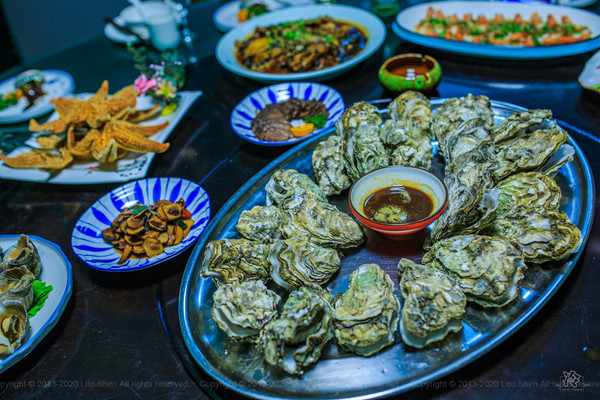
And Lu cuisine—one of China's eight great culinary traditions, steeped in history
As the saying goes, the waters and soil of a place shape its people. The good mountains and rivers of Shandong have raised a generation of warm-hearted, hospitable folks, while the thousand-mile coastline has painted countless natural masterpieces. Here you'll find the towering peaks of Mount Tai, the lively springs of the First Spring Under Heaven, the mild winter days Lao She once wrote about, the red roofs and yellow walls against the blue sea and sky, time-honored brands known across the world, and an endless array of foods to tempt your taste buds...
**Itinerary**
Day 1: Shanghai → Weihai → Tianmu Hot Springs → Weihai Tianmu Hot Spring Resort
Day 2: Weihai Tianmu Hot Spring Resort → Yandunjiao Swan Lake → Weihai Tianmu Hot Spring Resort
Day 3: Weihai Tianmu Hot Spring Resort → Qingdao → Catholic Cathedral → Tsingtao Beer Museum → Taipingjiao Badaguan → Mercure Hotel Qingdao
Day 4: Mercure Hotel Qingdao → Zhanqiao Pier → Signal Hill Park → Badaguan (Huashi Tower, Princess Tower, etc.) → Zaozhuang → Taierzhuang Ancient City → Taierzhuang Mansion
Day 5: Taierzhuang Mansion → Qufu → Nishan Sacred Land → Confucius Temple (San Kong Scenic Area) → Qufu Jit Hotel
Day 6: Qufu Jit Hotel → San Kong Scenic Area → Tai'an Tianwai Village → Mount Tai Scenic Area → Jinan → Feiman Hotel (MixC Mall Branch)
Day 7: Feiman Hotel → Jiefang Pavilion → Baishi Spring → Heihu Spring → Quancheng Square → Baotu Spring → Daming Lake → Jinan West High-Speed Rail Station → Shanghai
**Key Points**
★ All scenic spots in Shandong are open as usual, unaffected by the season or the pandemic.
★ Must-visit highlights: Rongcheng Yandunjiao Swan Lake, Tsingtao Beer Museum, Taierzhuang Ancient City, Nishan Sacred Land, Mount Tai Scenic Area, Baotu Spring, and Daming Lake.
★ Attractions in Shandong are fairly spread out, so renting a car or hiring a driver is the most convenient way to get around. Parking is easy everywhere except in Qingdao and Jinan.
★ Shandong cuisine leans heavily on noodles, dumplings, and steamed buns, and portions are generous—order wisely.
★ Temperatures vary quite a bit between cities, so pack plenty of layers, especially if you plan to climb Mount Tai.
**Transport**
By air: There are several daily flights between Shanghai and Weihai or Jinan. If ticket prices work out, flying is the way to go.
By train: Whether you're headed to Weihai or Jinan, it's easiest to arrive via Jinan's high-speed rail station.
Tip: If you're starting in Weihai, fly—it's quicker, and regular airfares are comparable to high-speed rail. If you're starting in Jinan, take the train—there are plenty of departures, and prices are similar to flights. Traveling between cities within Shandong by high-speed rail is also very convenient, but since the sights within each city are scattered, renting a car is your best bet. Rental counters are available at every airport and train station, and picking up and dropping off across the province is a breeze.
**About the Food:**
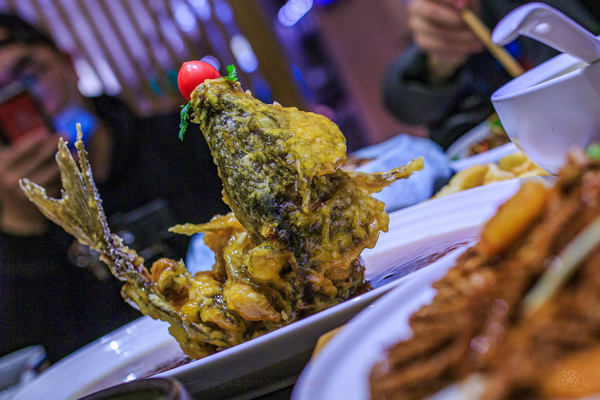
Shandong cuisine, or Lu cuisine, is one of China's four great culinary traditions. It has a long history, a signature flavor that's fresh, salty, crisp, and tender, and a reputation that spans the globe. Techniques like "bao" (quick-frying), "chao" (stir-frying), "shao" (braising), and "ta" (pan-frying) are its hallmarks. Taste Lu cuisine and you'll meet the warm, straightforward people of Shandong. Every town has its own signature dish, and you can find authentic local snacks at markets and temple fairs. "Pancake rolls with scallions" is the classic Shandong combo—drinking, dipping in sauce, biting into scallions, and chewing on pancakes all fit the bold, down-to-earth character of the locals.
In Shandong, "no fish means no feast, and no liquor means no banquet." Wang Xizhi, Li Qingzhao, Xin Qiji, and even sojourners like Li Bai, Du Fu, and Su Shi all found their boldest inspiration in wine. The people of Shandong drink with gusto—not necessarily the most, the fastest, or the fiercest, but their rules, their stubbornness, and their toasting rituals will leave an impression you won't forget.
**The Sudden Snowstorm Was a Shock and a Delight**
A trip taken on a whim always means plans will shift along the way—but that's exactly where the surprises and the magic lie.
**Stop One: Weihai**
Liugong Island, Huaxia City, Chengshantou, Xixiakou... these are the names that make Weihai locals proud. How many have you been to?
Almost every traveler dreams of meeting the sea. And when it comes to coastal cities, if you haven't been to Weihai, you could say you haven't seen every corner of the world. But if your impression of Weihai stops at the ocean, let me tell you: Weihai has a thousand faces, and you've only seen one.
**Weihai Tianmu Hot Spring Resort**
Address: Zhangjiachang Town, Wendeng District, Weihai
Price: 138 RMB per person per visit
Whether you're on a group tour or traveling solo, meeting up with friends from all corners of the country is always something to look forward to. So our first rendezvous point was the well-known Tianmu Hot Springs in Weihai.
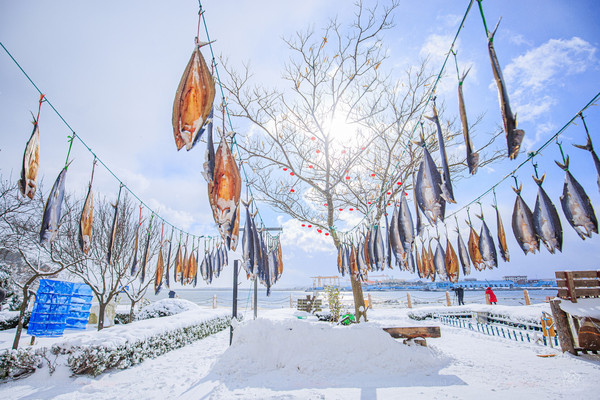
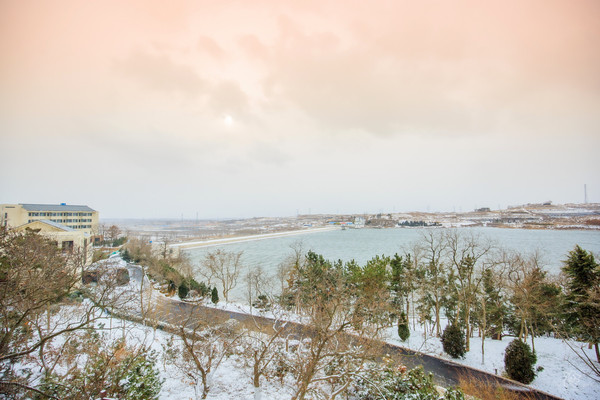
The moment I stepped off the plane, the chill in the air and the snow-covered ground were a delightful surprise. We'd barely landed and already we'd stumbled upon the snowscape I'd been hoping for. For someone who grew up in the south, even a thin layer of snow is enough to set you dancing. But little did I know—this was just the opening act. Over the next few days, the snowstorms got so intense that even the locals said they'd rarely seen anything like it. It threw some of our plans off track, and trust me, enjoying snow from a warm window is one thing; traveling through a blizzard is something else entirely.
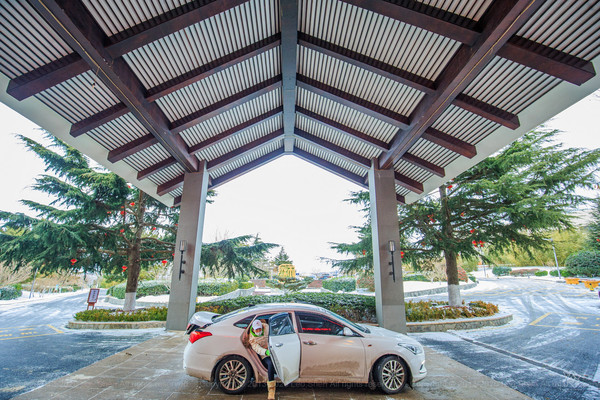
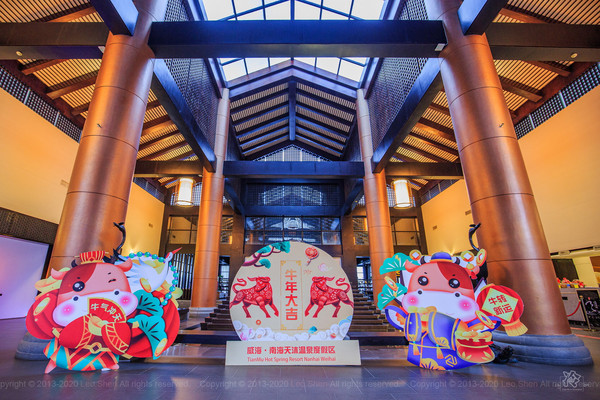
The drive from the airport to the resort was about 30 kilometers, roughly half an hour. After a quick check-in, we headed straight for the outdoor pools while we waited for the rest of the group.
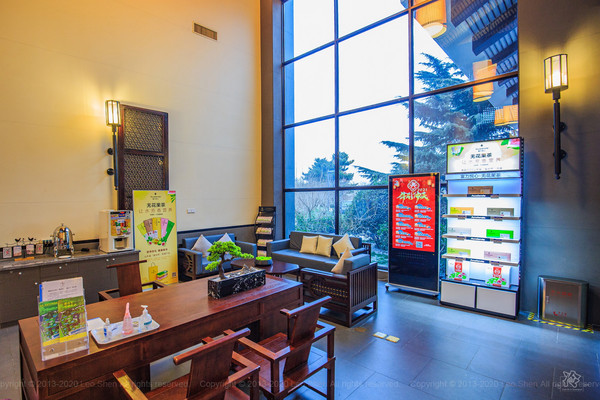
The Weihai Wendeng Tianmu Hot Spring Resort is a five-star property built by the Zhuhai Tianmu Group in Zhangjiachang Town. Thanks to its location, it regularly hosts guests not just from China but also from Japan, Korea, Russia, and beyond. Of course, with the pandemic, international visitors have thinned out, but domestic guests still come in droves to soak.
Nestled among the hills and waters, the indoor and outdoor hot spring areas are built around the idea of "bathing in a forest spring, staying in waterside rooms, eating green food, and breathing fresh air." It's a reputation that extends well beyond Weihai, across all of Shandong.
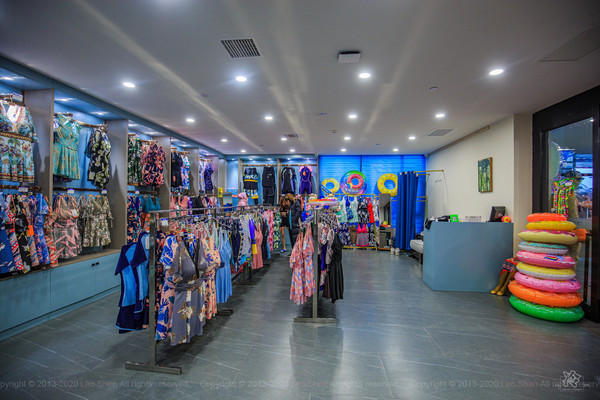
The resort has a large indoor hot spring hall and extensive outdoor pools, including specialty fish therapy, herbal baths, beauty and skincare soaks, SPA hydrotherapy, world-themed baths, the Four Beauties' pools, and the Taiji Eight Pools—66 in total. Just walking past all of them takes over an hour, and hitting every single one in a day is no small feat.
Tianmu is a national chain, so the service is systematic and polished. Even in the dead of winter, it feels genuinely warm—indoors or out, the staff greet you, help with towels, and bring you tea without being asked. When it