The Lowest Land in China: Turpan’s Sand and Fire!
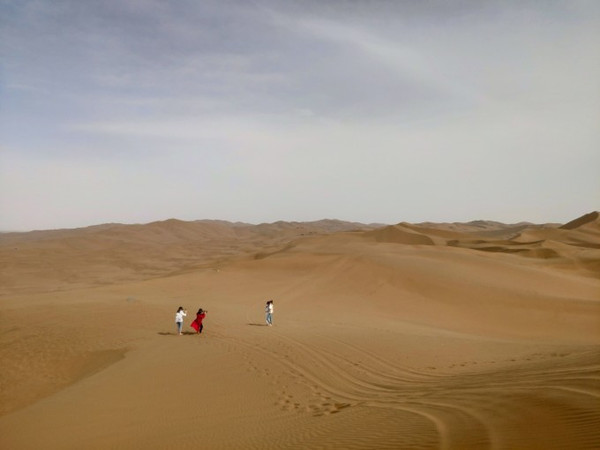
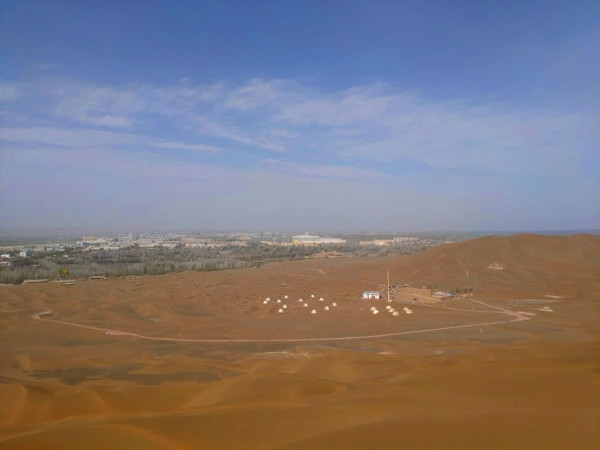
The lowest land in China is the Turpan Basin. Besides grapes, it also has the Kumtag Desert and the Flaming Mountains!
The sand and fire here make you feel the passion of this land in Xinjiang.
DAY 1: Apricot Blossoms in Toksun
Took a train from Karamay, sleeper berth straight to Urumqi. Around 6 a.m., it was a bit bleak and freezing. Security checks at the station were strict. After getting out, took a car straight to the Southern Airlines Pearl International Hotel, the meeting point for the one-day Toksun apricot blossom tour in Turpan. The bus passed through Dabancheng.
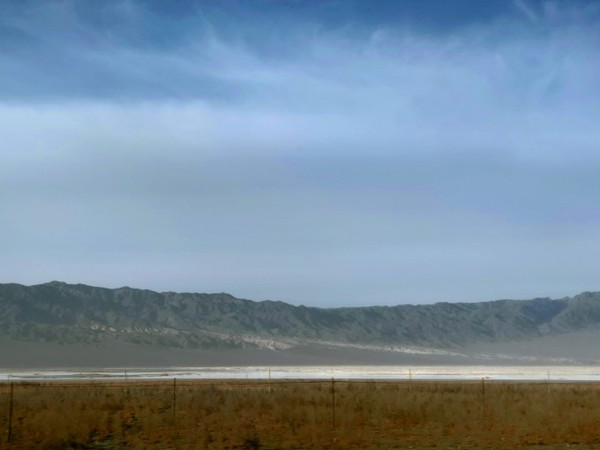
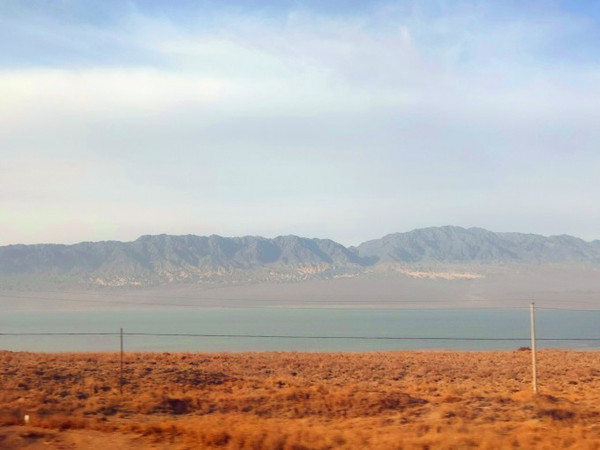
Around 9, everyone was there, and the bus set off straight to the destination. The guide, Xiao Xin, was a lively young woman who explained the key points of the itinerary. The bus passed by a salt lake on the south side of the highway—a huge expanse, with white crystallized salt piled along the shore and water still in the middle.
When passing through Dabancheng, Xiao Xin reminded us that this place became famous nationwide because of a song, "The Girls of Dabancheng"—"If you're going to marry, don't marry anyone else, you must marry me." Haha.
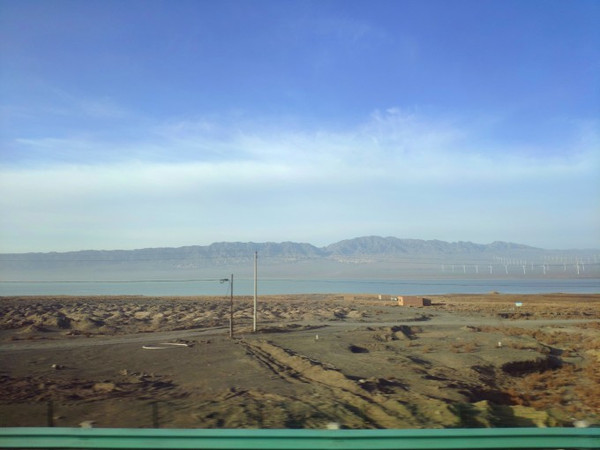
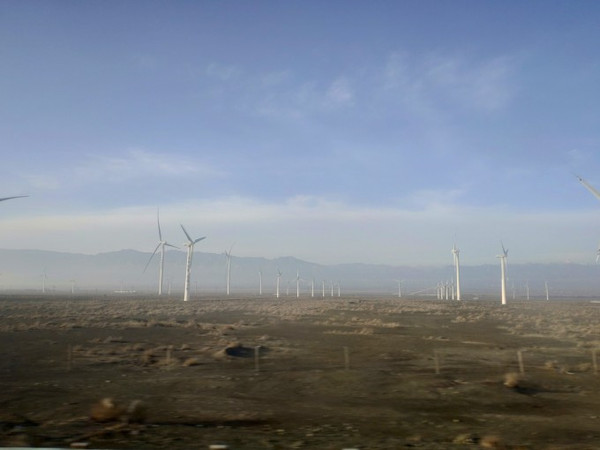
We passed through a vast desert with many wind turbines. The wind here must be strong. China's wind farms are mainly concentrated in two places: the southeast coast and the western gobi deserts.
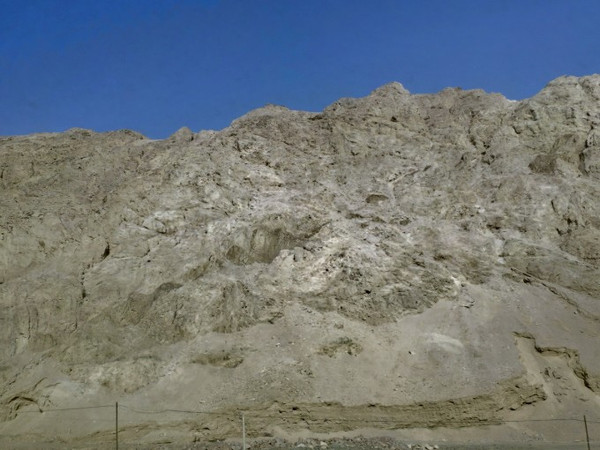
From Urumqi to Turpan, going south you have to cross the North Tianshan Mountains—well, not exactly cross, since the North Tianshan isn't continuous, and there's a big gap right here. The mountains here are so different from those in central and eastern China. The most obvious feeling is desolation—no vegetation at all on the slopes, just bare yellow-brown earth, a bit eerie.
Looking north on the road, you can see distant snow-capped mountains. The highest peak should be Bogda Peak, a sacred mountain of the west.
No Apricot Blossoms at Apricot Blossom Village
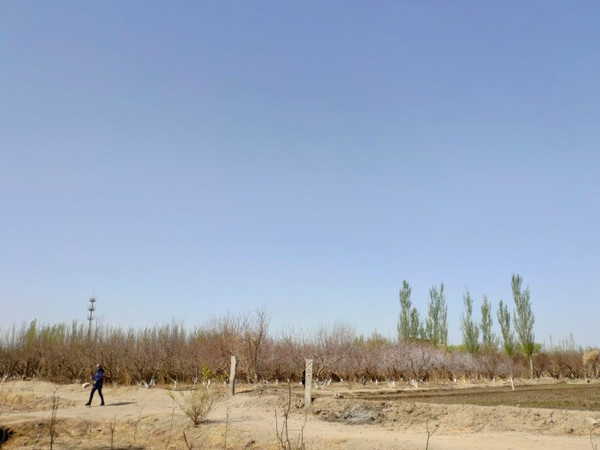
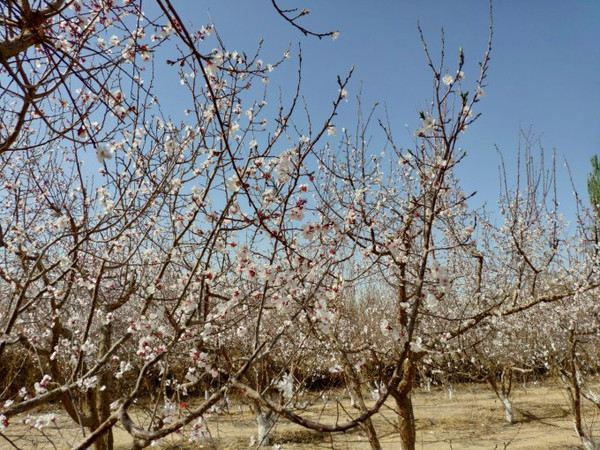
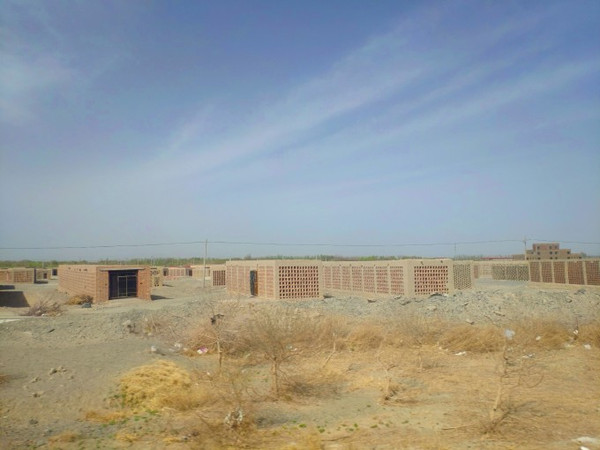
Finally arrived at the destination, Toksun Apricot Blossom Village. On the map, this is a big oasis in the desert—what a peculiar nature! From the parking lot to the apricot grove, you have to walk at least 20 minutes. Along the way, you can see some hollow brick houses—those are for drying grapes. There's also a main street where locals run restaurants and specialty shops. The guide said this is a mobile village—it's only this lively during the flowering season, and normally there's nobody around. When we got to the apricot grove, disappointment—the flowers were almost gone. Apricot trees everywhere, but hardly any with a full bloom. Apparently the wind was strong these past two days and blew them all away, though it was basically the end of the flowering season anyway.
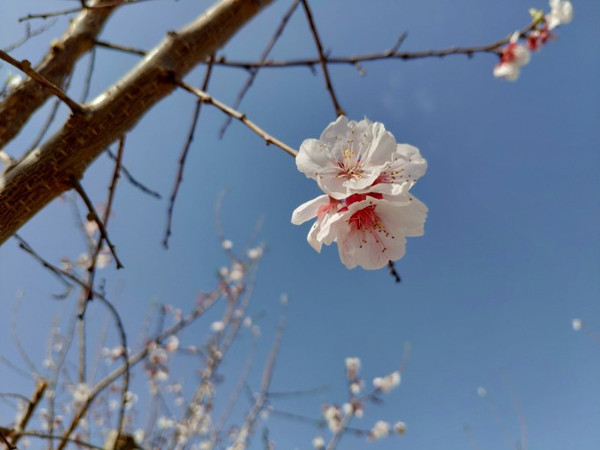
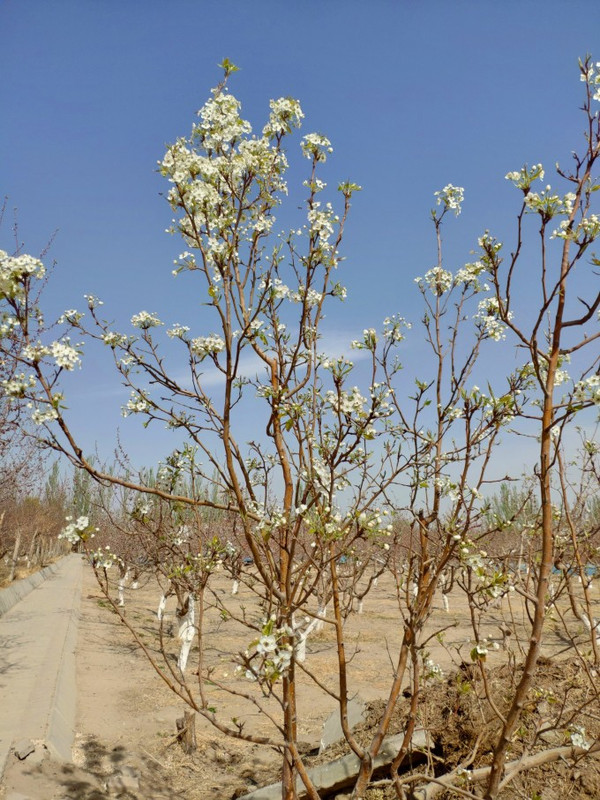
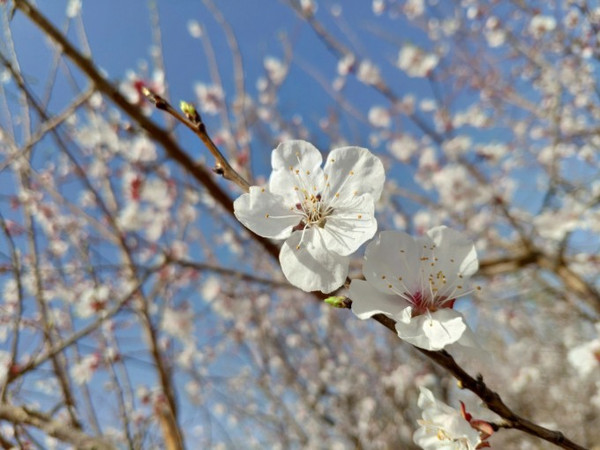
Only found a small patch with more apricot blossoms, so at least the trip wasn't wasted. Apricot blossoms look so similar to peach and plum blossoms—hard to tell apart! Nearby I also saw two pear trees, white pear blossoms in full bloom, beautiful.
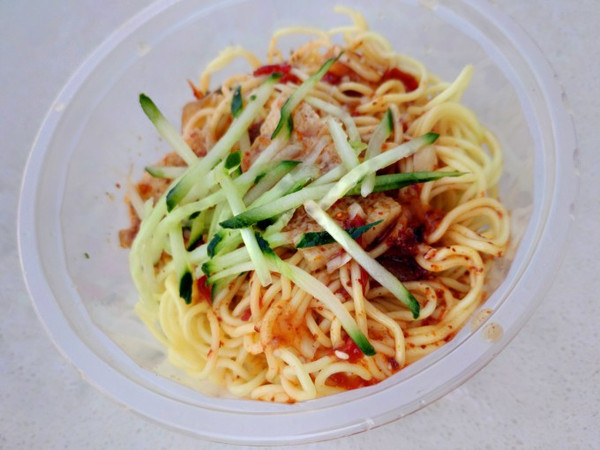
Had lunch with the guide and the driver. They're locals who know everything—listening to them chat about fun stories is always a good bet. Toksun is known for apricots, peanuts, chives, and wheat (used for banmian, especially famous). Kashgar is known for pomegranates, and the most famous and purest apricots come from Kuqa. The driver also showed me photos of places in Xinjiang far from civilization—Bazhou Hulu Island (phonetic)—with poplar trees and lakes. It was truly beautiful. For the best lamb, Qiemo County in Hotan, southern Xinjiang, is the best. Made me very curious—I'd just had Kashgar lamb and it was already delicious. There's even better lamb?!
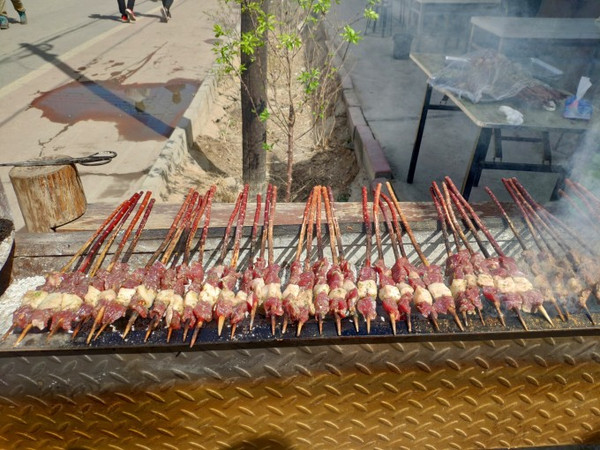
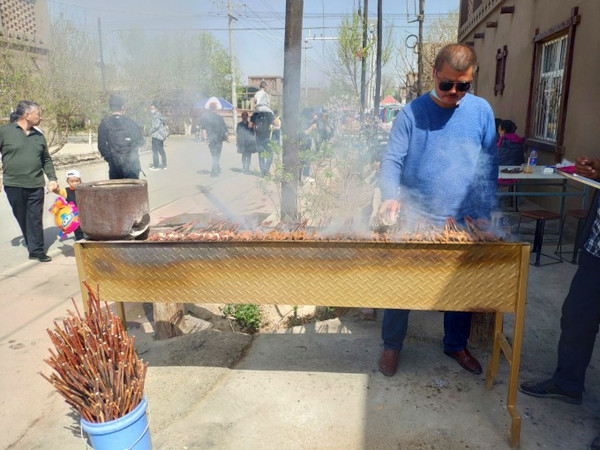
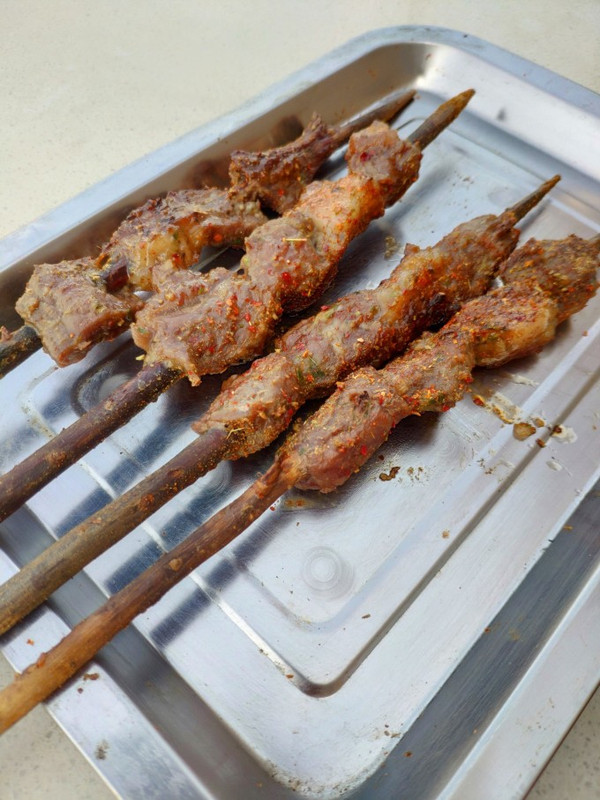
For lunch we had banmian and red willow grilled lamb. The lamb here was marinated, a bit salty, not as good as Kashgar's.
The normal schedule was to head back at 4, but by 2 some group members started coming back to wait for the bus. By around 3, basically all guests had gathered, with only two or three saying they wanted to keep browsing. Awkward—we ended up waiting until 4 to leave. Not a great experience.
While waiting, I bought raisins from a mobile vendor. The owner said mare's nipple raisins were 30 per jin, seedless raisins 35 per jin. I bought a big bag of grapes for 25 per jin, 60 total. Xinjiang raisins are truly sweet!
Xinjiang's climate has a huge temperature difference between day and night. Down jacket in the morning, short sleeves at noon, down jacket again at night. I learned this in geography class: wear cotton in the morning, gauze at noon, eat watermelon around the stove! The mountains have no vegetation to retain moisture, so the temperature difference can't be buffered—it gets very hot. Back in Urumqi, took a car to the hostel and checked in. Had a casual dinner nearby, then at 8 p.m. went with other guests who checked in that day to do nucleic acid testing.
DAY 2: Turpan's Sand and Fire
One-day tour of Turpan. Left a little after 7 a.m., still dark, basically no one on the streets, all shops closed. Only a few residents jogging in light rain—impressive! The BRT was decent and got us to the train station on time. Arrived at Turpan North a little after 10, met up with other group members. Three young moms from Sichuan, two girls from Shihezi, a girl from Taiyuan, a guy from Tianshui, Gansu, plus Guide Han from Turpan. Off we went happily.
Turpan Overview
Having a driver-guide is nice—you learn so much more. Turpan's climate is really dry, with annual rainfall of just over 10 millimeters. People invented the karez system to survive, and it's still in use today! Even now, the city's greenery has to use drip irrigation. Guide Han joked that raising trees here is as hard as raising kids—they need just as much careful attention.
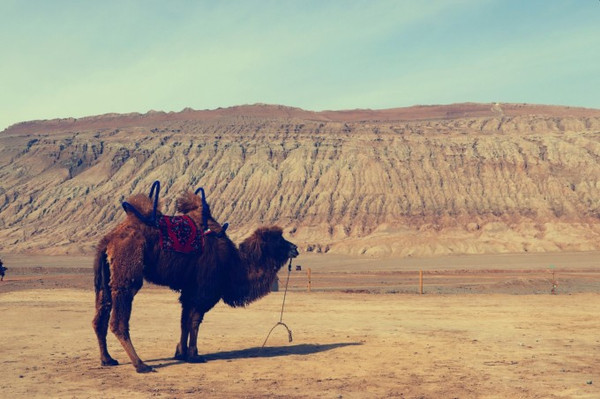
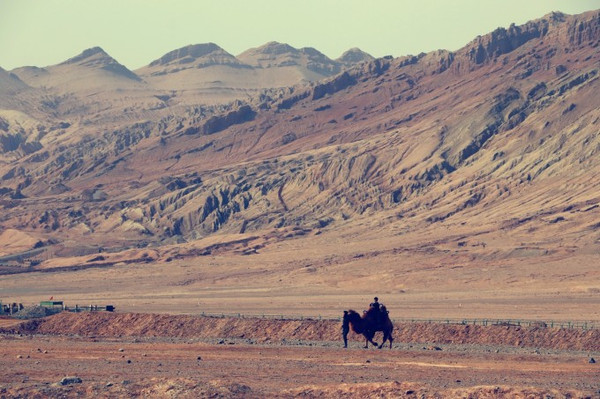
Guide Han also said Turpan is the lowest point on land (the Dead Sea is the lowest sea level). Actually, it should be China's lowest point—the world's lowest is definitely the Dead Sea coast, haha. Turpan is a basin surrounded by mountains on all sides. In summer it's over 40 degrees, max over 50—just terrifying to think about. At the Flaming Mountains scenic area, it can reach 60-70 degrees—truly deserving of the name. How can people stand it? My god, the heat alone could send you away.
70% of Turpan's population is ethnic minorities, with over 30 groups. Now the economy is mainly tourism and agriculture. Grapes ripen from July to September, which is the peak tourist season here—but also hot. Grapes are planted everywhere, you see them all over. Turpan is the paired aid city for Hunan Province, hence names like Changde Park. Shihezi is aided by Dalian. We happened to talk about the recent hot topic of Xinjiang cotton—Shihezi grows cotton, mechanized, large-scale, and is fairly wealthy.
Grape Paradise: Uyghur Home Visit
Soon we arrived at the first stop, a young Uyghur man's home. Guide Han taught us a phrase: "Yaxshi musiz"—Uyghur for hello—with one hand placed diagonally on the chest and a bow. The young man's Mandarin was good. He said Turpan only has 50 households with reception qualifications. Many either don't pass the Mandarin requirement or fail for other reasons. He's one of the leaders of this group.
At his home, the young man explained many Uyghur customs. He emphasized that in Uyghur culture, men have high status, and sons are preferred over daughters. When asked why, he said Turpan mainly lives on grape cultivation. Every winter, the vines must be rolled up and buried underground, then dug out in spring and wrapped around trellises. These heavy tasks are all done by men—extremely hard work—hence men's high status.
Uyghur men are called "Bayi老爷," meaning someone who can marry eight wives. I joked and asked how many he planned to marry. The young man laughed and said only one—the law doesn't allow more now, haha! He also said when entertaining guests, men must sit at the table first, women after; men finish eating before women eat; when leaving the table, women help men put on their shoes—all these rules reflect the preference for men. Oh man, too scary, haha. The young man kept asking the girls in our group to demonstrate these rules. I laughed and said no need, or us two guys would have a hard time for the rest of the trip!
Snacks were served: baked naan and frozen watermelon—tasted pretty good. There was also a Uyghur girl dancing performance. This home visit felt good. Though staged, at least you learn more about local customs. Traveling on your own, it's hard to have this kind of experience.
After eating and resting a bit, the young man took us to