Lhasa, Tibet: A Thousand Mountains of Twilight Snow, I Only Want to See You
The Sacred Place in My Heart
This sacred place that haunts my dreams sits at the peak of a thousand mountains and the source of ten thousand rivers. Tibet has long been woven into my bones and blood. Lhasa is the city Tibet gave me to live in and to build stories around. I spent another half month on the plateau this time, going nowhere else, staying only in Lhasa.
People often ask me why I love this land. The "Third Pole" — this snow-covered plateau — has always held an irresistible charm. It is rugged yet delicate, simple yet romantic. The unique Tibetan culture gives Tibet a character all its own, one that no other place can match.
On this snowy plateau, I always feel like I've come home. Those who have never been to Tibet imagine its beauty and purity, and dream that one day setting foot there might cleanse their soul.
If you ever get the chance to live in Lhasa, believe me — wherever you end up in the years to come, Lhasa will follow you. Even a brief three or five months becomes a memory you can't shake. Coming back this time, the Jokhang Temple hadn't opened yet — it was undergoing fire safety renovations. No prostrating pilgrims in front of the gate, the incense burner hadn't been lit. Even without some of the ritual atmosphere, people still walked the Barkhor circuit day after day, spinning their prayer wheels.
Lhasa is changing, transforming with each passing day. The whole city is gradually becoming more beautiful and modern. It absorbs new things while the old remains. The heritage Tibetan people have carried for thousands of years stands apart in today's world — and there's a reason for that.
The rainy season came early this year. The plateau sky is like a child's face — it changes in minutes. Morning brings brilliant sunshine, that blue sky and white clouds unique to Tibet. When you want to soak up the sun, you take off your hat and face the light, and life feels full of hope. But by evening or night, the sky darkens and rain falls. Tibetan rain never lasts long, though — it's over quickly, and you can often catch a rainbow.
On the streets of Lhasa, I never want to bring my camera. I just want to walk out empty-handed and comfortable, whether it's spinning prayer wheels or drinking tea. I never feel regret — this city is already carved deep into my mind. Honestly, it's something I'll never forget for as long as I live. As it happened, this trip I explored some parts of Lhasa's surroundings I'd never visited before. Of course, the two great sacred lakes — Yamdrok and Namtso — were highlights since they're so close to Lhasa.
So how should you explore Lhasa?
Day 1: Lhasa – Namtso – Nagqu
Day 2: Nagqu – Lhasa – Barkhor Street – Potala Palace Square – Phuntsok
Day 3: Lhasa – Junba Fishing Village – Yamdrok Lake – Lhasa
Day 4: Lhasa – Linzhou rapeseed flowers – Xia Monastery – Silin Monastery – Pangduo Township
Day 5: Pangduo Township – Reting Monastery – Zangxiong Village – Damxung
Day 6: Damxung – Tsurphu Monastery – Cijiaolin – Princess Wencheng – Songtsam
Day 7: Lhasa – Zhaji Monastery
After wrapping up my stargazing trip in Qinghai, I flew to Lhasa and stayed for a week. Every day was either tea with this friend or dinner with that one — the days always fly by too fast. It felt like it was time to say goodbye again, but I couldn't quite bear to leave. Brother Zhu drove over to pick me up and we headed to Namtso together. After a day in that world of white, I still missed my days in Lhasa, so I gave up flying back to Chengdu and took a train back to Lhasa instead. As luck would have it, Liu Wei was driving solo from Xiamen along the Yunnan-Tibet route and had just arrived in Lhasa. That's how the next few days of exploring Lhasa came together. And just like that, my half month in Lhasa took shape.
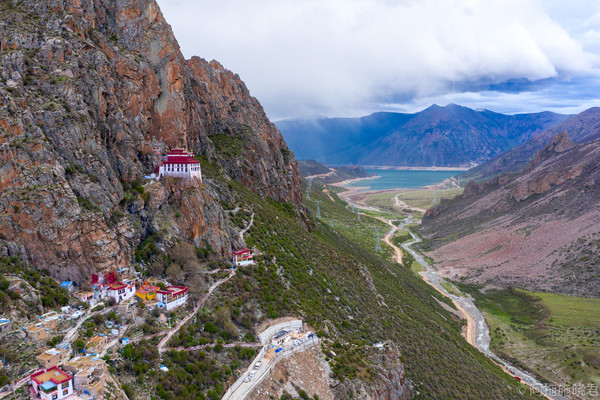
I'd been in Lhasa so many times, but apart from knowing about Sera Monastery and Drepung Monastery near the city, and slightly farther out, Drak Yerpa and Ganden Monastery, I had no idea there were so many lovely monasteries near Linzhou. They lift your spirits just by visiting.
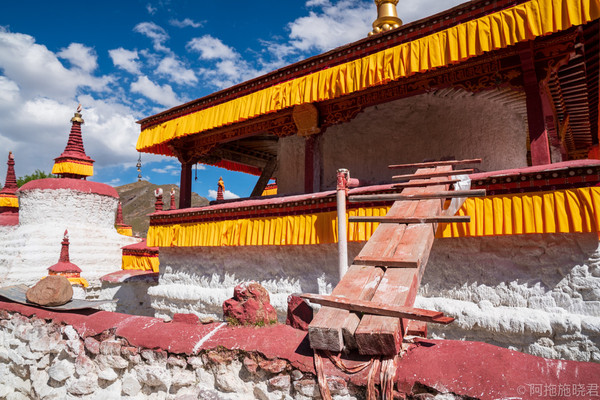
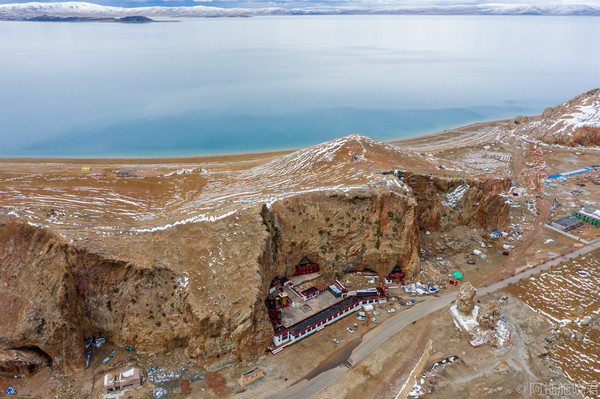
Of course, the two great sacred lakes need no introduction. But here's what I especially recommend: Xia Monastery, Silin Monastery, and Reting Monastery. This was my eleventh trip to Tibet, yet my first time on the Northern Lhasa circuit. Beyond the three great monasteries, there are many low-key but beautiful ones along this route — perfect for a proper exploration.
Day 1: The White Namtso
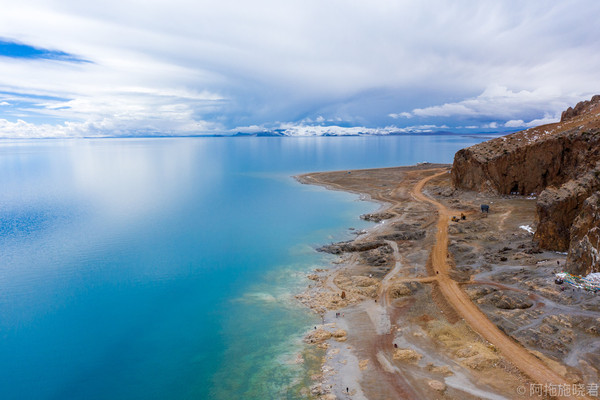
I posted photos of Namtso on WeChat Moments and saw a comment: "You're in a fairyland every day — are you a fairy?" "Yes, I am," I replied. This was my fourth trip to Namtso, and I still haven't made it to the Sacred Elephant Gate. Maybe because I know I'll get there someday, I don't feel much regret. Namtso used to be Tibet's largest lake, until Siling Lake quietly overtook it. Now Namtso is Tibet's second largest.
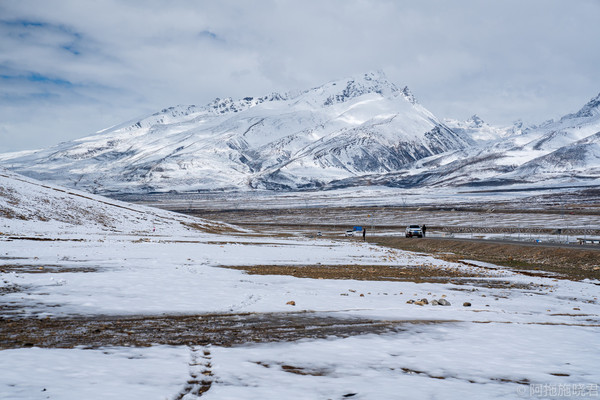
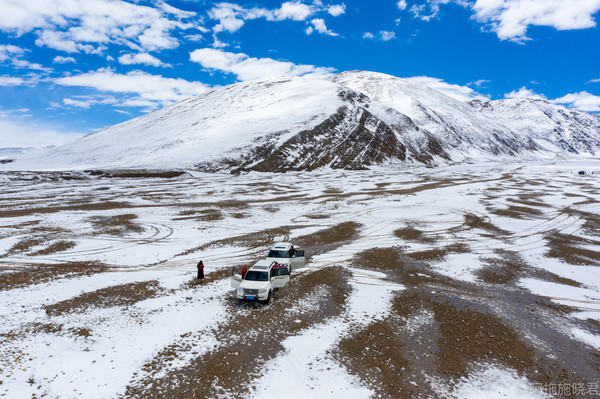
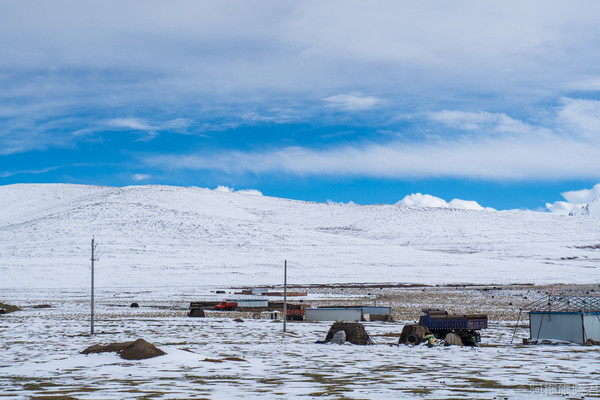
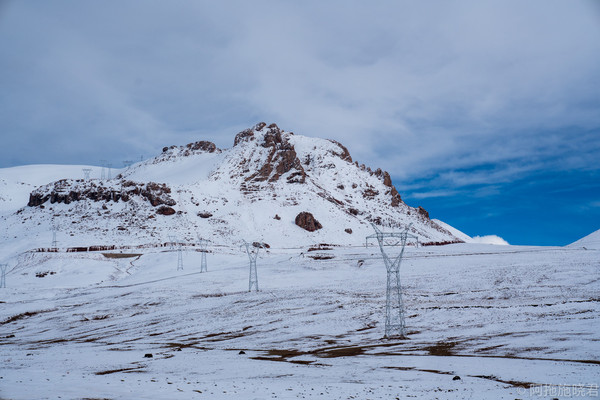
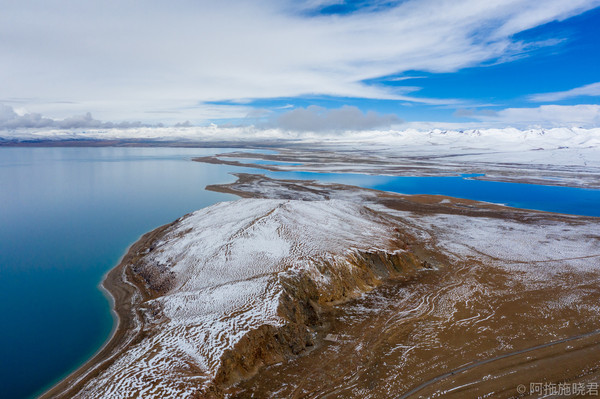
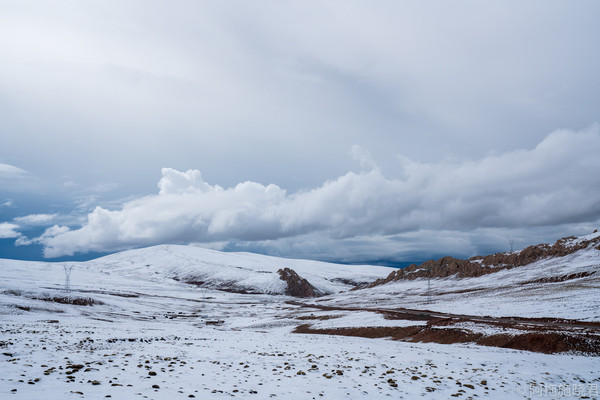
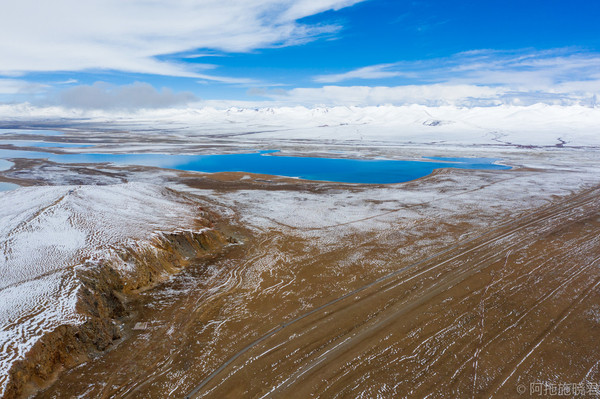
Six years ago, my first glimpse of Namtso was already breathtakingly beautiful. This time, what drew me in even more was the scenery along the way — truly otherworldly. May on the plateau, and you can still encounter vast stretches of white. Apart from the cars on the road, everywhere you look is wrapped in silver.
Every stretch of road in Tibet has its own character. Nyingchi is elegant, Ngari is luminous, Nagqu is rugged. Heading from Lhasa toward Damxung, this section is the famous Qinghai-Tibet Highway, Route 109. It's paved the whole way, in excellent condition.
The rainy season came early this year. Already in May, rain fell frequently at night in Lhasa. Namtso sits at 4,700 meters — a full thousand meters higher than Lhasa. When it rains in Lhasa, it usually snows at Namtso. As we drew closer, the rolling hills around us grew whiter and whiter.
As the sun rose higher, the temperature climbed, and mist began to rise slowly from the white world. You could watch it happen in real time — clouds and fog swirling before your eyes. The only words that came out were "wow, so beautiful" — no other adjectives existed.
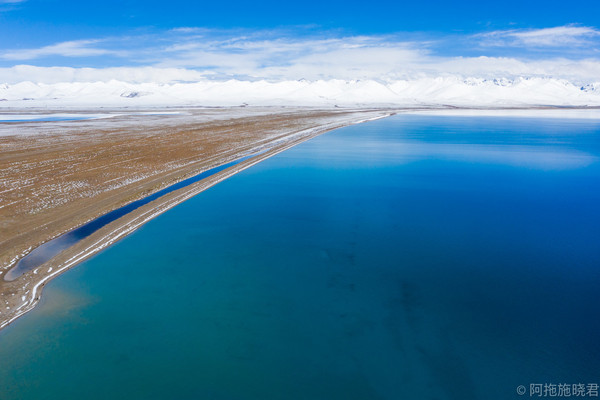
Namtso entrance is 120 yuan; going to the Sacred Elephant Gate costs another 80. We weren't planning to loop all the way around, just to walk the Tashi Peninsula. The sacred Namtso has rested on this snowy plateau for ages, bound to the Nyenchen Tanglha Mountains in life and death.
They say everyone should visit two places in their lifetime: the ocean and Tibet. I've always felt Namtso is a fusion of both — vast and boundless, with snow mountains as companions. No single scene can compare.
I've flown my drone over lakes big and small across Ngari. The regret remains that I still haven't made it to the Sacred Elephant Gate. Launching the drone at Tashi Peninsula, the visuals were just ordinary. Actually, I'd really recommend coming in April or May when Namtso's ice begins to break. If the mountain passes aren't snowed in, standing before a half-frozen Namtso will make you question everything you thought you knew about beauty.
In Tibetan Buddhism, there's a tradition of circling the mountain in the Year of the Horse and the lake in the Year of the Sheep. Every Year of the Sheep, many pilgrims travel great distances to Namtso to circumambulate the lake, because in that specific year, one circuit equals twelve ordinary ones.
A full circuit of Namtso is 280 kilometers. On foot, it would take about half a month. Some drive off-road vehicles around it — that's quite a test of driving skill. The most stunning spot at Namtso is undoubtedly the Sacred Elephant Gate.
In Tibet, no car basically means you can't go anywhere. My top recommendation for getting to Namtso: if you're a confident driver, rent a car and go yourself; if not, hire a car with a driver; if there's truly no other option, join a tour from Lhasa. Such a beautiful place, and you'd be limited to seeing it for just one hour when the round trip from Lhasa alone takes ten — that's just torture.
Accommodation at Namtso is basic. The high altitude and thin air make altitude sickness very likely, but for the stunning starry skies and the sunrise and sunset, it's absolutely worth enduring a bit of altitude sickness.
Day 2: Barkhor Street, Potala Palace, Phuntsok
Waiting for my flight to Lhasa in Xining, I really wanted to go home. I'd been traveling for over a month and missed the food in Quanzhou — vermicelli paste, wontons, the affordable fish and shrimp and crab from the market. My favorite was those tiny fish just off the boat. I missed them so much I nearly flew straight back. But then I