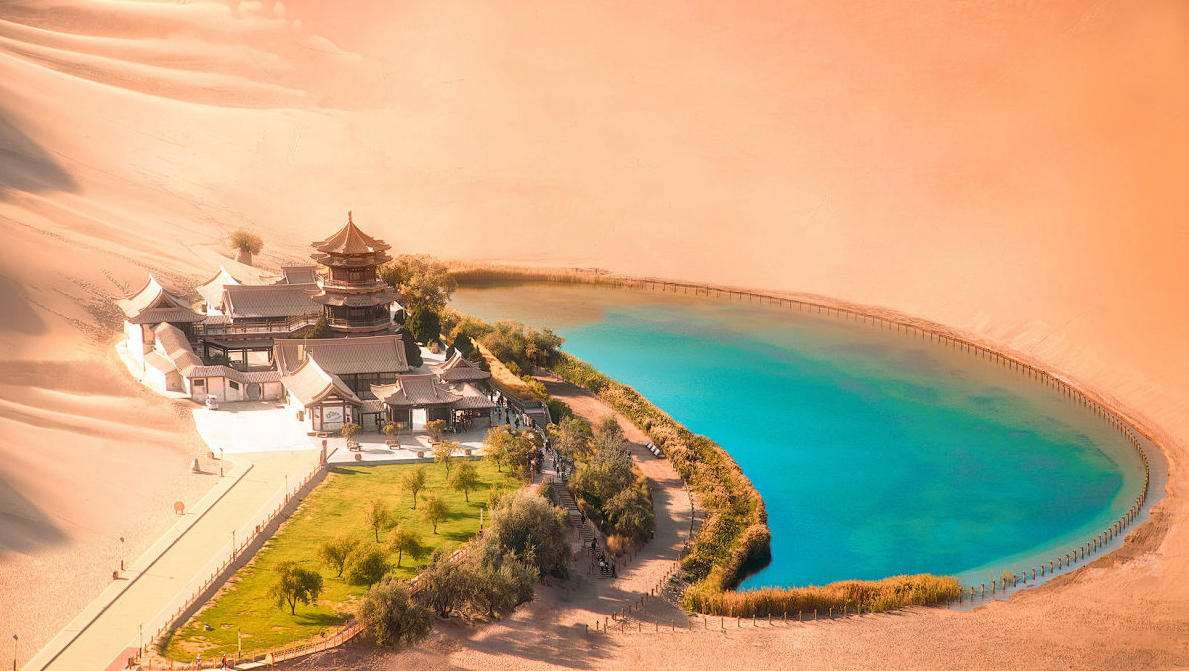
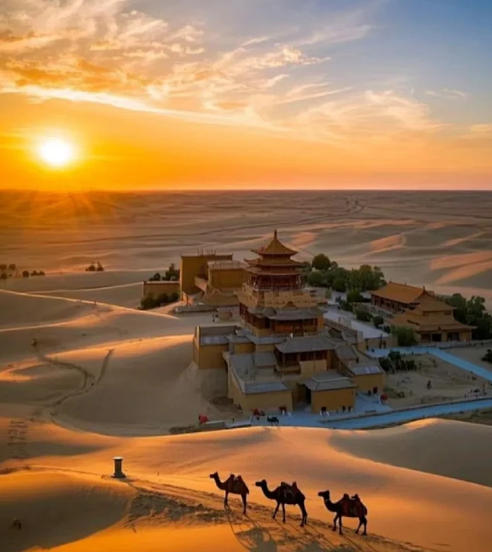
Mogao Caves (Mogaoku)
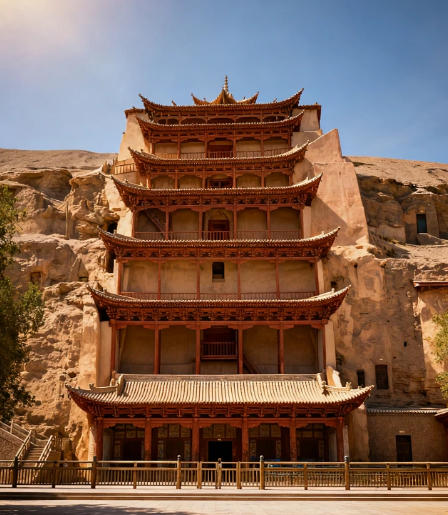
About Mogao Caves
The Mogao Caves, also known as the Thousand Buddha Grottoes, are a UNESCO World Heritage Site featuring 492 caves adorned with Buddhist art spanning 1,000 years of creation from the 4th to the 14th century. Located on the edge of the Gobi Desert near Dunhuang, the caves were a major stop on the Silk Road, where merchants, monks, and pilgrims prayed for safe passage and gave thanks.
The caves contain over 2,000 painted sculptures and 45,000 square meters of murals — the world's richest treasure of Buddhist art. The artwork spans multiple dynasties, showing the evolution of Buddhist iconography and Chinese painting styles. Due to conservation concerns, only a limited number of caves are open each day, and visitors must book in advance. The Digital Display Center shows films about the caves before the actual visit, providing context for what you'll see.
What Not to Miss
The giant Buddha statues — the largest cave houses a 35-meter seated Buddha.
The flying apsaras murals — celestial beings that are the symbol of Dunhuang.
The Library Cave — where 50,000 manuscripts were discovered in 1900.