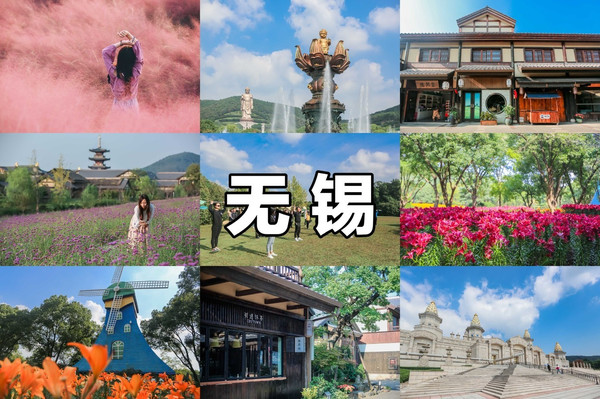
A Zen Getaway in Wuxi: A Romantic Rendezvous with Pink Muhly Grass
Stepping into Wuxi in Autumn
Wuxi—a city that wears its title of “land of fish and rice” with ease. The awe-inspiring Lingshan Palace of Brahman, the cherry blossoms of Yuantouzhu, the Water Margin City with its 108 outlaws, and the ancient water towns brimming with Jiangnan charm have all made this city a favorite among those in the Yangtze River Delta delivery zone. I’ve lost count of how many times I’ve been here. This pearl by Lake Taihu, where I’ve come back to time and again, welcomed me once more in the fall—this time with a sea of blossoms in full bloom.
Jiulongwan Flower Town: Wuxi in Full Bloom
Flowers blur the eyes as they bloom in profusion, and it’s that time of year again. Spring and autumn are the perfect seasons for getting outdoors, when the heat of summer and the bite of winter are both absent. Everyone heads out then, and flower-viewing becomes the theme of autumn outings. I came to Wuxi to see flowers in spring, and now I’m back in the most comfortable of seasons. Spring has its azaleas and cherry blossoms; autumn brings pink muhly grass and marigolds. In Wuxi, every season is a flower season.
There’s no shortage of places to see flowers here. You’ve got the well-known Yuantouzhu and Nianhua Bay, and then there’s the lesser-known Jiulongwan Flower Town—the city’s newest Instagram-famous spot. Marigolds, verbena, reed marshes… and a sprawling patch of pink muhly grass that’s pure heart-eyes material.
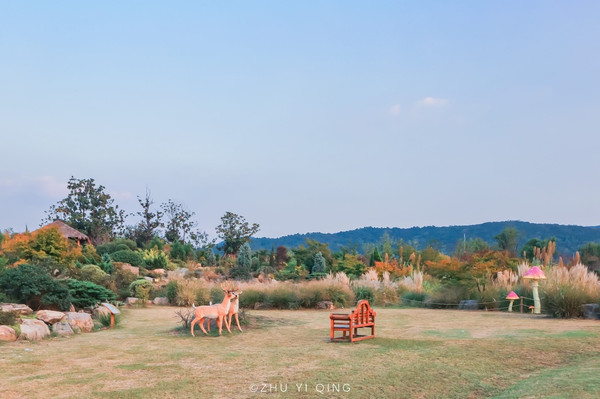
The main draw at Jiulongwan is Flower Planet, a 525-acre expanse that includes an English rock garden, a rose garden, and a water lily garden. The name’s a playful one—a planet where flowers rule, a world apart where you can lose yourself without interruption.
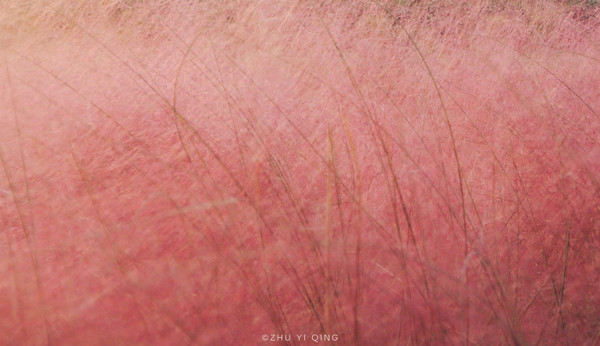
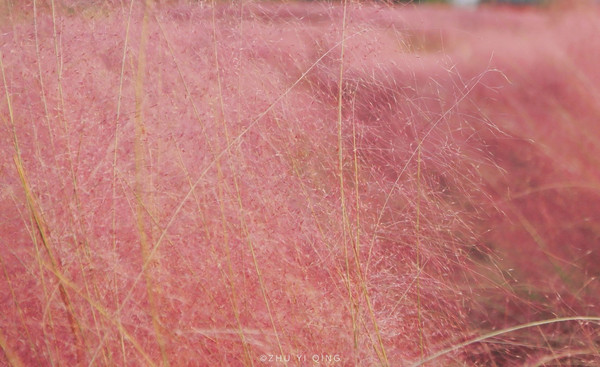
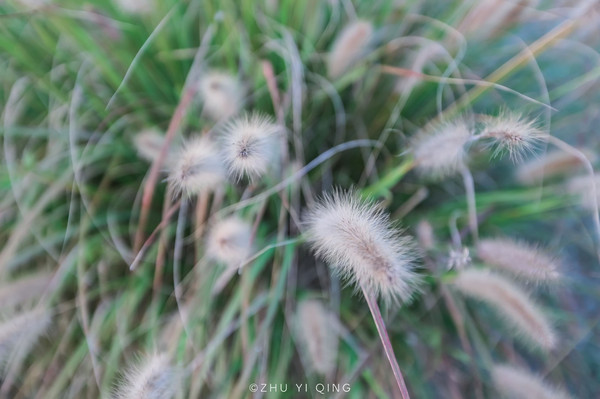
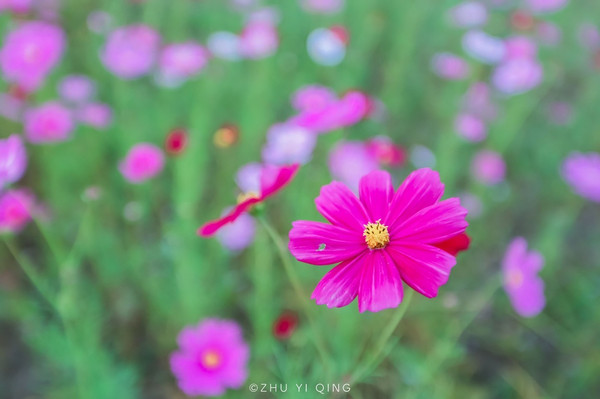
And if you ask me what the most beautiful color on Flower Planet is, I’d say pink without hesitation. I’d assumed I’d missed the peak season for pink muhly grass, but stumbling upon this dreamy patch at Flower Town was a happy accident. These soft, feathery tufts of pink scatter like a fairy’s touch across the grounds, and you can’t help but feel a little magical yourself.
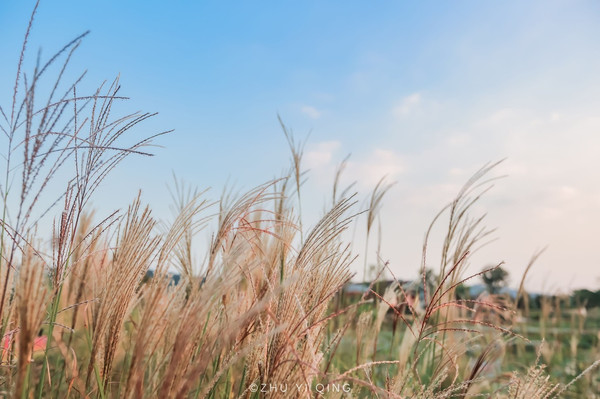
Pink muhly grass is native to the North American prairies, a perennial grass that sends up delicate, hair-like purple-pink plumes when it blooms. Planted in large swaths, it looks like clouds of cotton candy from a distance—absolutely made for photos. The muhly grass here had just started flowering a couple of days before my visit, so it wasn’t at full peak yet, but that tender blush pink had already won over plenty of hearts. The patch isn’t huge, but it’s endlessly photogenic.
Surrounded by the pink grass, with the warm light of dusk settling in, it felt like something out of a poem or a painting. Step into the sea of grass and you’re wrapped in romance. Each tiny bloom is delicate on its own, but together they form the perfect backdrop for a photo—and everyone, male or female, wants a shot against this rare pink canvas.
This pink meadow is pure dream. The muhly grass stretches on, airy and light, swaying with the breeze. The soft pink waves ripple outward, and everyone sees something different in them. My friend said it looked like a pink velvet carpet. Under the setting sun, every snap of the shutter was a keeper. In early autumn, I doubt there’s another meadow this beautiful anywhere in Wuxi.
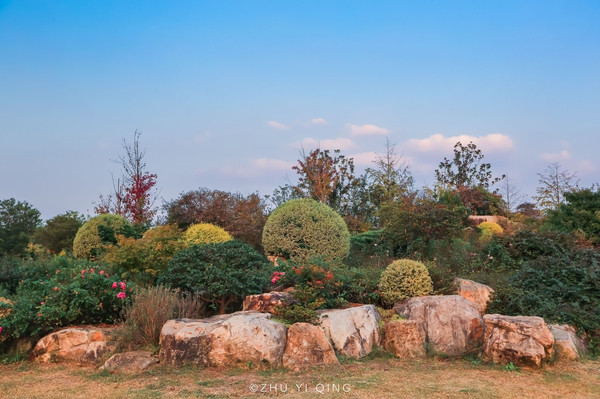
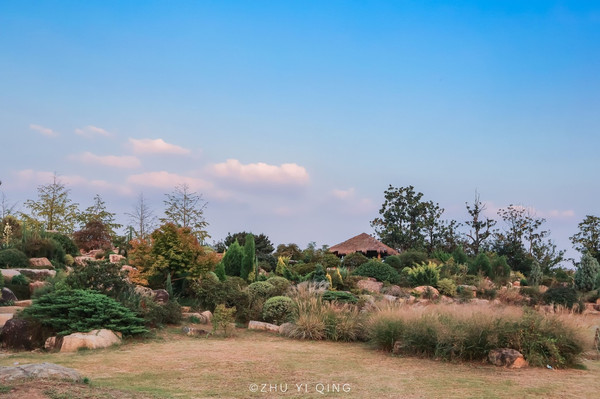
Beyond the pink muhly grass, the rock garden is worth a look too. The marriage of stone and flower gives the blooms a different kind of beauty—alpine plants and rocky landscapes complement each other, the hard and soft in balance. Come in spring, and the rocks are layered with cascading flowers of every color.
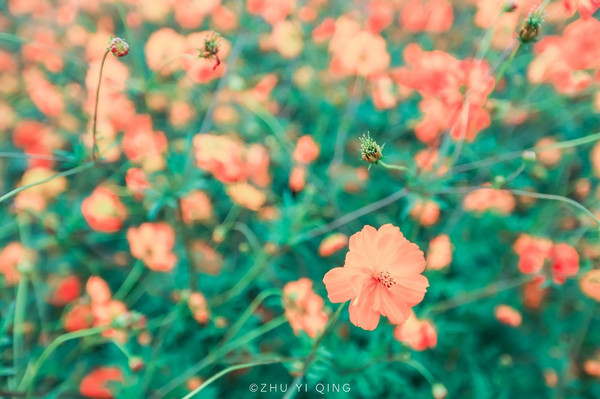
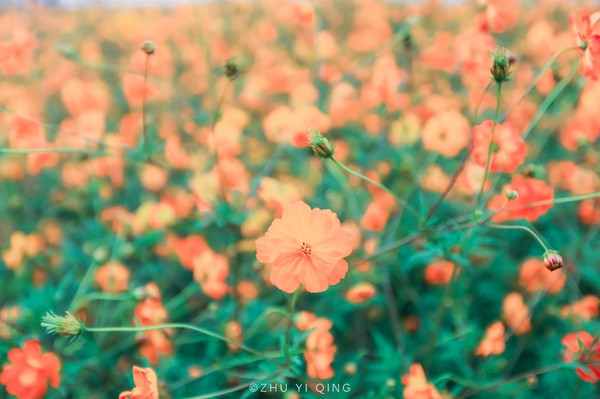
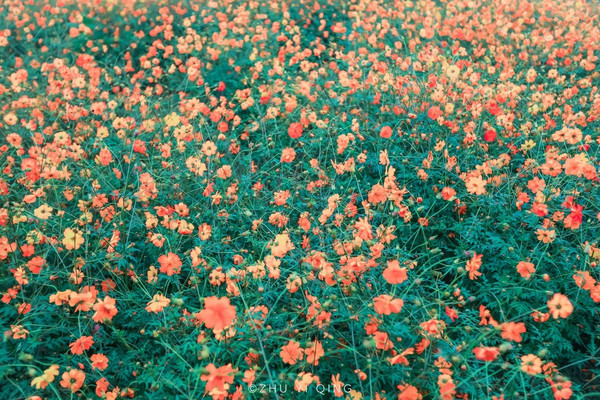
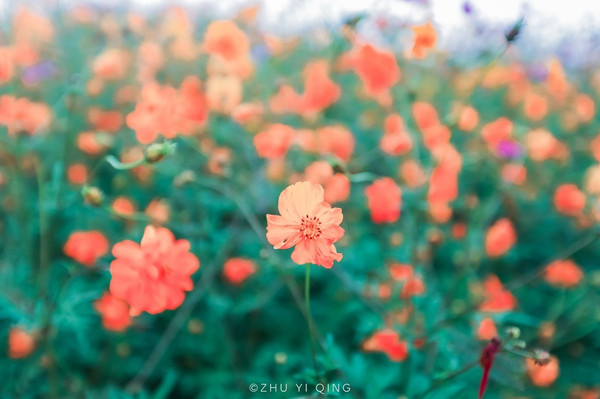
In autumn, the sulfur cosmos take center stage on Flower Planet. A golden sea of them blooms in competition with each other, the orange petals glowing elegantly in the sunset. Also known as yellow cosmos, they symbolize wild beauty, and a field of them together is so lovely you won’t want to leave.
Flower Planet rotates its themed flower displays throughout the year, so no matter when you visit, there’s always something in bloom. Hydrangeas, roses, wisteria, peach blossoms, apricot blossoms, water lilies, lotuses, dahlias, spider lilies, camellias, tea plums, maples—over a thousand species and hundreds of thousands of plants bloom across the seasons. It’s a true ocean of flowers, a planet of blooms. And it’s not just about looking—there’s family fun, nature education, and outdoor activities woven in, so you can pair flower-watching with a proper day out.
A garden that surpasses nature, a paradise folded into the landscape. Thousands of rare flowers compete for attention here, painting a vivid autumn picture by the lake. No wonder it’s another unmissable spot for fall flower-viewing in Wuxi.
Lingshan Grand Buddha: The Holy Land of Lingshan
Everyone grew up with Journey to the West, and we all wondered at some point: where exactly was the “Western Heaven” that Tang Seng was headed to? It refers to Vulture Peak in India, where Shakyamuni attained enlightenment—a sacred Buddhist site. But Master Xuanzang also named a “Little Vulture Peak” in China: what we now know as Mashan in the Wuxi Taihu National Tourism Resort. Legend has it that after returning from his pilgrimage, Xuanzang traveled to this spot and found the scenery strikingly similar to the sacred Vulture Peak, so he named it Little Vulture Peak. And so Lingshan was born.
Today, the Lingshan Grand Buddha has become a symbol of Wuxi. It’s massive, imposing, and blends natural landscapes with Buddhist culture. The thousand-year-old temple on Little Vulture Peak shines bright. The scenic area includes the Grand Buddha—the largest in China—along with Xiangfu Temple, Little Vulture Peak, and the Lingshan Cultural Park. When ancient Buddhist culture meets mountains and water, Lingshan becomes a blessed land in the heart of Jiangnan, a slice of paradise on earth.
To enter, you first cross the Wuming Bridge, its white marble echoing the Golden Water Bridge in front of Beijing’s Forbidden City. Past the bridge, you reach the main gate of Lingshan. The words “Rulai Ruyuan” (As the Buddha Wills) on the archway immediately command respect. This grand memorial arch is actually the original entrance to the scenic area, blending the simplicity of Huizhou architecture, the grandeur of northern imperial style, and the vibrant character of Tibetan design—a fitting welcome that speaks to the site’s cultural openness. The plaque reading “Lingshan Shengjing” was inscribed by Zhao Puchu, while the reverse side bears Sanskrit calligraphy by Ji Xianlin.
Just past the gate, you’ll find the Footprint Altar, which many people walk right past without noticing. This is where the Buddha left his twin footprints for his disciples before his passing—a sacred relic venerated by Buddhists for centuries. As the Buddha approached nirvana, he left his footprints and told his followers, “Seeing these footprints is like seeing me.” They’ve been objects of devotion ever since. The prints are enormous, the toes perfectly aligned, giving you a sense of just how towering the Buddha must have been.
Beyond the Footprint Altar is the Five Wisdoms Gate, a grand stone archway rich in Buddhist meaning. The north and south faces are carved with the Six Perfections—generosity, ethics, patience, diligence, meditation, and wisdom—the six practices a Buddhist must cultivate to reach great insight. Whether you can achieve nirvana, it’s said, depends on mastering these.
The road to the Nine Dragons Bathing the Infant is the main artery of Lingshan. Along it, seven lotus reliefs are set into the ground, symbolizing lotus blossoms appearing under each step the Buddha took after his birth.
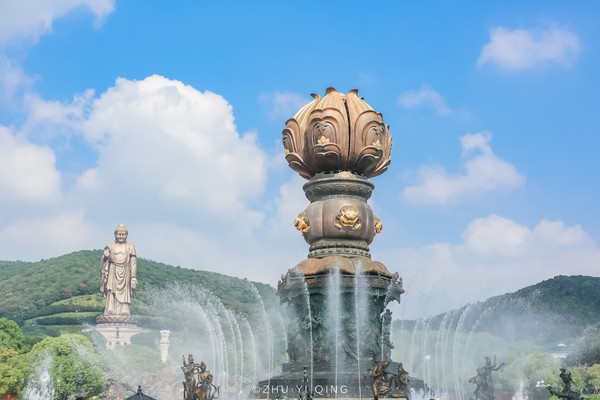
At the end is the Nine Dragons Bathing plaza. Before the performance begins, it’s a bronze lotus platform with petals still closed, backed by the towering bronze statue of the Grand Buddha against a clear blue sky—peaceful and serene. This lotus platform is the largest dynamic bronze sculpture group with music in China, telling the story of Shakyamuni’s birth. The platform is supported by a lion drum and the Four Heavenly Kings, with nine dragons and eight celestial maidens surrounding the great pool.
The show times are fixed—only a few each day—so visitors make a point to arrive early. It’s one of Lingshan’s signature sights. As the music begins, the six giant lotus petals slowly unfurl, revealing a golden infant Buddha that rises and begins to rotate.
The nine dragons then shoot arcs of water over 30 meters into the air, converging on the infant Buddha in a grand bathing ritual. Drums and music swell, fountains dance in ever-changing patterns, water jets rising and falling with the melody. The clear water leaves the Buddha gleaming, and the water used for