Strolling along the Yangpu Riverside Belt: A Glimpse of a Century of Industrial Vicissitudes
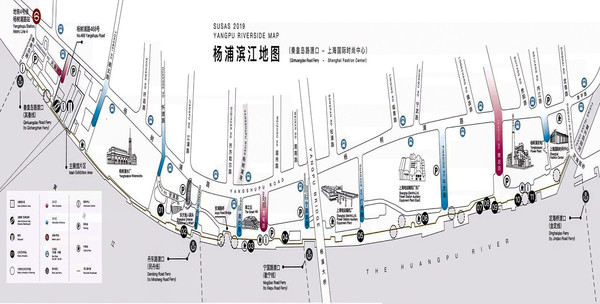
Shanghai is the birthplace of modern Chinese industry, and Yangshupu can be regarded as the cradle of modern Chinese industry. Located in the lower reaches of the Huangpu River, large tracts of riverside mudflats were cheap, and with convenient access to the heart of the concession areas, foreign merchants flocked to set up factories along Yangshupu Road from 1902 to 1937. Among them were 17 textile mills and 4 metallurgical plants run by Japanese merchants, including Yufeng, Dakang, and Gongda; 3 shipyards such as the British-owned Muller's; 6 textile mills including Jardine's; 14 light industrial factories such as China Soap Company; and 2 plants including the Shanghai Gas Works. American and German merchants also opened 10 factories here. The total length of the Yangpu waterfront is approximately 15.5 kilometers. In October 2017, the approximately 2.8-kilometer stretch of waterfront from the west side of Yangpu Bridge to Qinhuangdao Road Pier was opened up. On September 28, 2019, the 2.7-kilometer public space east of the bridge on the southern section of the Yangpu Riverside was also opened to the public, thereby connecting the entire 5.5 kilometers of the southern Yangpu waterfront. Walking paths, jogging trails, and cycling paths—"three paths"—run side by side, while the industrial heritage exhibition belt, the native landscape experience belt, and the vibrant three-path interweaving belt—"three belts"—merge together, presenting a world-class waterfront space.
Today, the Yangpu waterfront is gradually transforming from a production-oriented shoreline dominated by factories and warehouses into a living, ecological, and scenic shoreline dominated by parks and green spaces. The former industrial rust belt has become a beautiful ribbon of life.
We entered from Pingding Road and, starting from the site of the Yangshupu Power Plant, toured the Yangpu waterfront from east to west. Of the 5.5-kilometer riverside area, we covered more than 4 kilometers. Along the way, there were many highlights and pleasant surprises.
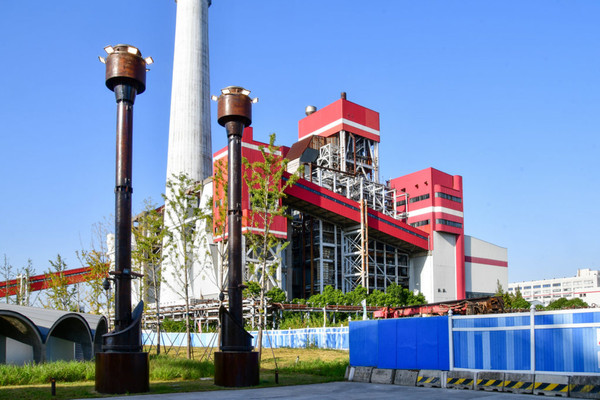
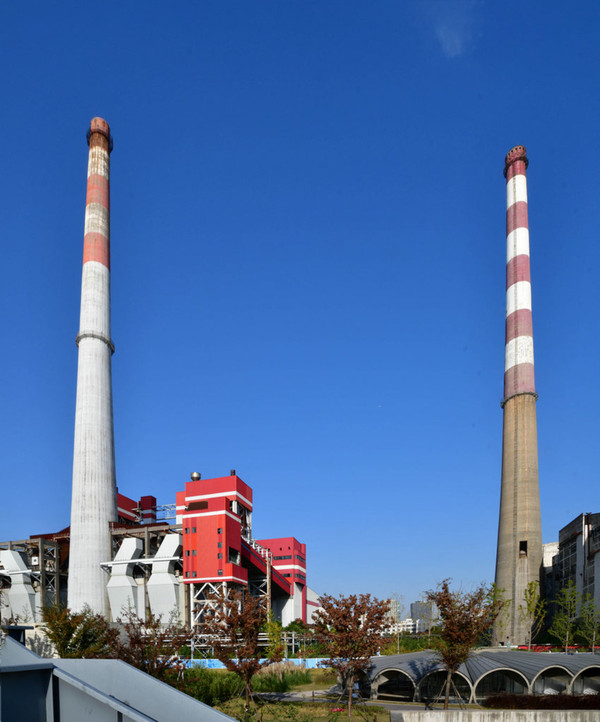
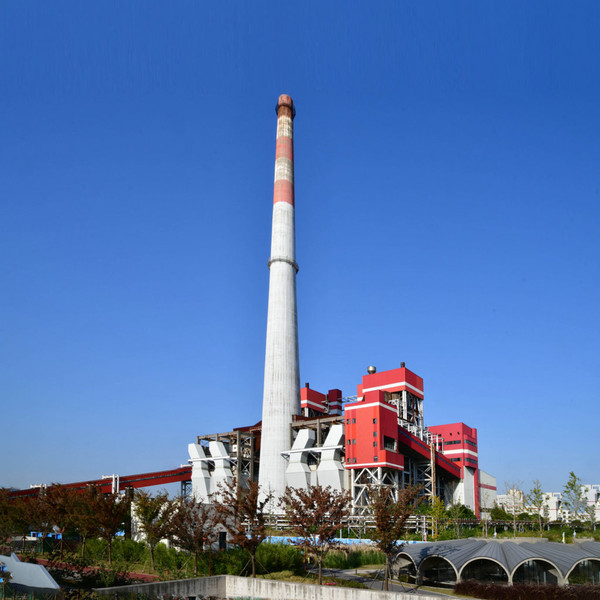
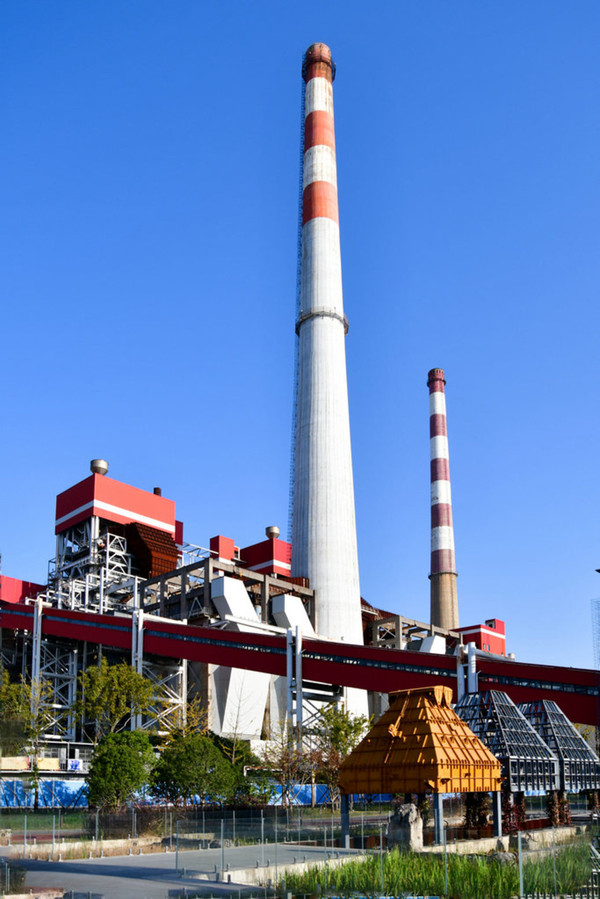
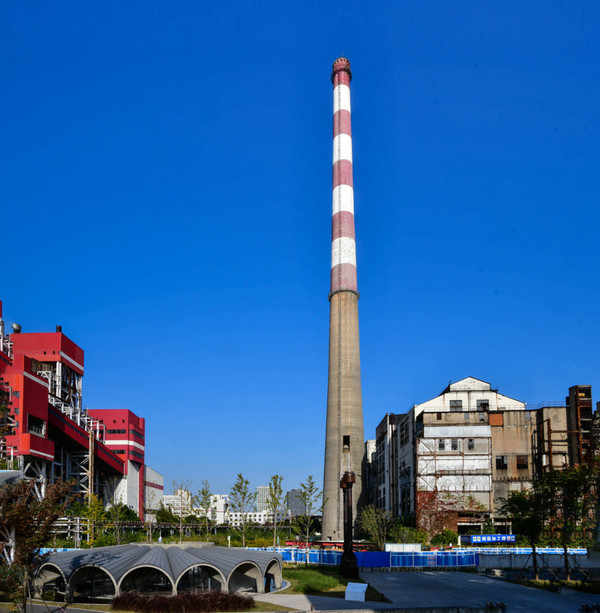
The two 100-meter chimneys (100.65 meters and 89.5 meters) have now become landmarks of the Yangpu waterfront. The towering chimneys of the power plant were once regarded as a symbol of entering Shanghai, remaining in the memories of several generations of Shanghai residents and bearing witness to the formation of Shanghai's inclusive urban spirit. Today, the two chimneys and two main factory buildings of the original power plant have been preserved.
The Yangshupu Power Plant was invested in and built by British merchants in 1913. Its initial installed capacity was 10,400 kilowatts; by 1924, it had reached 121,000 kilowatts, making it the largest power plant in the Far East at the time. When Shanghai was liberated, the Yangshupu Power Plant generated 10.7 percent of the nation's electricity and supplied nearly 80 percent of Shanghai's power, earning it the reputation of "the cradle of China's electric power industry." In 1985, the plant's total installed capacity reached 264,150 kilowatts. In order to make Shanghai's skies bluer and its waters cleaner, and in accordance with the national policy of "shutting down small units for large ones, and conserving energy and reducing emissions," the Yangshupu Power Plant was closed at the end of December 2010.
Now, a power plant heritage park has been established here, centered on the coal conveyor trestle along the river.
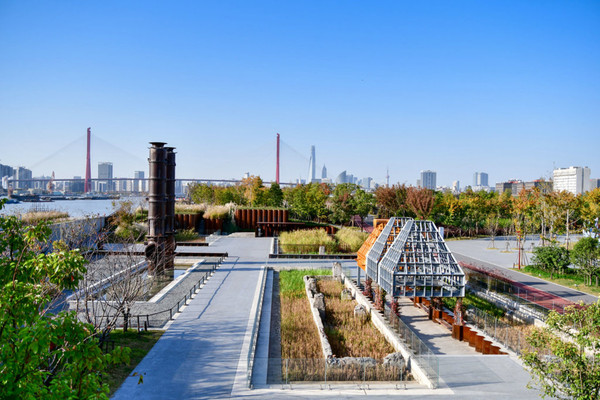
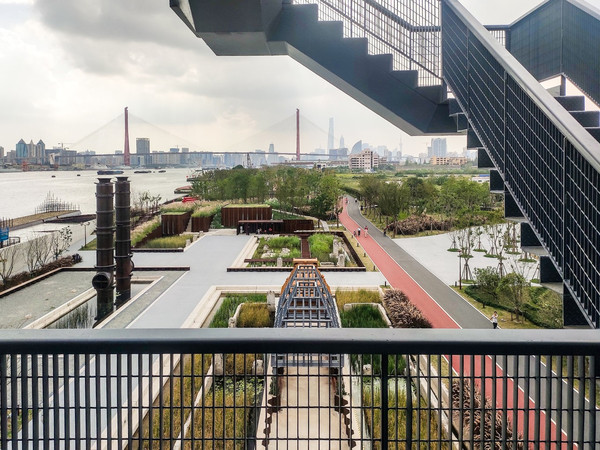
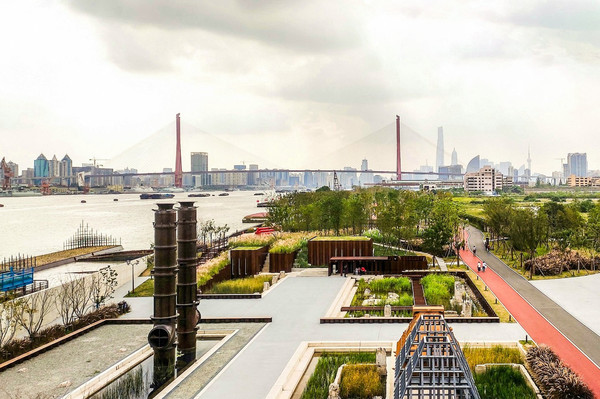
In order to reveal the position of the two transfer buildings near the riverbank on the coal conveyor trestle within the production process, foundation pits were further excavated beneath the demolished buildings, forming three ponds for aquatic plants and constituting the basic landscape framework of the ruins plaza, which together with the surroundings has become a new leisure area for citizens.
The heritage park preserves in its entirety a coal conveyor trestle and its buildings.
The towering chimneys of the power plant were once regarded as a symbol of entering Shanghai, remaining in the memories of several generations of Shanghai residents and bearing witness to the formation of Shanghai's inclusive urban spirit.
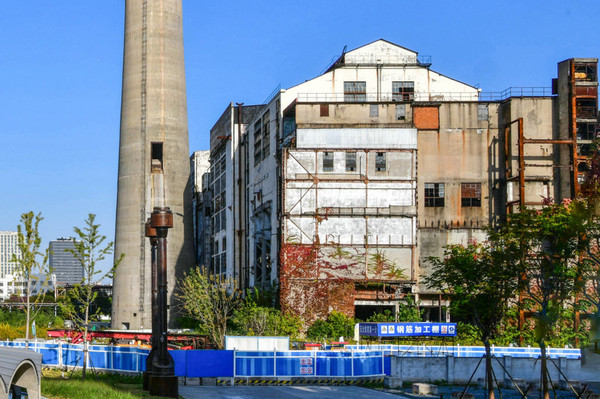
The exterior walls of the factory buildings expose their steel structures, with mottled surfaces covered in rust, revealing the true character of "a century of rust belt and industrial heritage."
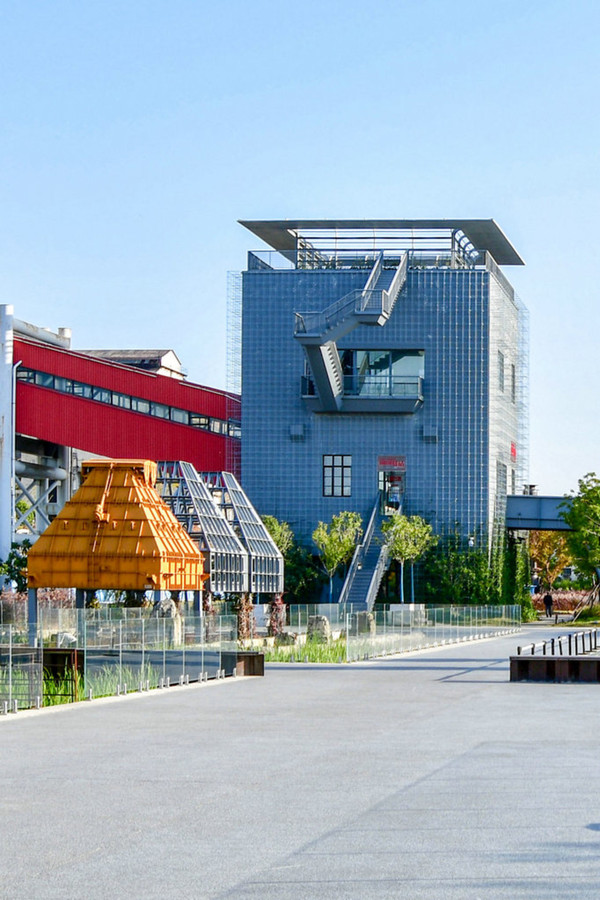
The former No. 3 transfer tower of the power plant has now been converted into a rest stop for visitors.
On the third floor of the rest stop, a suspended steel staircase has been installed, which is truly impressive.
The coal conveyor trestle leading to the Huangpu River has now been transformed into a pedestrian walkway.
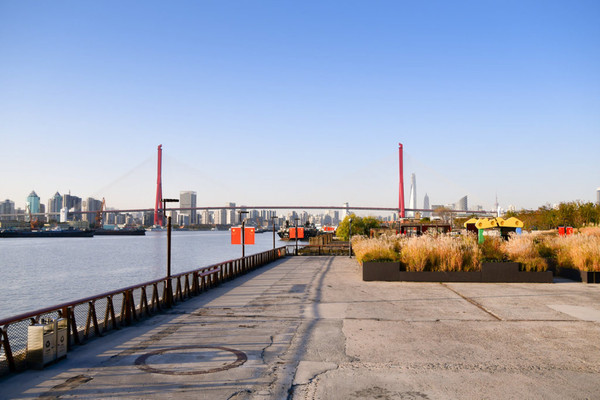
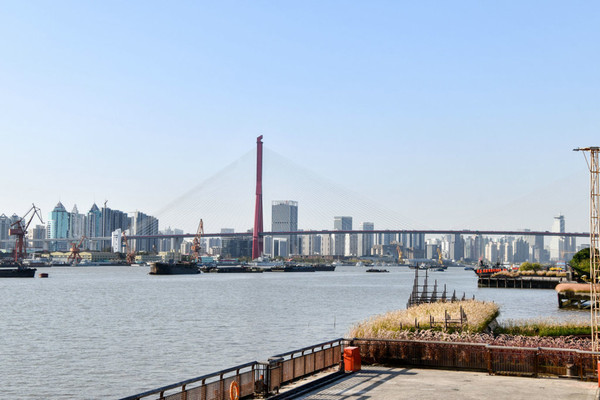
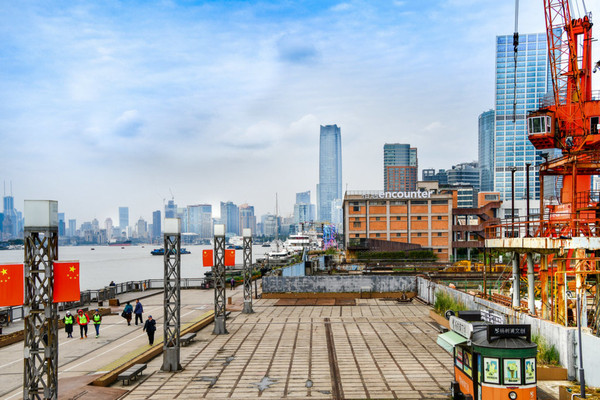
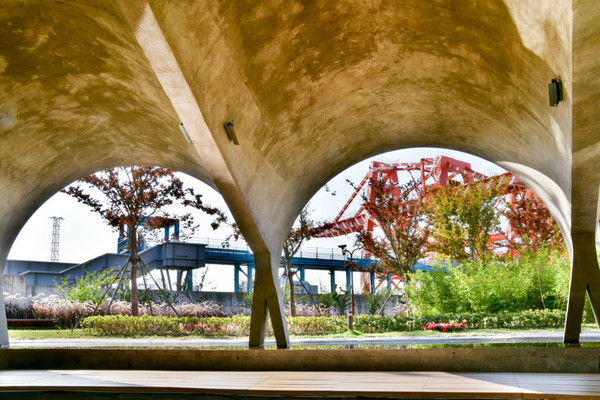
Looking west from the power plant rest stop, the Yangpu Bridge can be seen in the distance, while the power plant heritage park lies close by.
To the east of the power plant rest stop is the power plant heritage park.
Industrial-era architecture blends with contemporary buildings.
The roof of the rest area in the power plant heritage park is laid out radially with eighteen petal-like cylindrical structures; viewed from above, it resembles a blooming cornflower.
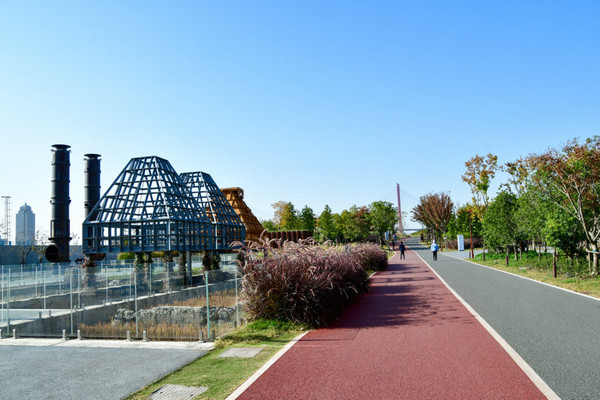
Former pipelines stand upright like rocket launchers.
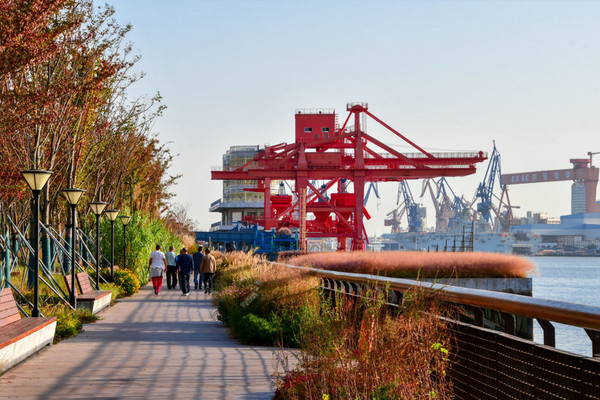
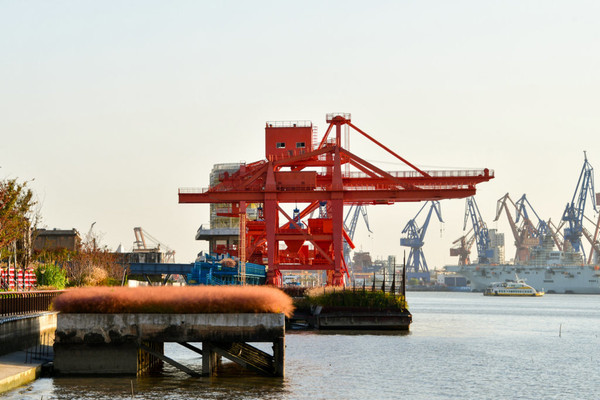
By the river, the two towering gantry cranes of the power plant still stand tall.
With the creative input of the renowned Swiss artist Felice Varini, the heavy cranes produce an astonishing sense of motion. The collision of red and blue makes the cranes by the Yangpu waterfront especially striking: the orange-red cranes are painted with white stripes, forming a sharp contrast with the blue steel stairways and enriching the riverside colors. Three of them are the work of French artist Felice Varini, titled "Diagonale du Pont," running through three cranes. Among seemingly "fragmented" shapes and lines, only when one reaches the one and only viewpoint do these straight lines align, offering a sudden revelation.
Varini's work "Diagonale du Pont" also stands on the riverbank, "passing through" a group of three orange-yellow cranes, but many people initially notice only the white lines on the cranes, without even realizing it is a public artwork. Only when one finds a specific position (which subtly varies with the viewer's height) does one suddenly discover that the three cranes, originally in three-dimensional space, are transformed into a two-dimensional plane through the artist's "diagonal."
The Gray Silo Art Space, imbued with an atmosphere of exploration.
Gray Silo Art Space
The Gray Silo Art Space was originally three dry ash silos by the river at the power plant. By adding two viewing platforms, the three originally separate silos have been connected into a unified whole. Through the use of hazy interface treatments, the original 15-meter-high enclosed silos have been renovated. The usage pattern of the entire space is imagined as a completely public meandering route, winding from the concrete frame at the bottom all the way to the top of the silos.
"Huangpu Cargo Hold" was created by British artist Richard Wilson. The artist removed 42 components from a derelict shipwreck and installed them at the ends of 21 stacked steel pipes. Initially, the artist planned to create a work based on the ship's waterline, but after searching in Chongming Island, Hengsha Island, and elsewhere without finding a vessel that met his requirements, he finally settled on a long-abandoned ship docked at Shanghai Shipyard.
This abandoned vessel was designed and built by workers at Shanghai Shipyard in 1975. In 2005, when Shanghai Shipyard moved to Chongming District, the ship was taken out of service. Wilson was fascinated by the rust and the age-old ship components. Forty-two round or oval parts were cut from the ship, and the former industrial remnants gained new vitality, continuing to forge connections at Shanghai Shipyard, to which it belonged in the past, present, and future. Wilson uses a ship to present a ship and history to tell history. In his view, it is also one of the artist's missions: "to show the world that ordinary people cannot see, not to force the public to accept anything, but simply to tell them that such things also exist." He once described this work in an interview in this way.
According to the Chinese staff at Xinzhifeng Art Consulting, who liaised with Wilson, the artist's choice to use a derelict vessel from the Huangpu River, together with pipes—materials originally serving as a means of transport—to complete the work seems to echo subtly with the power plant behind the work. His customary approach of altering the original content of objects or the relationships between objects strips away people's perception of the commonplace reality through a grand narrative. He uses a boat to present a boat and history to understand history.
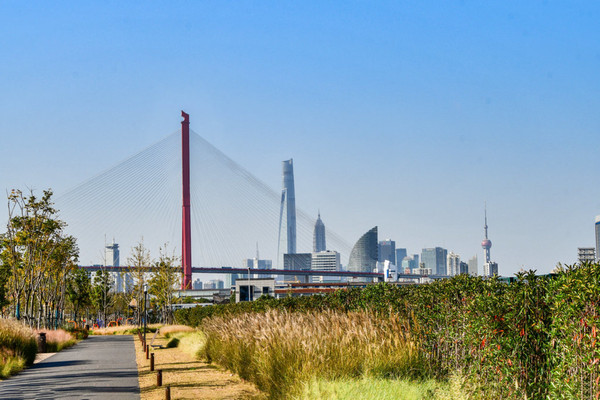
The greenery here is especially beautiful.
The color-changing leaves and fruits of the Chinese tallow tree.
Pine needles falling onto blooming reed flowers—white, red, and green—how beautiful!
Setaria viridis (green foxtail).
Reed flowers in backlight.
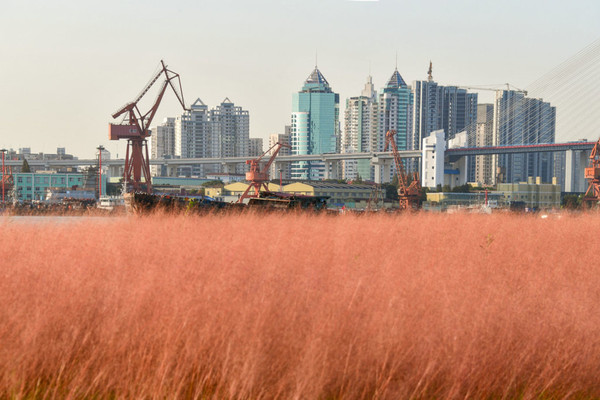
Pink muhly grass.
Hui (Circle): Author: Shen Lieyi. The vacant chairs, like departed memories arriving with the moonlight, leave traces on the mirror-like river surface. If someone were to sit facing another here, they would encounter not only part of a cultural experience but also themselves and others, while the river would enfold all of this and flow on forever.
"Light Boat Passing Through Time" is a boat-shaped architectural sculpture "floating" in mid-air, contrasting with the busy vessel traffic on the Huang