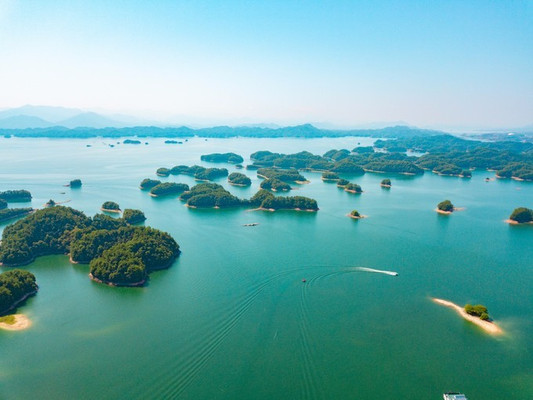
The Rare Beauty of Thousand Island Lake
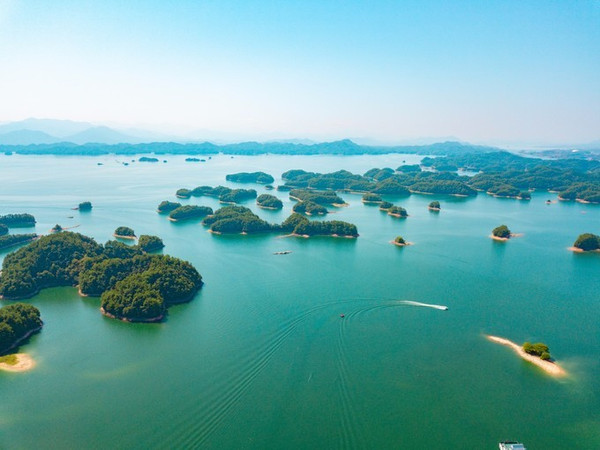
There are many kinds of beauty in this world, but there's one kind that lingers in your heart long after you've seen it. I'd barely left Thousand Island Lake before I found myself missing it—missing that vast stretch of blue that clears the mind, missing the islands scattered in perfect rhythm, some clustered close, others set apart, each one bursting with green life, and missing the fish and shrimp in the lake, so tender and fresh that the taste stays with you long after the meal is over.
AAAAA-Rated Scenic Area: Thousand Island Lake
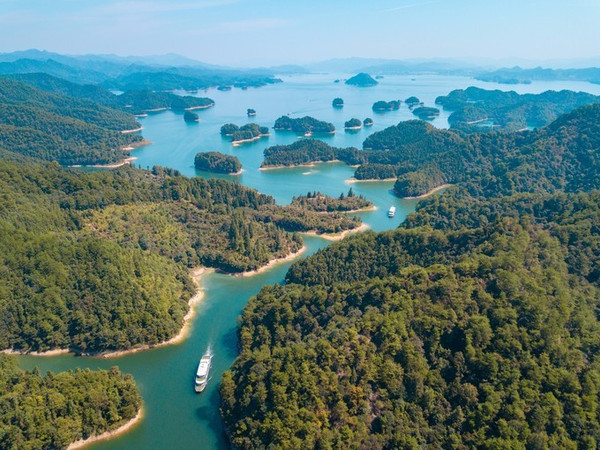
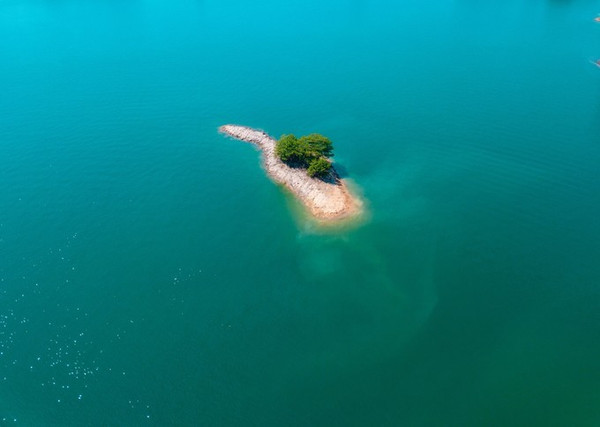
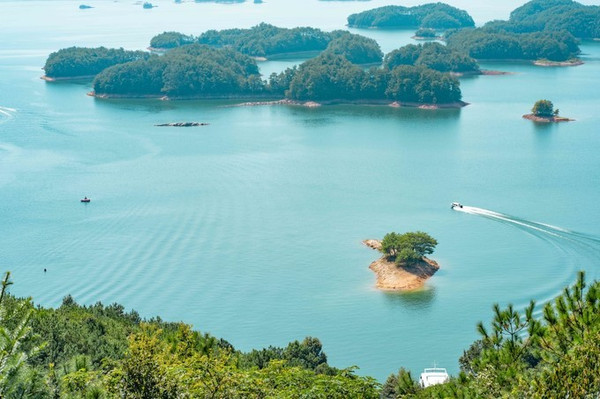
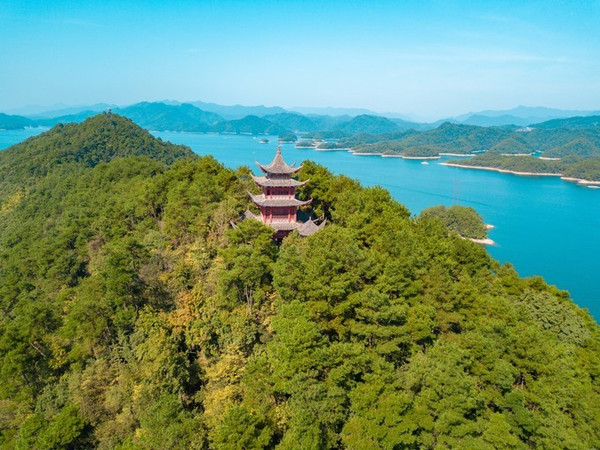
Thousand Island Lake is famous for its sheer number of islands—1,078 in total—so it's no surprise that the lake area itself is the main attraction. The lake is divided into two scenic zones: the Central Lake Zone and the Southeast Lake Zone. The Central Lake Zone draws more visitors, with highlights like Meifeng Island, Yule Island, and Longshan Island. The Southeast Lake Zone is a bit quieter, with notable islands such as Huangshan Point, Monkey Island, and Bird Island. Which one you pick really comes down to personal preference. We went with the two classics: Meifeng Island and Longshan Island. We booked our tickets online in advance—tickets plus cable car came to 280 yuan per person. My advice: set off as early as you can, so you don't end up rushing the rest of your day.
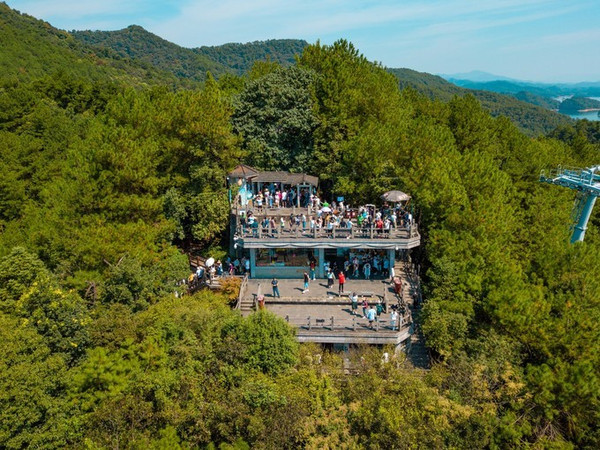
Meifeng Island offers the best views in all of Thousand Island Lake—the finest spot to take in the panoramic scenery and look down upon the islands. It's the kind of place that makes the whole trip worthwhile. As the saying goes, "If you haven't stood on Meifeng and gazed upon the islands, you haven't truly seen Thousand Island Lake." From Meifeng, you can take in more than 300 islands of varying sizes, making it the prime vantage point in the entire area. There's a cable car that takes you straight up, but if you're feeling energetic or just want to get some fresh air and exercise, you can hike instead. Either way, you'll reach the top—just choose the option that suits you, and you'll enjoy different scenery along the way. We rode the cable car as it climbed slowly. The sunlight made everything glow brilliantly. Lush green trees covered the slopes, framing the crowds of visitors below. With the blue sky and white clouds as a backdrop, the whole scene was even more striking. Once we reached the summit, I stood on the viewing platform and looked out. Islands of every size dotted the water below. The clear lake surface shone like a bright silver mirror, and the sky seemed to melt into the water. It was a breathtaking sight. At the top of Meifeng, there are two viewing platforms—east and west. The west one is where the real magic is. From up there, islands crowd the view in every direction, and you can truly appreciate the poetic image of green hills, clear waters, and golden shores. Looking out across the lake, the islands floated like plum blossoms on the water, while the larger ones, with their winding harbors, traced white arcs of sand between green islets and blue water.
The island is home to over 5,000 artificially planted plum trees—red, green, white, and winter plums among them. When they bloom, it becomes the finest spot in the area for plum blossom viewing. Unfortunately, we missed the flowers this time—a reason to come back, I suppose. One visit to Thousand Island Lake is never enough; you leave, and you already miss it. In the distance, layers of mountains rose and fell in gentle waves. The lake water was so clear you could see straight to the bottom, and the surface shimmered with ripples as a soft breeze passed, stirring up gentle swells. Surrounded by hills, with the water glistening—it was such a poetic scene that we were completely lost in it, utterly mesmerized.
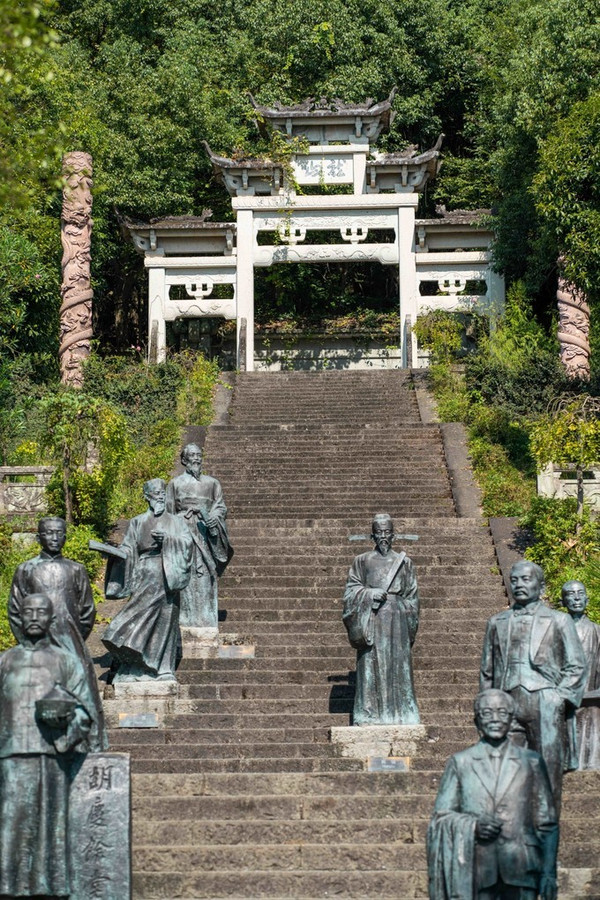
Longshan Scenic Area sits in the heart of the Central Lake Zone in Chun'an, about 5.5 kilometers from Thousand Island Lake. It rises 201.8 meters above sea level and covers 525 mu. It's a well-known base for integrity education in Zhejiang Province and also serves as the Thousand Island Lake Creative Center for the Chinese Artists Association. The island blends cultural and natural scenery beautifully. Its name comes from its shape—from a distance, it looks like a dragon playing in the water. During the Southern Song Dynasty, Fang Fengchen, a number-one scholar from Chun'an, built a study on the southern slope of Longshan to teach. Fang styled himself "Jiaofeng"—jiao meaning flood dragon and feng meaning peak—so the island was named in his honor. In the eyes of the locals, Longshan has always been more than just a scenic spot; it's a symbol of the region's rich heritage and talented people. A visit to Longshan Island lets you truly appreciate the old saying: "Bronze bridge, iron well, Little Gold Mountain; Stone Gorge Academy brings Longshan to life." Climb the bell tower to gaze across the lake, and tread upon the dragon's back to enjoy the views.
When I saw all those statues, I was puzzled. Our guide explained that this region has produced countless scholars and luminaries, all of them highly learned. There's an academy on Longshan Island, and reportedly, many of its students went on to pass the imperial exams—either as juren or jinshi. You have to admit, this island has excellent feng shui for academics. It must be the perfect combination of timing, location, and harmony. It's a shame there's no lodging on Longshan itself—I bet plenty of students would move in for a while, study, soak up the spiritual energy, and then ace their exams. But honestly, staying on the main shore of Thousand Island Lake works just as well. Property prices in Chun'an County are far cheaper than in Shanghai or Hangzhou—only about 10,000 yuan per square meter. Or you could rent a place for a little over a thousand yuan a month (we asked a local taxi driver, who said a two-bedroom apartment goes for around 1,000-plus yuan a month). If it means your kid gets into a good school, what's a little money compared to that, right?
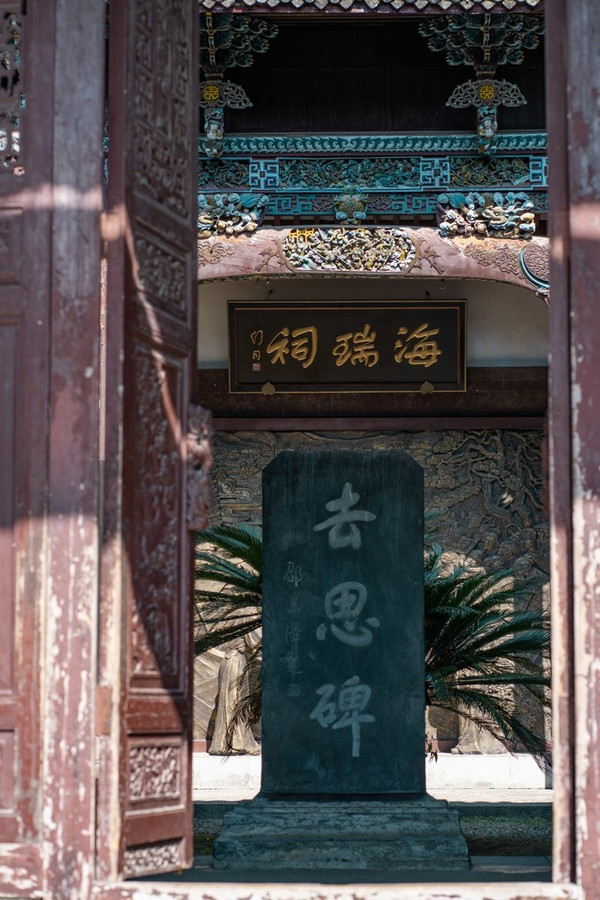
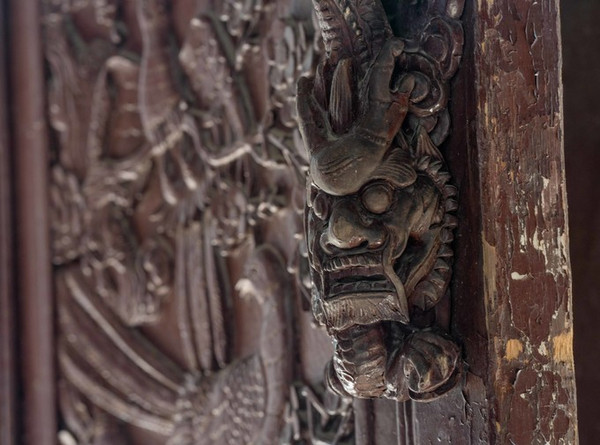
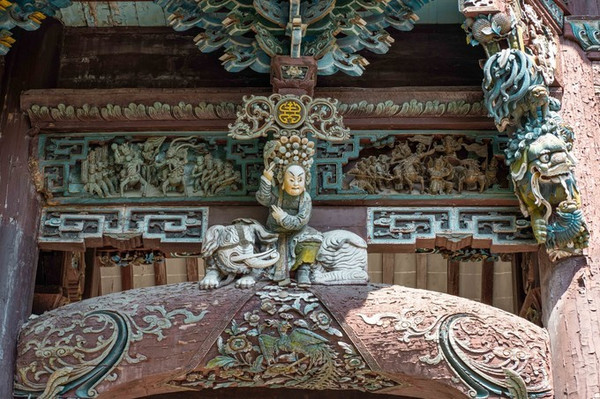
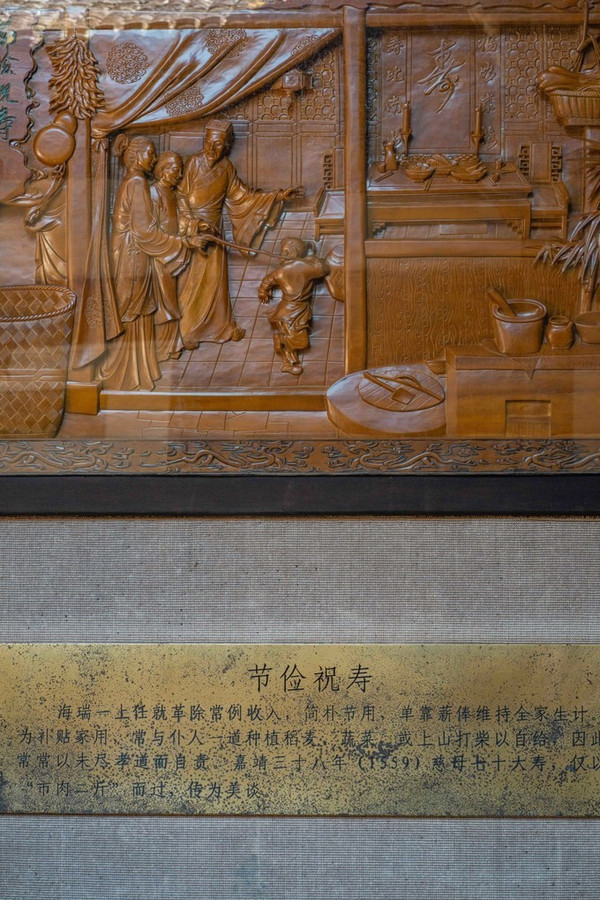
The Hai Rui Shrine: Hai Rui was a native of Qiongshan, Guangdong (modern-day Haikou, Hainan), and a famous incorruptible official of the Ming Dynasty. Some 440 years ago, from the fifth month of the thirty-seventh year of the Jiajing reign to the seventh month of the forty-first year, he served as county magistrate in Chun'an. To honor this upright official who dared to speak up for the common people, the locals built a "Shrine of Lord Hai" in the old county town the very year he was transferred away. In September 1959, when the reservoir area was relocated, the shrine site sank beneath the waters. In the 1980s, the Chun'an County government, wanting both to commemorate Hai Rui's integrity and to boost tourism, rebuilt the shrine using materials salvaged from an old rural ancestral hall. This "Hai Rui Shrine" is the crown jewel of Longshan Island. Visiting it, you'll notice four striking features. First, the architecture is richly ornamented—the wood carvings, brick carvings, and stone carvings (collectively known as the "three carvings") are exquisite beyond words. Second, the statue of Hai Rui inside, the wooden mural carvings on either side, and the poetic couplets on the pillars all speak to his lifelong integrity and righteous spirit—themes that still resonate today. Third, the garden courtyard, with its themes of "lofty character" and "noble integrity," is airy and open, thoughtfully arranged with trees and flowers spaced just right, making it hard to leave.
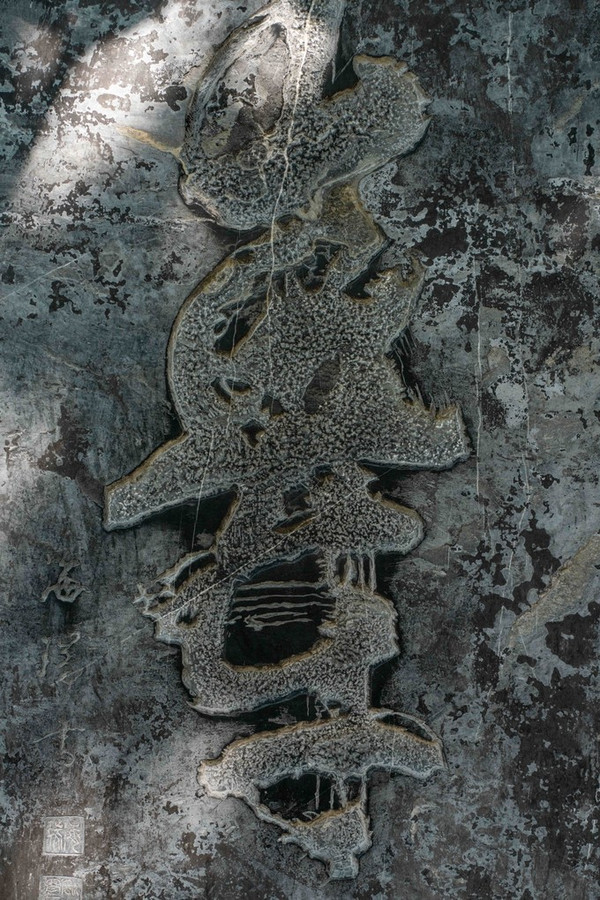
In the center of the main hall, directly facing the entrance, stands the famous "Stele of Parting Thoughts." "Parting thoughts" means that although Hai Rui left his post and bid farewell to the local people, they never stopped thinking of him. The stele's history goes back to the fortieth year of the Jiajing reign (1561), when Hai Rui's term in Chun'an ended. As he departed for Jiaxing, the townspeople lined the road to see him off, and they asked Xu Tingshou, a jinshi from Chun'an, to compose an essay in his honor, which was carved into the stele. The original Ming Dynasty stele now lies beneath the waters; the one standing today is a re-erection, with calligraphy by Shao Huaze, former president of People's Daily.
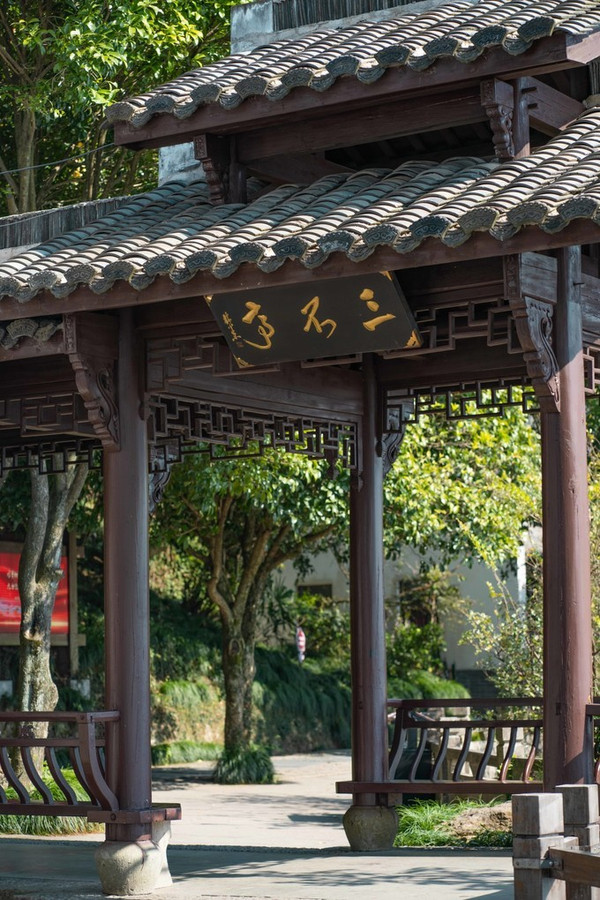
The Hai Rui Shrine consists of five parts: the Lake-Viewing Terrace, the Gate Tower, the Main Hall, the Central Hall, and the Academy of Remembrance. It covers 625 square meters, with a floor area of 547.1 square meters and a main hall height of 12 meters. The architecture preserves the residential style of Chun'an while incorporating Huizhou characteristics—painted beams, carved rafters, and upturned eaves. Standing on the Lake-Viewing Terrace, you can admire the shrine's architecture up close while gazing out over the lake and the city beyond—a view that's both beautiful and deeply satisfying.
The Hai Rui Calligraphy Corridor features poems by Tang Dynasty poets, re-engraved from Hai Rui's surviving brushwork. Among them is a particularly striking wild