Mount Emei Is Home to a Fantastical
Prologue
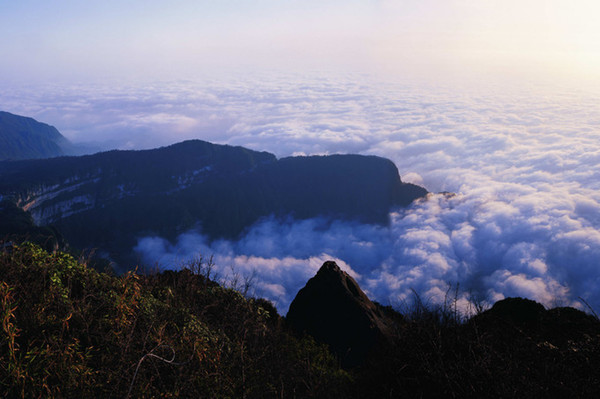
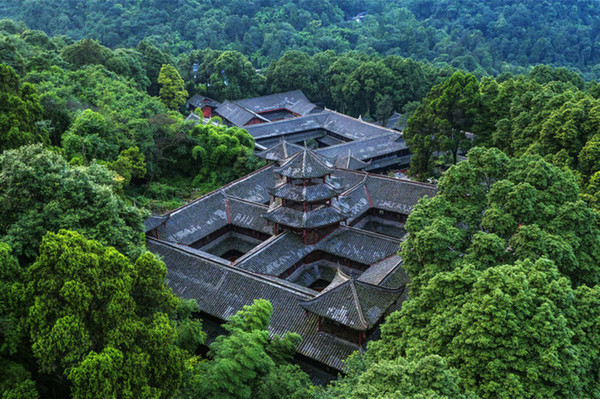
Mentioning Mount Emei always brings to mind Li Bai's poem: "Half a wheel of autumn moon over Mount Emei, its shadow cast into the calm waters of the Pingqiang River. Setting out at night from Qingxi toward the Three Gorges, I think of you but cannot see you as I drift toward Yuzhou." In the early morning, mist rises from the valleys of Emei, and the whole forest is soaked in milky fog. A sea of clouds unfolds before your eyes. Slowly, the sun climbs out, and thousands of golden rays, like sharp blades of light, pierce through the treetops and spill across the mountain, glittering and breathtakingly beautiful. Mount Emei is just an hour's drive from Chengdu. This time, setting out from Chengdu, I finally made it to the mountain I'd been longing to see.
If You Visit Mount Emei Without Reaching the Golden Summit, You Might as Well Not Have Come
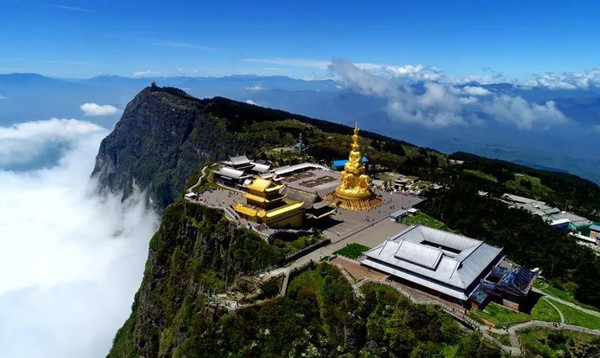
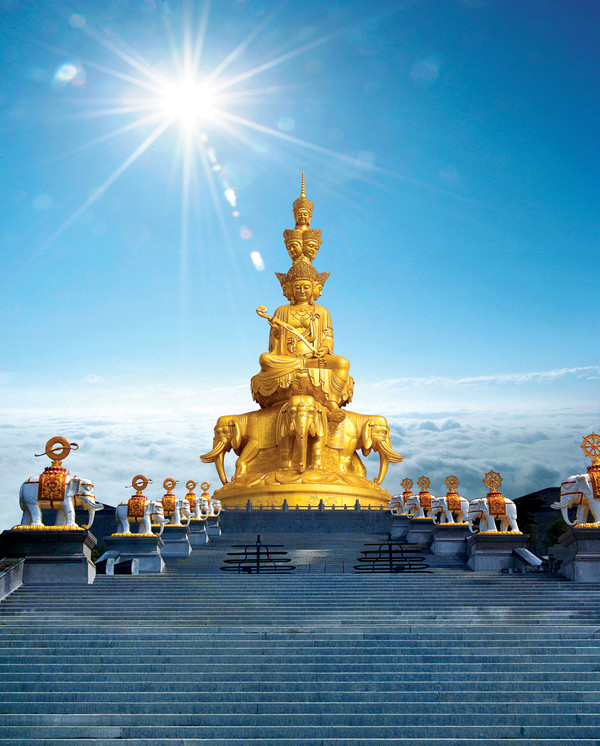
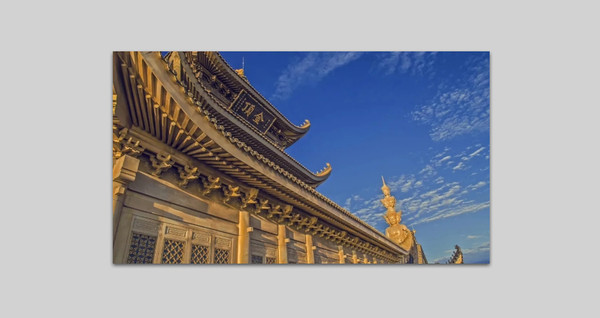
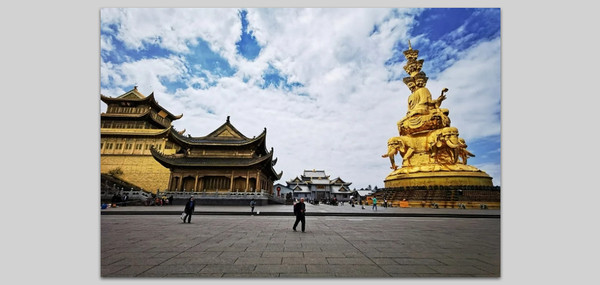
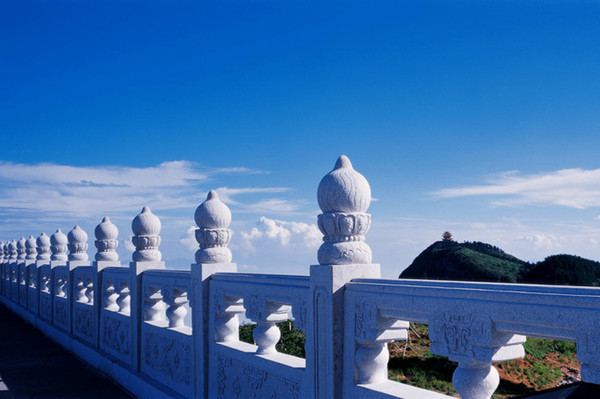
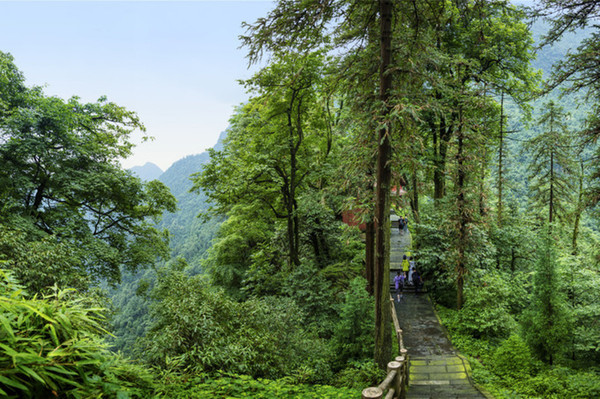
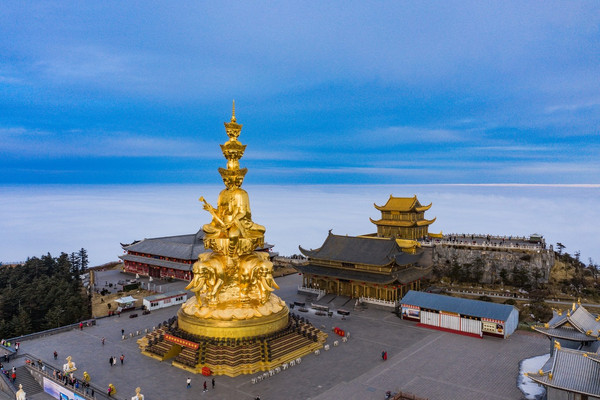
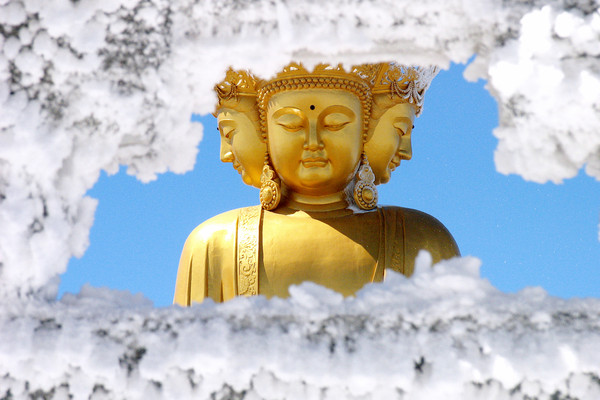
Every place has its signature spot—think Gulangyu for Xiamen, and for Mount Emei, it's the Golden Summit. Emei's trees grow thick and lush, their dense layers of leaves sealing off the beautiful ridges, blocking your view and hiding the blue sky above. The stunning, otherworldly sunrise and sea of clouds at the Golden Summit left a deep impression on me that I'll never forget. Starting from Chengdu, after arriving at the foot of Mount Emei, you take a shuttle bus, then switch to a cable car, and you're at the Golden Summit, standing 3,077 meters high.
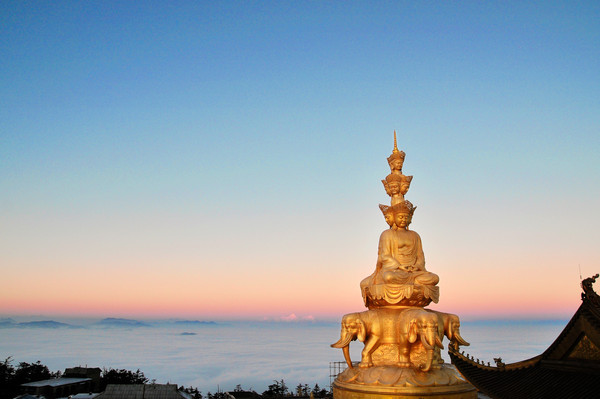
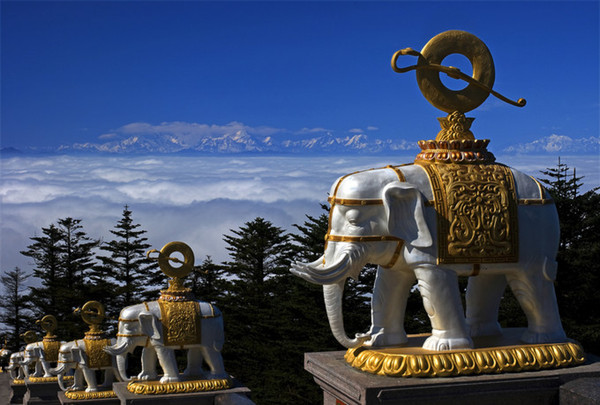
The moment I stepped out of the cable car, I was utterly captivated by the drifting clouds. If there's one thing about the Golden Summit that stays with you, it's the sea of clouds. Some visitors arrive at dawn just to wait for that breathtaking sight. As the sun gradually rises, the clouds slowly part, and the beauty feels almost like stepping into a fairyland. Some clouds are like playful children—they sit still when you leave them alone, but the moment you try to catch them for a closer look, they dart away and vanish without a trace. Truly ever-changing in a thousand forms.
The most beautiful and unusual sight, though, has to be the sunrise. Everything falls silent, as if welcoming a new star to the stage. I took a deep breath, and the crisp air filled my lungs, refreshing me completely. Up here, it's much colder than at the foot of the mountain, and plenty of visitors wander around in rented cotton coats.
Walking on to a railing, I looked out: the distant peaks flickered in and out of the mist, while the nearer slopes were a lush green, as if emerald Chinese ink had been poured from the heavens, blanketing the mountains in a rich layer. White clouds lingered around the summits, almost as if they didn't want to leave either. At that moment, Mount Emei looked like a living, three-dimensional Chinese landscape painting—waterfalls, streams, parking lots halfway up the mountain, and countryside inns all spread out before me. Breathing in the fresh air and basking in the cool breeze, I felt as if I'd become part of that beautiful scroll. It was absolutely worth the trip.
China's First Immersive "Drama City" You Won't Forget
Coming to Mount Emei for a second time, I have to recommend a different kind of experience. At the top of the list: the new viral hotspot, the *Only Emei* Drama City.
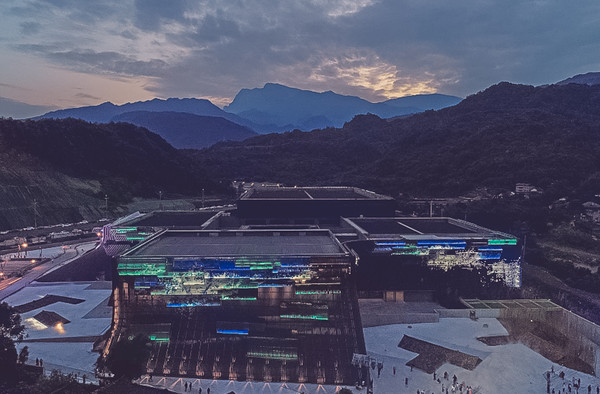
*Only Emei* sits at the foot of Mount Emei, one of China's four sacred Buddhist mountains. Together with the Chuanzhu River, Huangwan Town, and the Mount Emei scenic area, it forms a stunning sightseeing corridor. What's more, *Only Emei* sits with the Chuanzhu River to its left, Lion Mountain to its right, and faces the Golden Summit directly, catching the glow of morning and evening light alike. Blessed by the bodhisattvas, it's said to be the last piece of prime feng shui land in the whole area.
*Only Emei* is the first installment in renowned director Wang Chaoge's "Only" series, and I've heard the sound, light, and projection systems are world-class. Her productions have never disappointed me, and this brand-new experience stuck with me long after.
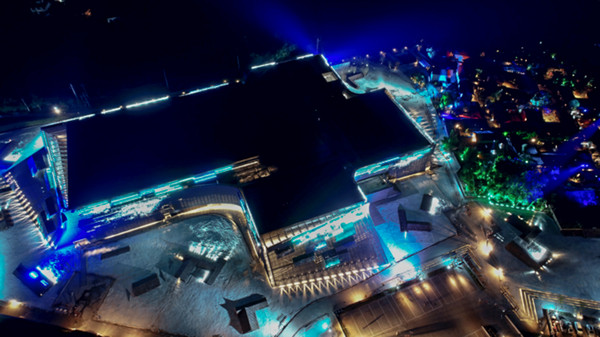
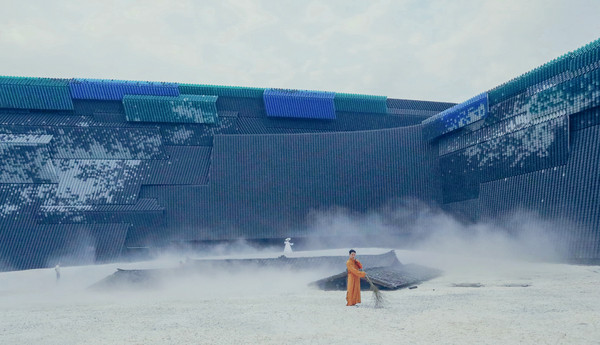
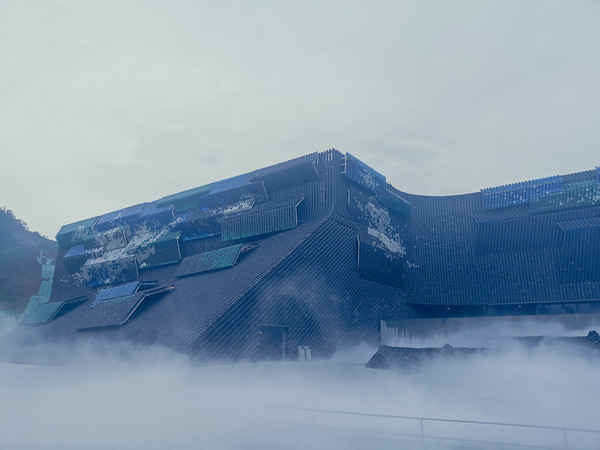
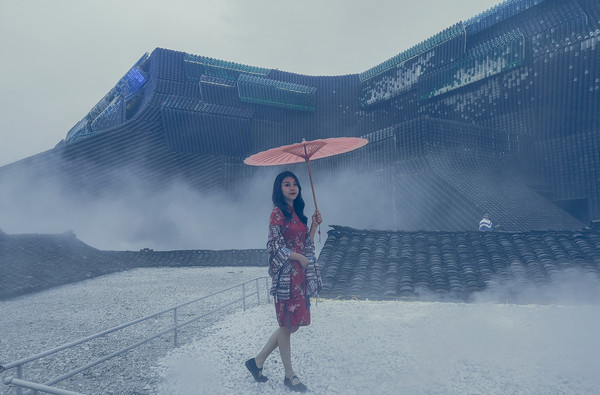
*Only Emei* holds several "firsts": the first drama city, the first live-action village theater, and the first swastika-shaped stage, to name a few. Even the exterior of the theater building is a spectacle—it uses 500,000 gray ceramic tiles and colored glass tiles to trace out a magnificent "Thousand-Mile Landscape." A truly bold stroke of ambition.
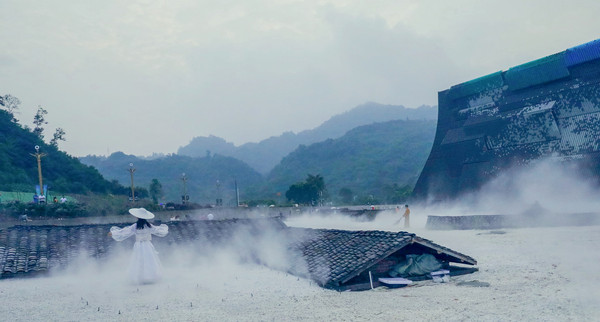
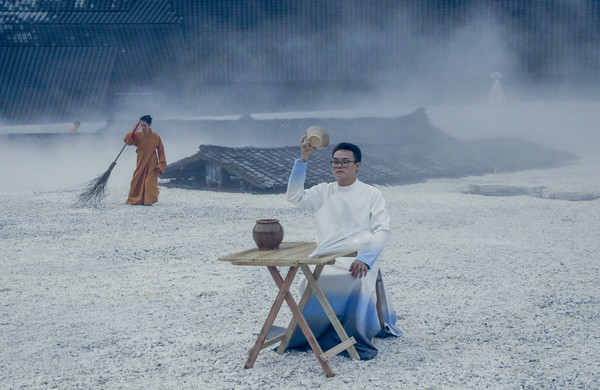
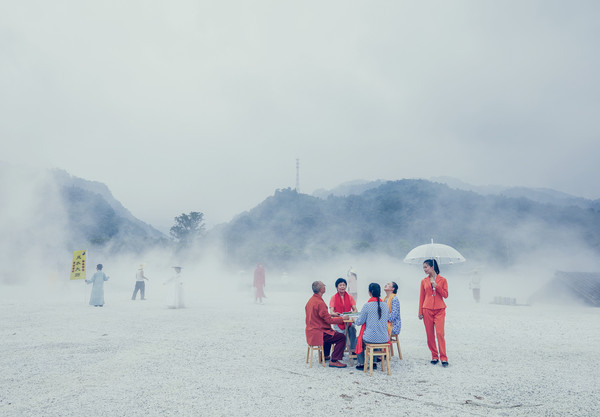
Stepping inside, you first arrive at "In the Clouds," an open theater that feels like a fairyland. A vast stretch of white gravel is fitted with mist-making devices, so the whole space is blanketed in fog. It's as if Director Wang scooped up the sea of clouds from Mount Emei and brought it right into the theater.
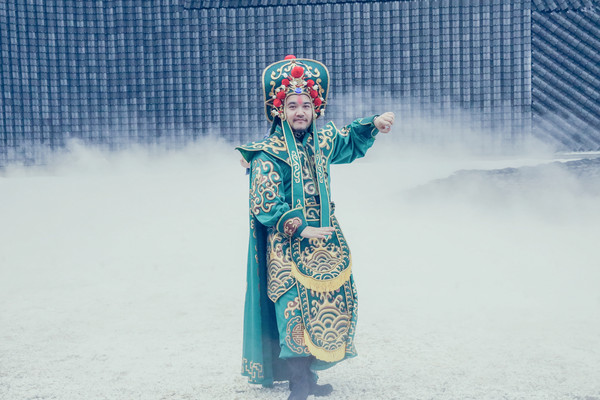
Surrounded by mist, you feel like you're wandering through a cloud-borne paradise. Performances unfold around you at every turn, creating a dreamlike experience. No wonder it's the go-to spot for photos now—the built-in effects and atmosphere make every shot stunning. Let me take you up close to the "Below the Clouds" live-action village theater.
How do you turn a village slated for demolition into a theater? I was intensely curious. Let me start with the official rundown: *Only Emei* is split into three theaters—"Above the Clouds," "In the Clouds," and "Below the Clouds." The "Below the Clouds" theater holds up to 700 people per show. Its biggest draw is that it preserves parts of an original village at the foot of Mount Emei, blending the theater with the surrounding rural community. The result is a walk-through performance that moves from indoors to outdoors, making it China's only immersive drama staged in an authentic, untouched village setting. I had to see it for myself, so I headed to "Below the Clouds." At the ticket gate, a signboard hinted at what was happening in the village. The setup was simple: the story takes place on the evening of April 30, 1980, when the Third Shenzhen Construction Company arrives to recruit workers. In every household, seemingly ordinary moments are about to change everyone's lives. Curious to see it? Come along with me.
Crossing through the ticket gate felt like stepping through a warped time tunnel into Gaohe Village in 1980. Dark tiles on the rooftops, narrow lanes, relics of a bygone era, weathered houses, and air tinged with the smell of grass and earth—everything pulled me in. But first, we followed our guide to watch a story unfold in one of the courtyards. The guide told us that "Below the Clouds" preserves 27 courtyards in total, housing 17 full courtyard performances. However, each visit lets you catch just three courtyard plays and one square performance. We settled in front of one courtyard, and the show began. It told the story of three brothers who, inspired by a magazine of city actresses, dream of heading to Shenzhen for work. It lasted about 20 minutes.
After that courtyard's tale wrapped up, our guide led us to another courtyard for a new story. Isn't that fun? It's like binge-watching a series—this is what I'd call real "episode chasing."
One courtyard, one story. I won't spoil it for you—I'll leave some suspense. The final performance was a farewell scene in the village square, and it was deeply moving. On that night in April 1980, everyone made what they believed was the best choice: some left, some stayed, and some never looked back. Decisions that seem alike lead to vastly different outcomes—a play that really makes you think.
After the guided performances, you're free to wander and uncover the stories hidden in every courtyard. And here's the kicker—it completely blew me away. Beyond the courtyard plays, there are scattered performances scattered throughout the village. Apparently, there are 75 of these in total, breathing life into what was once a quiet, fading settlement. I could snap photos freely, wanting to carry every memory home with me.
An old man plays chess under a tree, the empty seat across from him waiting for someone—who could it be?
The owner of the Liu Family Tavern lounges in his courtyard, enjoying the cool shade.
He beckons you to look—this is the everyday warmth of life below the clouds.
A village beauty stands at the rustic entrance to the village, as if waiting for someone she loves to arrive.
I'd never seen anything like this before. It completely shatters the boundaries of a stage, and the realism of it all is staggering. I kept wanting to discover more, and sure enough, the village was filled with words—text systems, if you will. This is what I admire most about Director Wang Chaoge: she's constantly pushing herself, innovating with everything she's got. Words hang on walls, are written on cloth, dangle from trees—these fragments, like scripts and actors, quietly tell the village's stories.
That stonemason over there—I hear he's a man of ambition. The cloth behind him bears