Nanjing in 48 Hours: 6 Iconic Spots, 7 Must-Try Foods, Then Off to Hengdian for Your *Story of Yanxi Palace* Fix
Four days, two cities—Nanjing and Hengdian—and a jump from the Republican era back to ancient China. It was a proper deep dive into classic Chinese aesthetics and tradition.
**The 4-Day Nanjing–Hengdian Itinerary**
Day 1: Arrive in Nanjing. Jiangsu Grand Theatre, Qinhuai River, Confucius Temple, Laomendong.
Day 2: 1912 District, Minguo Honggongguan, Deji Plaza, Sun Yat-sen Mausoleum, Mingwalang food street, LINE Friends store.
Day 3: Hengdian World Studios—Qin Wang Gong (Palace of Qin), Qingming Shanghe Tu (Along the River During the Qingming Festival), Guangzhou Street & Hong Kong Street.
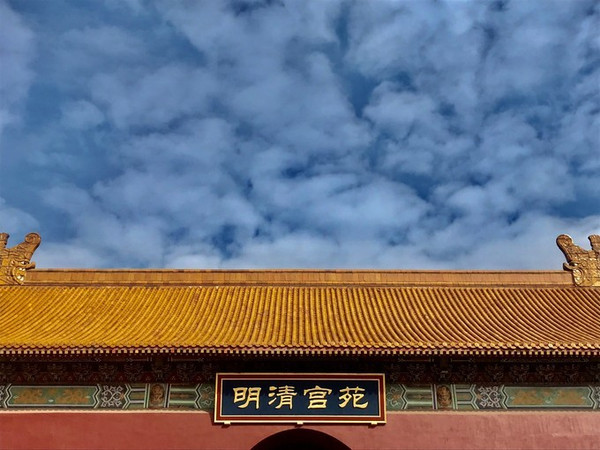
Day 4: Ming-Qing Palace (Mingqing Gongyuan), then fly back to Chongqing via Hangzhou.
**Getting from Nanjing to Hengdian**
(1) Technically, Hengdian is in Zhejiang and Nanjing is in Jiangsu, but they're practically neighbors. The easiest route: take a bullet train from Nanjing South to Yiwu (about 2 hours 19 minutes, ¥167.5), then hop on a 40-minute bus to Hengdian. On the way back, I took a bus from Hengdian to Hangzhou Xiaoshan Airport (¥70, around 2 hours). One heads-up: Hengdian's bus station and airport terminal share the same complex. Buses departing from the basement level take about 3 hours; those leaving from the second-floor airport departure hall only take 2.
(2) Getting around Nanjing is easy—there are 10 metro lines, and lines 1–4 cover most tourist spots. Fares run ¥2–9, and ticket machines only take ¥5, ¥10, ¥50, and ¥100 bills. Some stations now accept Alipay and WeChat Pay, which is super convenient. City buses start at ¥2, and taxis at ¥10.
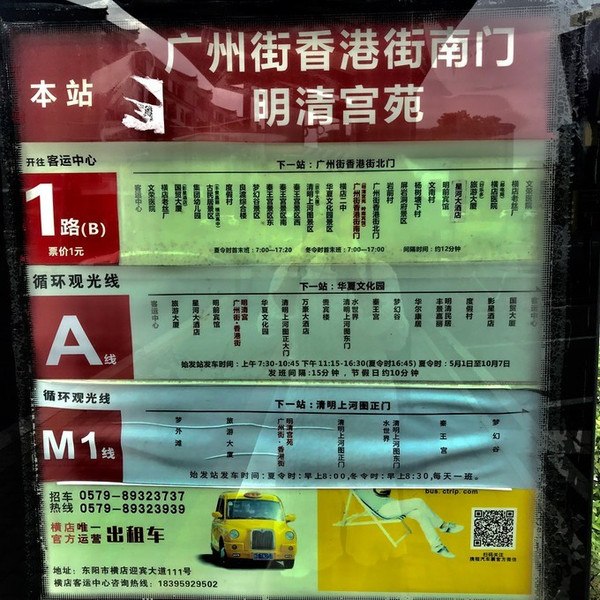
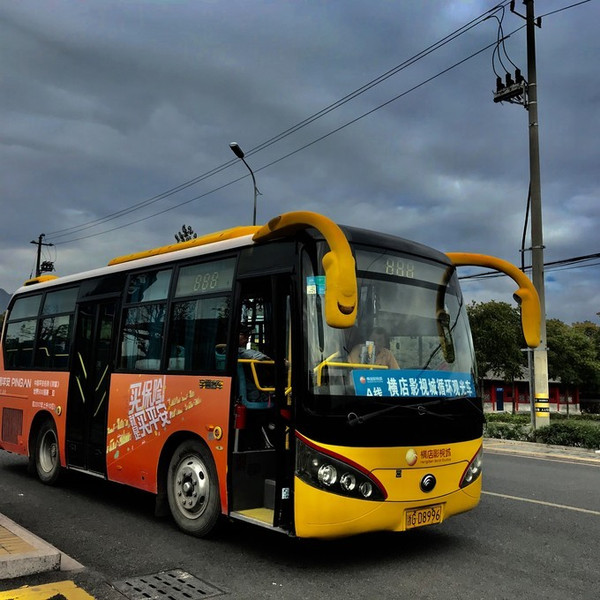
(3) In Hengdian, driving is the way to go—public buses are scarce. The Hengdian Group does run a free tourist shuttle loop between the major attractions, though. Other local buses start at ¥1.
---
**Part 1: Nanjing**
I was actually in Nanjing for work, so I squeezed in as much sightseeing as I could between meetings.
**Stop 1: Jiangsu Grand Theatre**
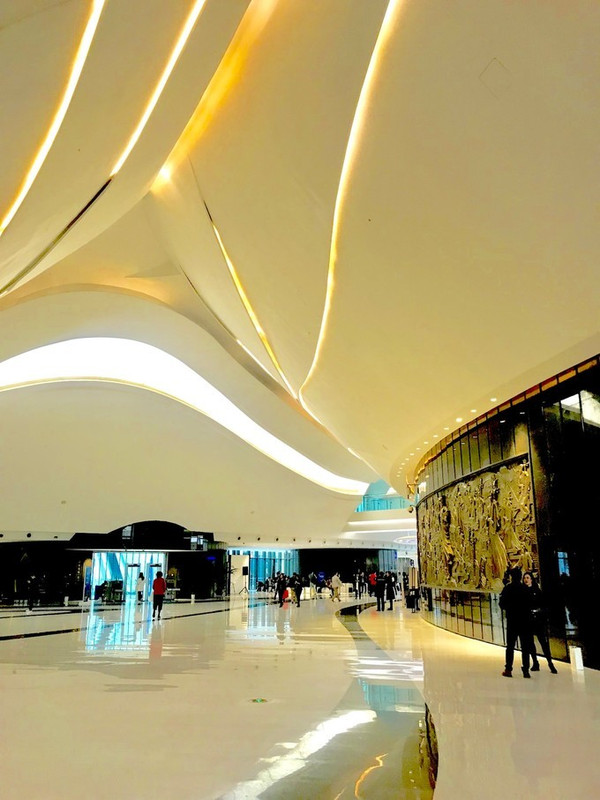
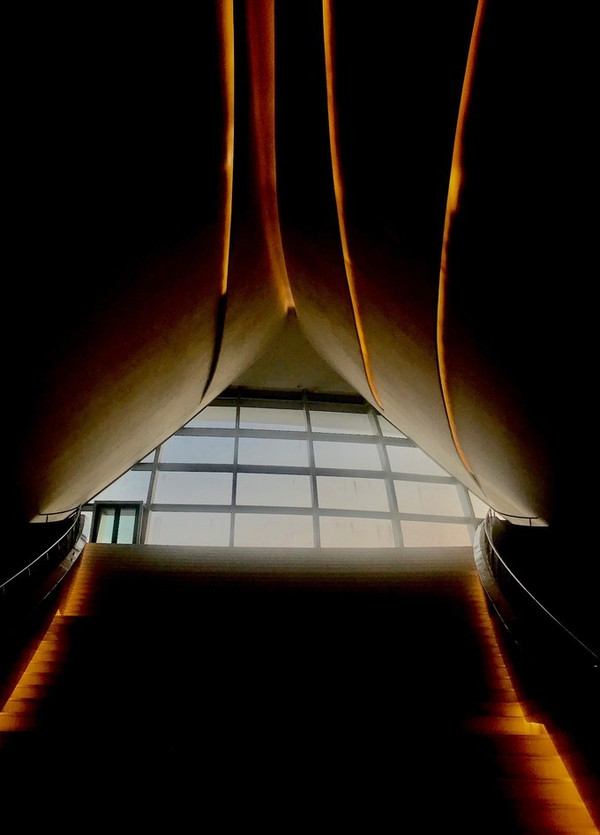
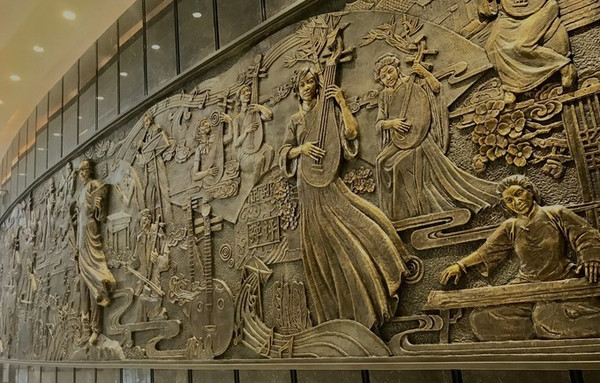
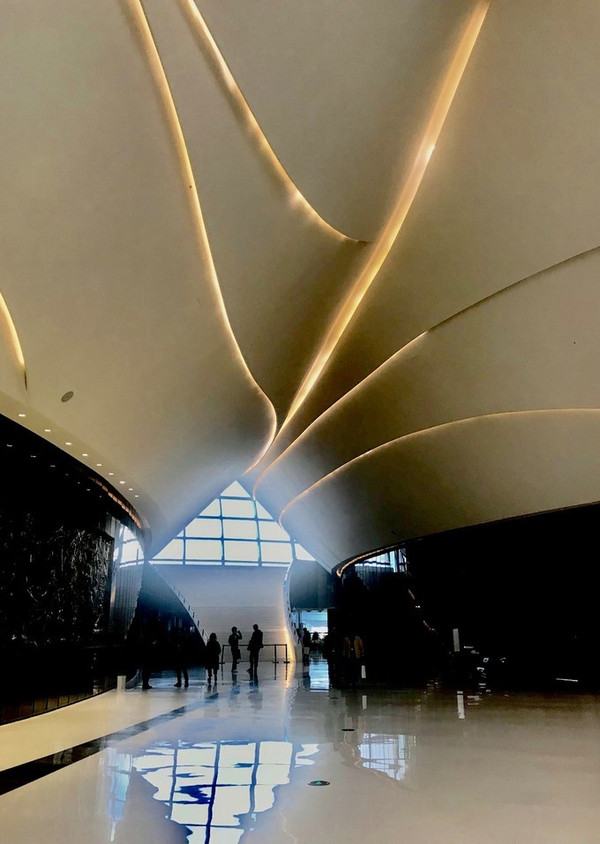
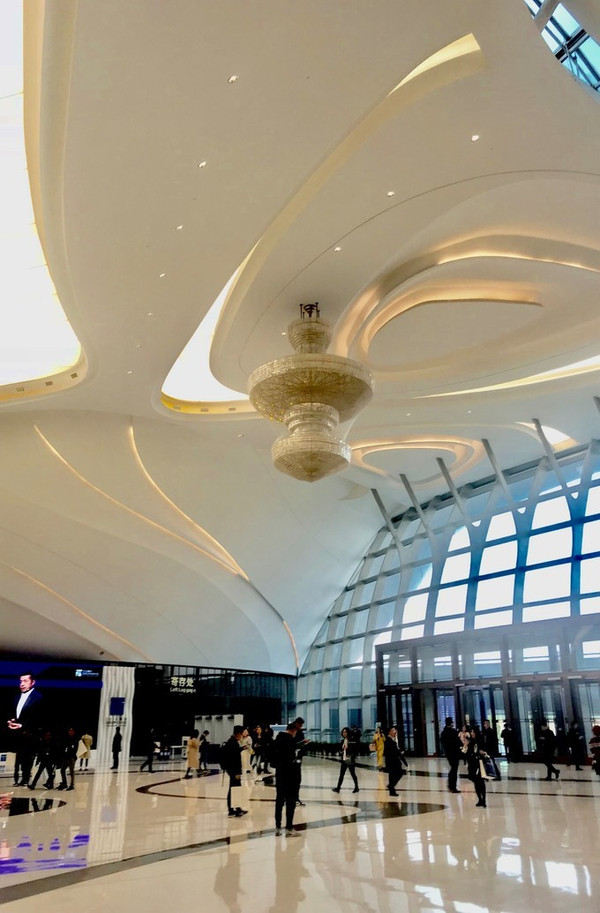
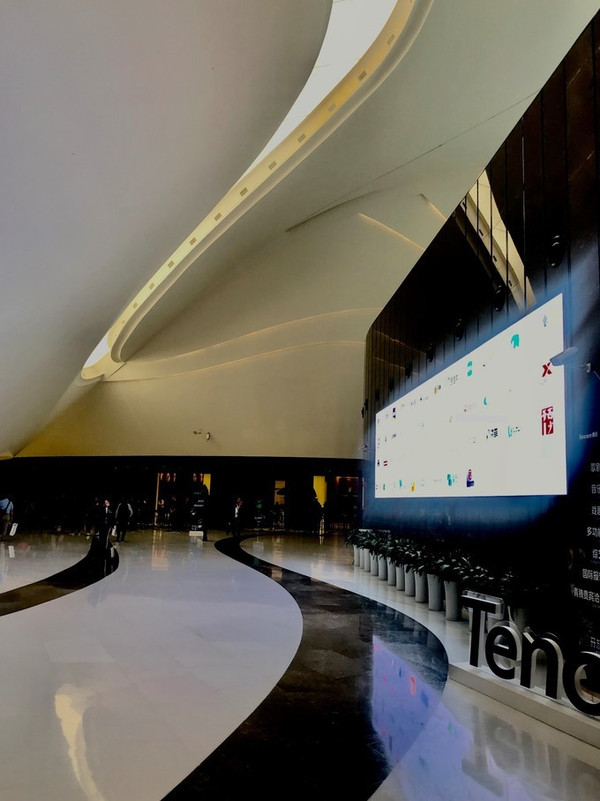
Our conference was held here, and it's genuinely gorgeous. But honestly, it's only worth visiting if there's a performance on—it's not a casual tourist stop. I'll just leave a few photos to give you a sense of the interior design.
Designed by East China Architectural Design & Research Institute, the theater draws inspiration from "water," fitting Nanjing's identity as a city of mountains, rivers, and forests. Its proximity to the Yangtze also reflects the "Water Charm of Jiangsu" concept. The overall shape is like a lotus leaf with water droplets—four "drops" tilt toward the center, creating a petal-like texture on the roof. Each drop houses one of the four main venues: opera, drama, concert, and variety hall. To complement the Olympic Sports Center's red archways, the droplets are a blue-to-white gradient, echoing the striations of Nanjing's famous Yuhua stones.
**Stop 2: Confucius Temple–Qinhuai River Scenic Area & Laomendong**
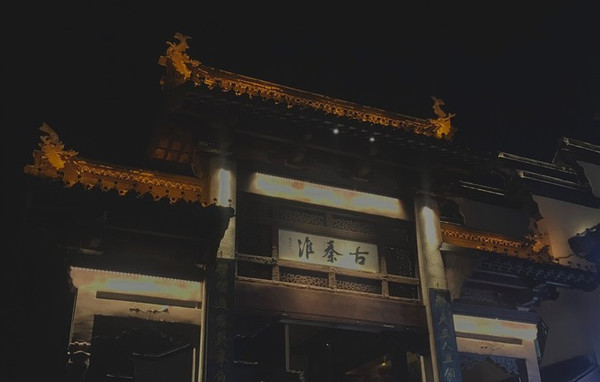
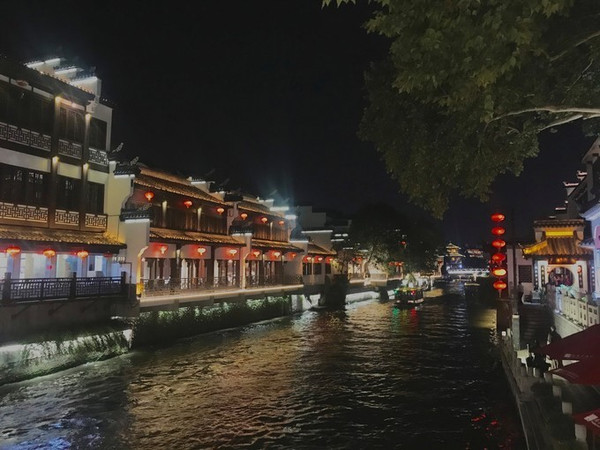
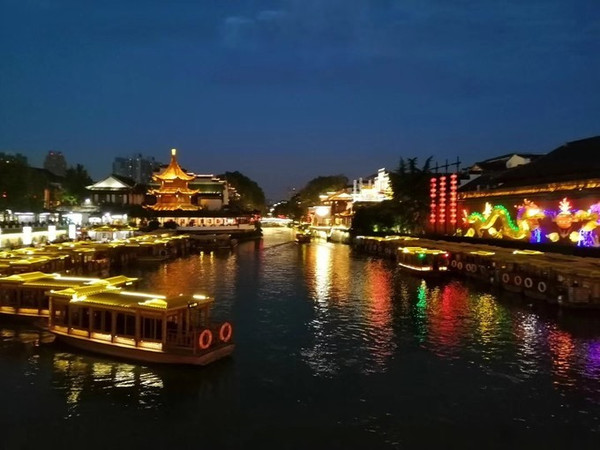
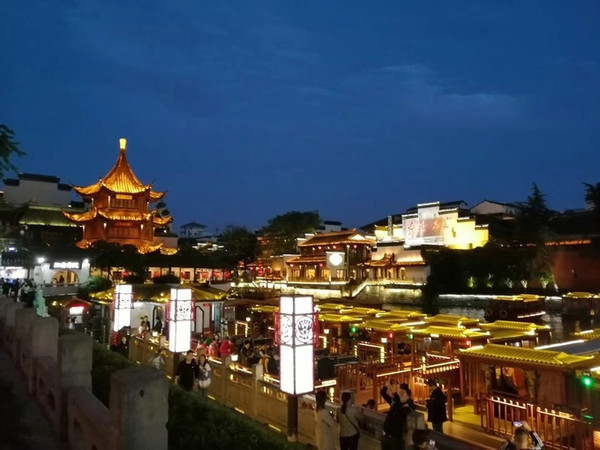
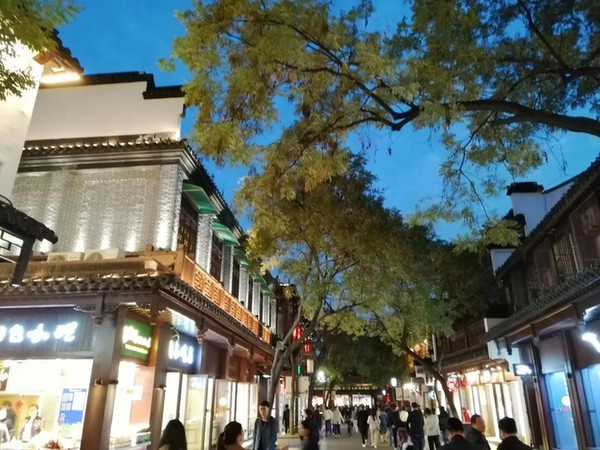
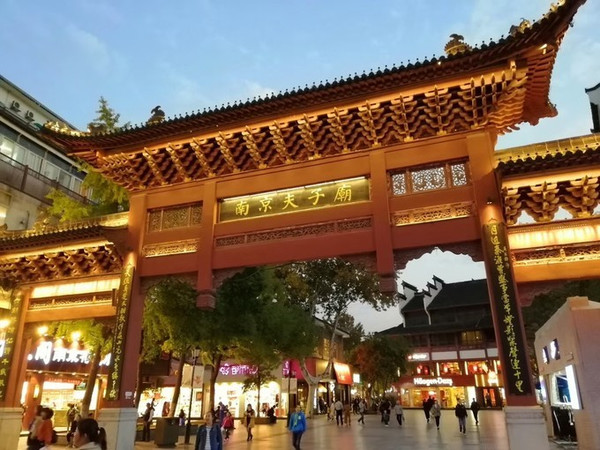
All the online guides said to come here at night, so after our meeting wrapped up, I brought some clients over for dinner. The Qinhuai River, Confucius Temple, and Laomendong are all in one area, so you can cover them in one go. There are several separately ticketed museums tucked in here too: Wuyi Xiang (¥8), the Confucius Temple's Dacheng Hall (¥30, or ¥32 for a combo ticket with the Wang-Xie Residence; open 9:00–22:00 daily). Individual tickets for Dacheng Hall, Jiangnan Examination Hall, Wang-Xie Residence, and Li Xiangjun's Former Residence run ¥15, ¥15, ¥8, and ¥8 respectively—or ¥40 for all four.
The Qinhuai River is a right-bank tributary of the Yangtze. It was once called Longcangpu, later Huai River from the Han dynasty, and Qinhuai from the Tang onward. It has two sources: the Jurong River from Baohua Mountain and the Lishui River from Donglu Mountain, converging in Jiangning before flowing into Nanjing through the Dongshui Pass and out through Xishui Pass. Most of the river runs through Nanjing, and historically it was the city's lifeline for shipping and irrigation, nurturing its ancient civilization. It's earned the title "China's First Historical and Cultural River" and has become the heart of a bustling pedestrian district.
The whole Confucius Temple–Qinhuai Scenic Belt, centered on the temple complex with the ten-li Qinhuai as its axis and the Ming city wall as a link, strings together numerous national and provincial heritage sites. It's a mix of Confucian culture, imperial exam history, folk customs, natural scenery, gardens, temples, old neighborhoods, local cuisine, shopping, and festivals—Nanjing's cultural essence in one open-air, 5A-rated attraction.
That said, I was honestly a bit underwhelmed. This place is for tourists—95% visitors, 5% vendors. Locals don't come here. The street-side shops are painfully generic, selling the same souvenirs you'd find anywhere in China. A few stores do carry Nanjing-specific creative products, which are kind of cute—I picked up a fridge magnet as a memento.
There are also several paid museums hidden in the area, all with a heritage focus.
The Confucius Temple itself is one of China's four great Confucian temples. Historically, it was the cultural hub of Jiangnan and the top educational complex in southeastern provinces, not to mention the largest traditional street market in the country. Entry requires a separate ticket.
Originally built in 337 AD during the Eastern Jin and converted into a Confucian temple in 1034, the complex has been destroyed and rebuilt five times, the last destruction coming at the hands of Japanese forces in 1937. After restoration in 1985, it's welcomed over 100 million visitors, averaging 100,000 on regular days and 300,000 on holidays. It's a sprawling complex comprising the temple, academy, and examination hall, with structures like the spirit wall, Pan Pool, archways, star pavilions, and main halls. Along with Shanghai's City God Temple, Suzhou's Xuanmiao Temple, and Beijing's Tianqiao, it's considered one of China's four great bustling markets.
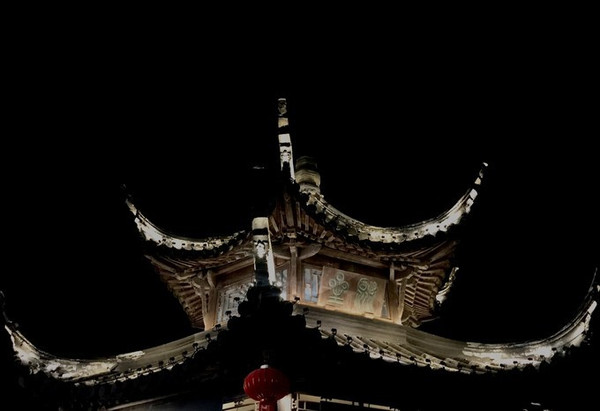
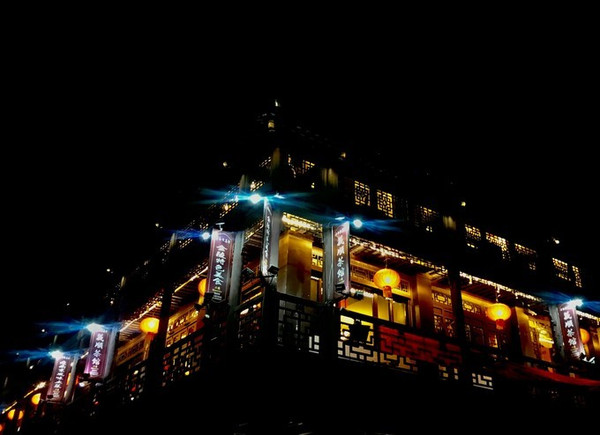
The Qinhuai River has nourished Nanjing for centuries—"ten li of spring breeze, thousands of homes facing the river." The wealthy and powerful once clustered along its banks, and the lantern boats here were famed across the land. Countless legends and poems were born along these waters.
We walked the entire Confucius Temple–Qinhuai stretch in about an hour. I'd heard you used to see costumed performers singing opera here for free—now that costs extra.
Wuyi Xiang (Black Robe Alley) is a small side lane in the pedestrian area and one of China's oldest, most storied alleys. It got its name from the Wang and Xie families of the Jin dynasty, whose sons favored black robes as a status symbol. This tiny street produced cultural giants like calligraphers Wang Xizhi and Wang Xianzhi, and Xie Lingyun, founder of China's landscape poetry tradition. In 1997, the district government restored the alley and rebuilt the Wang-Xie Residence Museum. Today, it's far from its former glory—no more lavish banquets, just tourists tracing the footsteps of these legendary families.
Inside the alley, there's an ancient well called Wuyi Well, said to date back to the Three Kingdoms period, originally used by stationed troops. Twelve deep grooves worn into the well curb by ropes tell the story of a thousand years of use.
I'll save Laomendong for the food section, because that's exactly what it's for.
Laomendong sits east of Zhonghua Gate in the Qinhuai district. Historically, everything east of the gate was "Mendong"—a broad area where Nanjing's traditional homes clustered and wealthy merchant families settled. Settlements date back to the Three Kingdoms era, and by the Ming dynasty, with Zhonghua Gate and the inner Qinhuai becoming the city's economic center, it thrived as a hub for trade and crafts. After the late Qing, it evolved into a primarily residential area showcasing traditional southern Nanjing architecture. The current historical district spans about 700,000 square meters, bordered by Changle Road, the Ming city wall, Jiangning Road, and the inner Qinhuai. It houses folk arts like Jinling woodblock printing, Nanjing Baiju opera, Deyun Society (crosstalk), kites, cloth painting, bamboo carving, paper-cutting, and puppet shows—plus a lineup of classic Nanjing snacks.
**Stop 3: 1912 District**
This area in Xuanwu District sits right next to the Presidential Palace, so you can easily knock out