Dalian in Winter: A City of Hidden Wonders
Ding—the confirmation message came through: my booked flight from Jinan to Dalian was ticketed. I told my friends, "It's set. We're really going this time."
The last time I'd been to Dalian, I was six years old. My friends were shocked. "Wow, that was a while ago," they said.
What is there to do in Dalian in winter? Isn't that the worst time to visit? A lot of people asked me that. But I've never been one to follow the crowd, especially not to crowded summer beaches. And here's the thing—Dalian is so much more than a summer escape. This city, once called Qingniwa, caught the eye of Russian architects a century ago who were obsessed with French culture. They dreamed of turning it into the "Paris of the East" and named it Dalniy, meaning "faraway city." That name, through translation, eventually became the Dalian we know today.
So here we were, in the middle of winter, ready to explore this city up close—walking its streets, capturing its essence through our lenses, and discovering what makes it so magical.
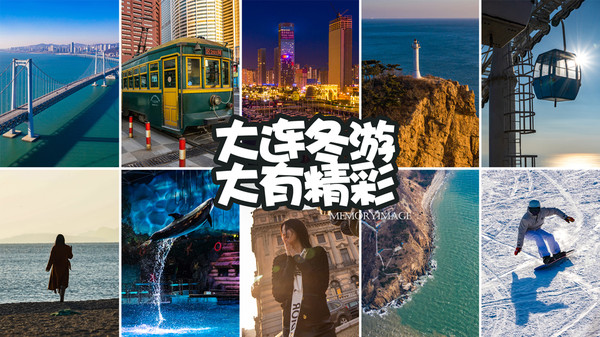
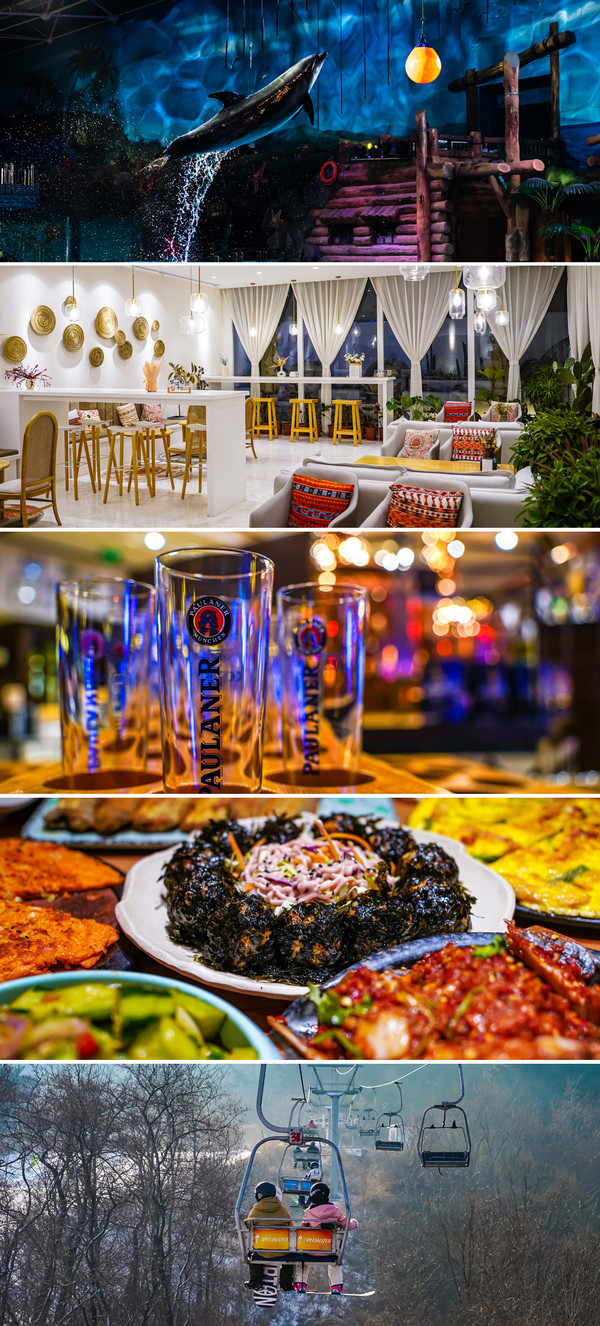
What to do in Dalian? What to see? What to photograph? What to eat? Where to stay? I'll try to answer all of that in this post. But first, let me give you a glimpse of these past few days through a few photos—a little taste of what's to come.
Known as the "City of Romance," Dalian has a reputation for sun, sand, sea, beautiful people, old mansions, and grand squares. With nearly 1,900 kilometers of coastline woven together with deep history—much of it shaped by decades of Russian and Japanese occupation—the city's remnants of that era have transformed into something wonderfully romantic. We wandered through the heart of the city, taking it all in, asking ourselves: after all these years, what has this city become?
Walking Through the City: You're a Stunner
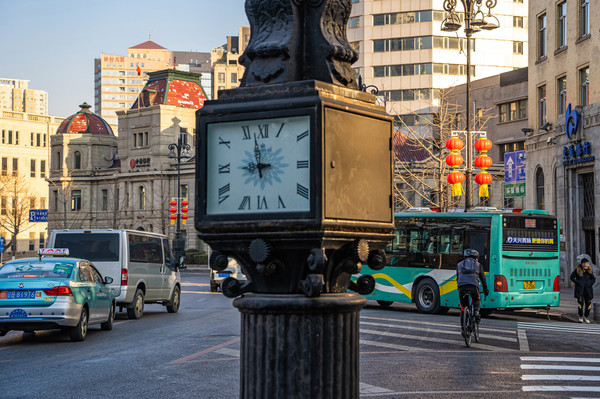
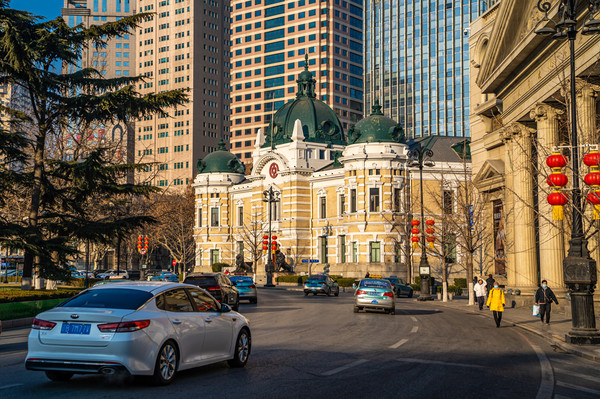
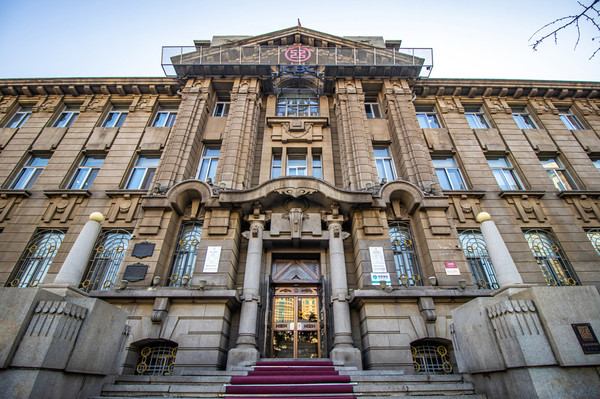
The first impression of Dalian's streets feels almost European. The architecture here is incredibly distinctive—Roman columns, domed roofs, Russian style, Baroque, Byzantine, Japanese villas, classical Chinese designs. It's a visual feast that leaves you marveling at every turn.
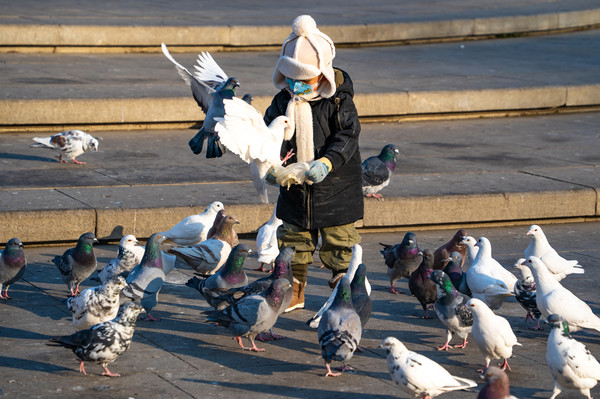
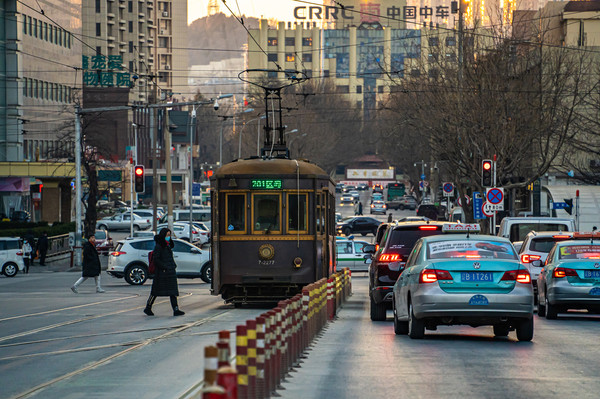
Old clocks still tick away, and we felt like we were traveling through time. The trams clang along their tracks, pigeons soar over the squares with their sharp calls, and the ceaseless hum of traffic fills the air. Tradition and modernity coexist without a hint of discord.
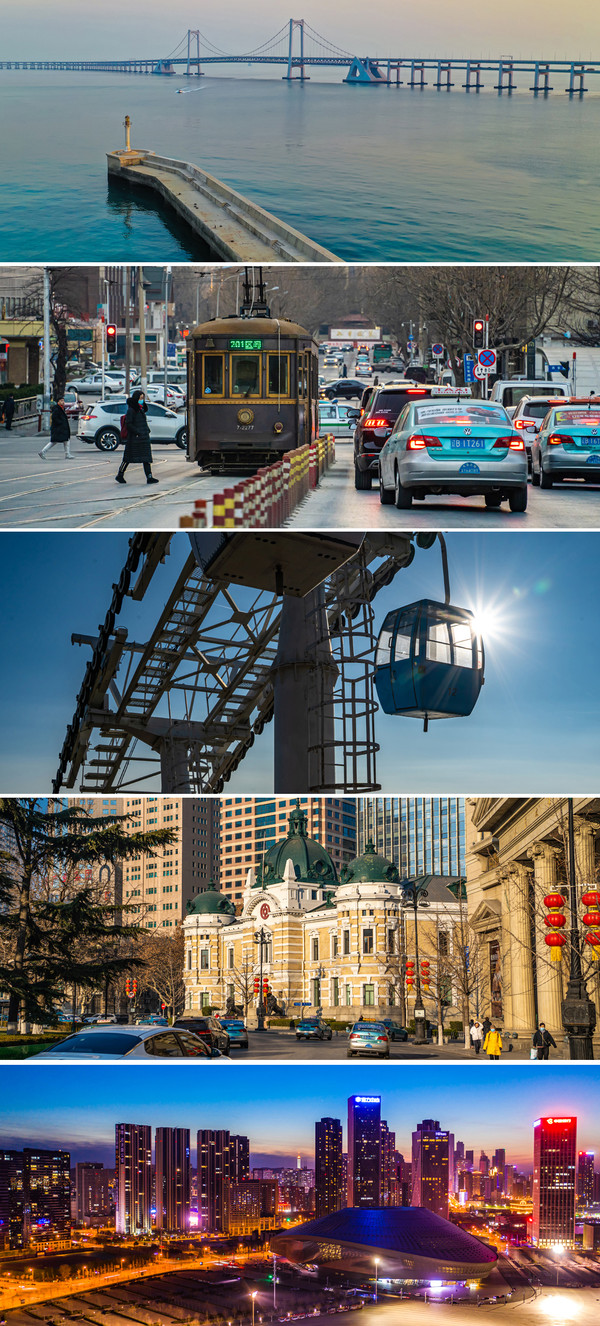
Sunlight filtered through the marble walls, adding warmth to this winter city. We found ourselves at Zhongshan Square, the oldest and largest square in Dalian, located at the heart of Zhongshan District. Its design was inspired by the Place de l'Étoile in Paris—ten roads radiating outward, each intersection marked by a historic foreign-style building. Like a sun at the city's core, the circular square shines bright.
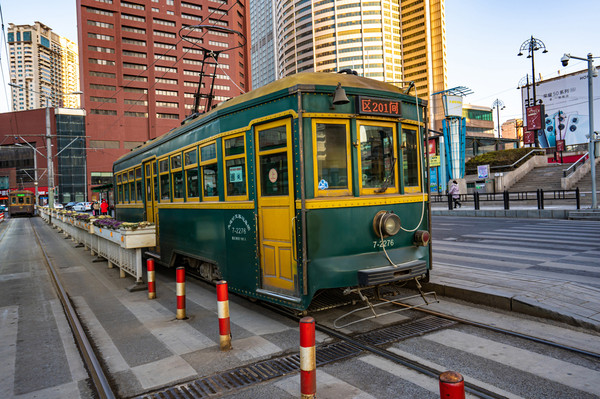
And then the old tram came. This is an absolute must-do in Dalian. The 201 retro tram is one of the city's icons. Dalian's first tram ran in September 1909. Over a century later, the system has evolved through several generations, and the current 201 line still operates with cars from 2007–2008.
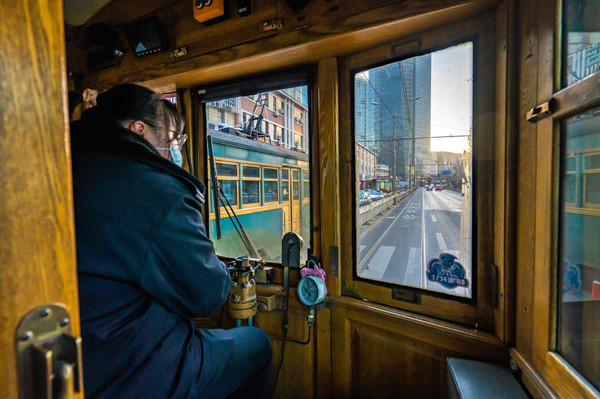
The 201 route passes many of Dalian's highlights—from Hai Zhi Yun Park to Si'ergou, Gangwan Square, Minzhu Square, Zhongshan Square, Dalian Station, Shengli Bridge, and ending at Xinggong Street. Watching the polished brass handles worn smooth by years of use, and gazing through the narrow windows at the streets outside, time seemed to stop for a moment. The tracks cut through the city, and through the long river of history.
We hopped off midway and watched the tram disappear into the distance. The cold wind bit at our necks—we had to keep moving. Dalian's evenings chill quickly. We made our way to the underground food street at Changxingli near Xi'an Road to warm up.
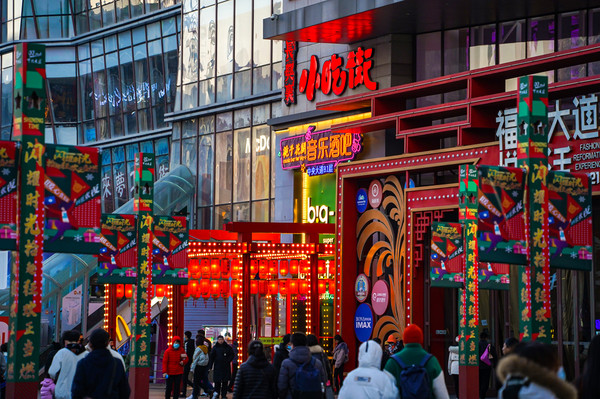
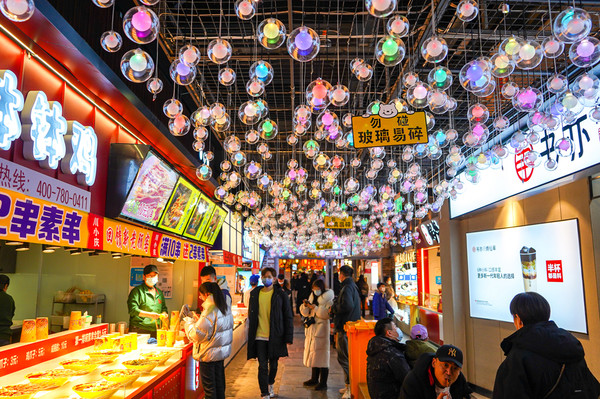
Even from a distance, we could see the dazzling neon of the Changxingli Night Market. Oddly enough, as evening came and people left work, the streets seemed to grow busier. People were weaving up and down the stairs—clearly, we weren't the only ones with the same idea.
Apparently, in summer, this place is packed shoulder-to-shoulder. But in winter, it's a haven from the cold and a paradise for food lovers. There were countless food stalls, bubble tea shops on every corner. If you can think of it, they probably sell it—flavors from all over the country, all in one place.
And these vendors aren't just good at business; they've got talent too. One guy at a crispy pork belly stand started singing, and honestly, he could give professional singers a run for their money.
Every corridor was filled with people eating, drinking, and chatting. The slightly retro streets were decorated with greenery and fairy lights, creating a cozy vibe. There were also plenty of trendy little shops scattered around—clearly a favorite spot for the younger crowd.
Some Scenes Are Closer Than You Think
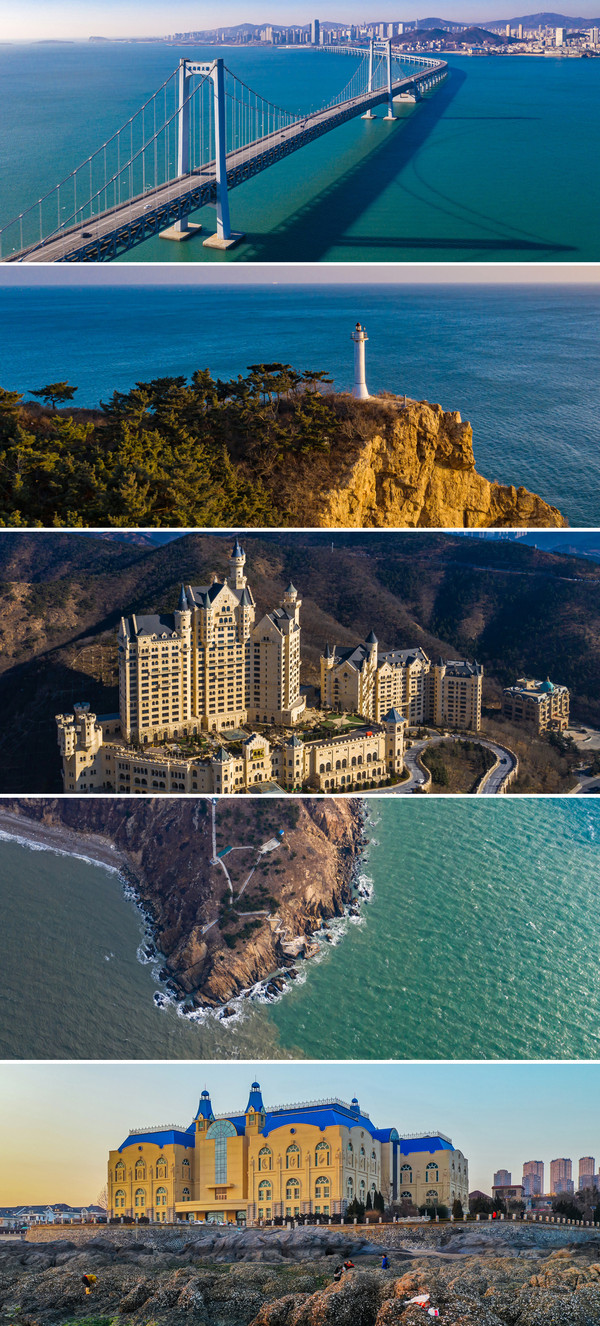
Xinghai Bay Bridge stretched across the bay like a silver ribbon, curving elegantly over the blue waters. As another of Dalian's landmarks, it's also China's first long-span double-deck suspension bridge with anchorages built at sea. It's an absolute must-see for any visitor.
From above, the bridge spans 6 kilometers in total design length, with a main span of 820 meters, a main span of 460 meters, side spans of 180 meters, and towers rising 114.3 meters. Both decks carry four lanes of traffic in each direction, running 24/7 without rest.
We were lucky enough to catch a near-perfect sunset here. As the sun sank, the sea's colors shifted and deepened—orange light washing over every surface of the bridge, blending into blues, oranges, purples, and greens.
Turning into the backlight, the city's skyline and the bridge's silhouette grew more defined against the twilight.
At Black Rock Reef, we spotted locals crossing the exposed mudflats at low tide, hopping between rocks in search of fresh seafood for their next meal.
Perched on a hilltop sat a luxurious palace—One Castle. Designed by Tho, a master architect from the world's top-ranked WATG firm, with interiors by HBA's design director Dauber, this castle hotel sits on one of Dalian's most beautiful coastlines. Backed by Lotus Mountain and facing the Xinghai Bay Bridge, it's the epitome of European-style luxury.
Every detail inside exudes royal European flair—a grand atrium, a palette of black, white, and pale gold that feels both noble and refined.
Through the arched corridors of the fifth-floor sky garden, we were treated to unobstructed views of Xinghai Bay.
Lotus Mountain's main peak stands at 259.6 meters—not exactly towering by number, but it's the highest point in Dalian proper. It became our second "Instagram-worthy" stop of the day. The observation deck at the summit sits right on the shore of Xinghai Bay, offering the best panoramic views of the city. In summer, you can take a cable car up with the sea breeze in your hair, but in winter, it's closed.
Standing by the white pagoda at the summit, we could see Dalian Port, Dalian Bay, and Jinzhou Bay to the northeast. To the southwest, Xinghai Bay unfolded below us. To the southeast, Fujiazhuang Beach and the cross-sea bridge were clearly visible. Straight ahead, the coastal road wound east and west, with islands of all shapes scattered across the sea.
You can grab a coffee at the café below the observation deck, bask in the sunshine, and wait for another sunset. Or, like me, you can stroll back down the mountain and head to the shore before the sun dips below the horizon—arriving at Fujiazhuang Beach.
Fujiazhuang Beach is flanked by high terraces on both sides, with a wide stretch of sand in the middle. The East and West Dalian Islands face the beach across the water, creating a layered landscape of sea, mountains, reefs, and shore. The 550-meter bathing beach here is one of Dalian's four major seawater baths.
Out on the water, islands stacked in layers, each slightly different in distance and clarity, formed a beautifully composed scene. The tide rolled in and out, fishing boats swayed gently, and seabirds occasionally flew past before disappearing behind the islands.
We continued along Dalian's famous coastal road, passing Yanwo Ridge and North Bridge, until we stopped at a lighthouse. Leaning against the railing by the cliff, we waited for the sun to sink into the sea.
The white cable-stayed bridge we'd seen from above—that's the famous North Bridge on the coastal road. It sits between Tiger Beach and Yanwo Ridge, connecting the entire eastern and western sections of Binhai Road. Below the bridge, a small dock, a lighthouse in the distance, and a ridiculously romantic European-style wedding photography base completed the stunning scenery.
The island rising from the sea looked like the dorsal fin of an orca breaking the surface, as if it might dive back under at any moment. The light at this hour reached its most magical point—dreamlike, almost surreal.
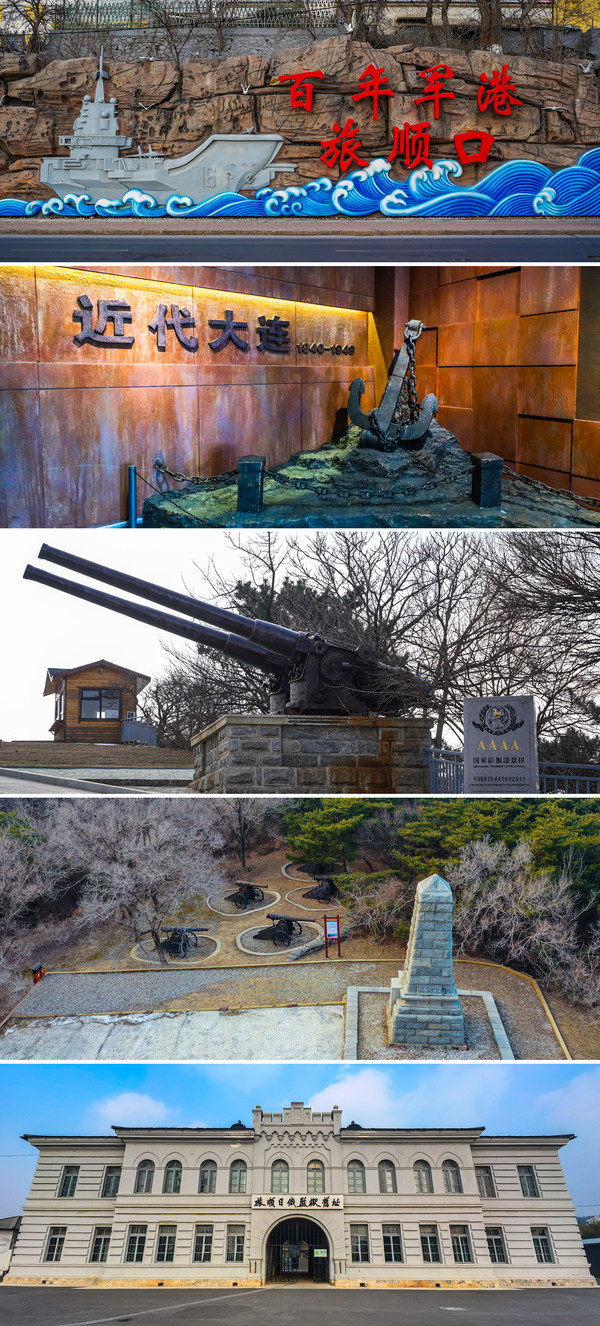
Another slightly surreal spot: the Yellow Sea–Bohai Sea boundary line at Lüshunkou. Just set