Shaoxing: Ancient Canals, Timeless Tales, and Footsteps of the Great
December 18–20. A short escape from the daily grind—just my wife and me, two spontaneous travelers who decided we wanted a quick getaway. Hotel and bullet train tickets booked through Ctrip. Simple as that.
Three-Day Itinerary
Day 1: Lu Xun’s Hometown – Shen Garden at Night
Day 2: Orchid Pavilion – Cangqiao Straight Street – Zhou Enlai’s Ancestral Home – Cai Yuanpei’s Former Residence – Calligraphy Sage’s Old Quarter
Day 3: Eight-Character Bridge – East Lake – Shaoxing Museum – Shen Garden
Where We Stayed
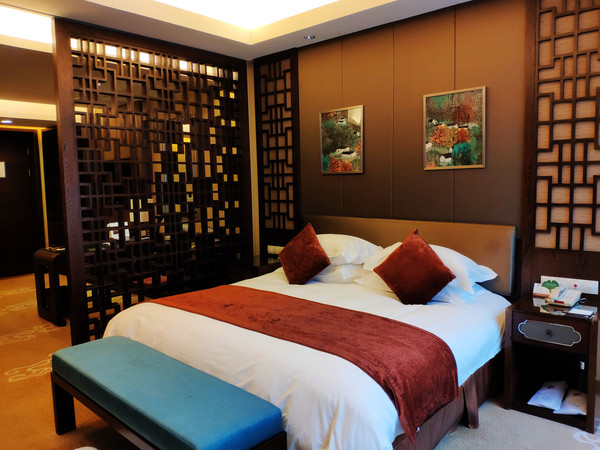
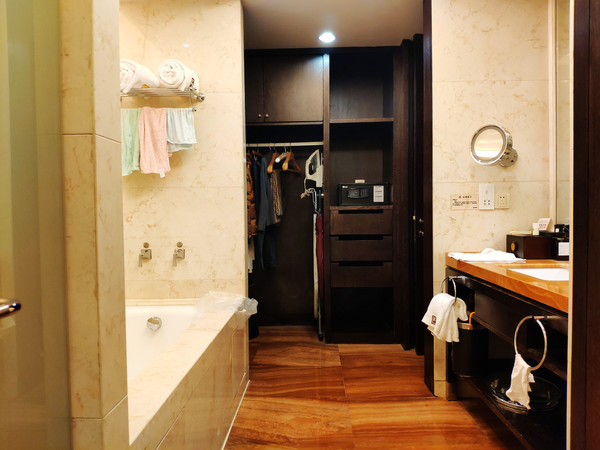
Xianheng Hotel (179 Lu Xun Middle Road). We booked a standard twin room, but Ctrip called to say they were fully booked in that category—so as valued members, we were upgraded to a suite. Nice touch.
Getting There
Shanghai Hongqiao to Shaoxing North Station by high-speed rail: about an hour and a half. Quick and smooth.
Getting Around
We took taxis everywhere this trip. Shaoxing’s fare structure: 10 yuan for the first 3 kilometers, then 2.4 yuan per kilometer after that. Our most expensive ride was 40 yuan. Cheap.
Tickets
We bought the Shaoxing combo pass on Ctrip: 145 yuan per person, covering Shen Garden at Night (80 yuan), Orchid Pavilion (70 yuan), East Lake (50 yuan), and the Yu Mausoleum (60 yuan). Excellent value for money.
---
Day 1: Lu Xun’s Hometown – Shen Garden at Night
Arrival
The high-speed train from Shanghai pulled into Shaoxing North Station at 11:30. From there, it’s about 13 kilometers to Lu Xun’s Hometown—a 25-minute taxi ride costing roughly 40 yuan.
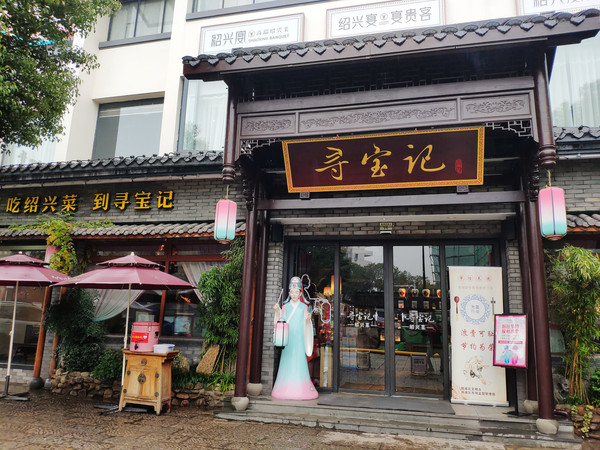
Lunch at Xun Bao Ji (Lu Xun Branch)
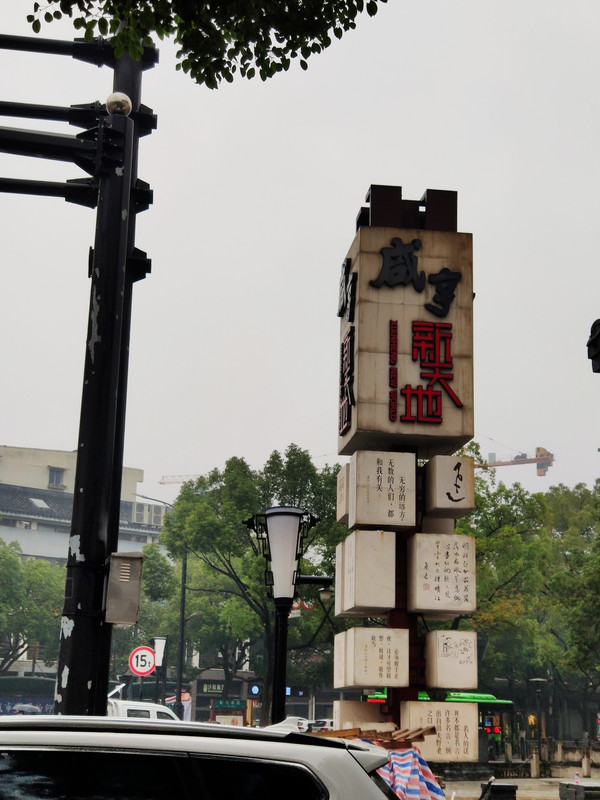
Located at the corner of Jiefang Road and Lu Xun Middle Road, right in the Xianheng New World area. We got there at noon on a Friday, so it wasn’t crowded—and the food was solid. We ordered the braised pork with preserved mustard greens, yellow croaker steamed with Huadiao wine, the classic Shaoxing three-delicacy soup, and some local rice cakes, along with half a jin of Huadiao wine. Honestly, the flavors were excellent, the wine was sweet and smooth, and my wife was thrilled. The bill came to 281 yuan. There was even a Yue opera performance in the main hall.
Check-in at Xianheng Hotel
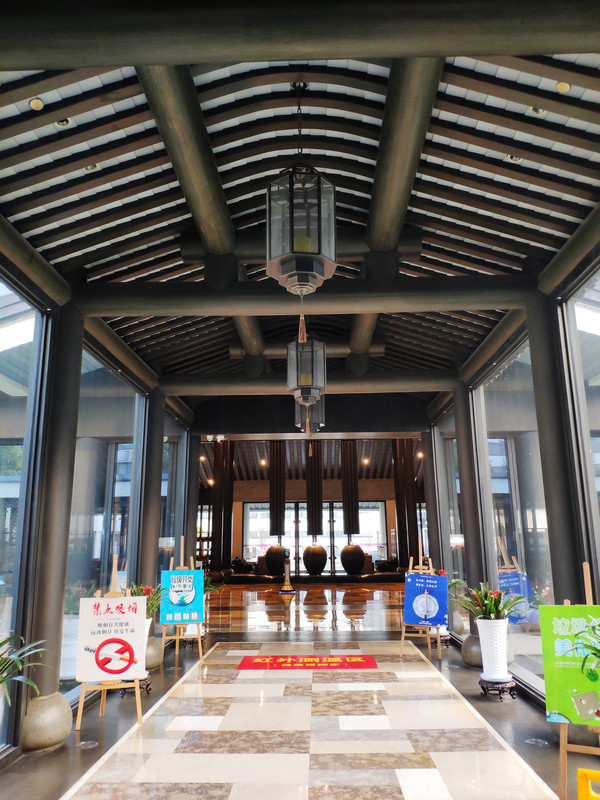
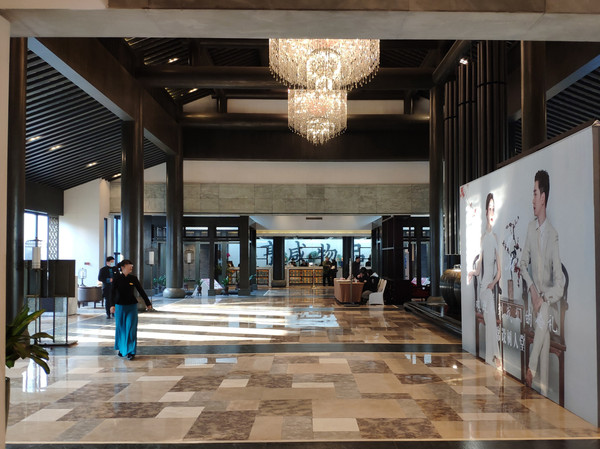
From Xian Bao Ji, it was a short walk—maybe 200 meters—to the hotel. The entrance corridor features a ceiling designed like a traditional boat awning, which is a lovely touch.
The front desk bears four characters: “品物咸亨,” a phrase from the I Ching meaning roughly “all things flourish and flow smoothly.” It speaks to a time of peace and prosperity.
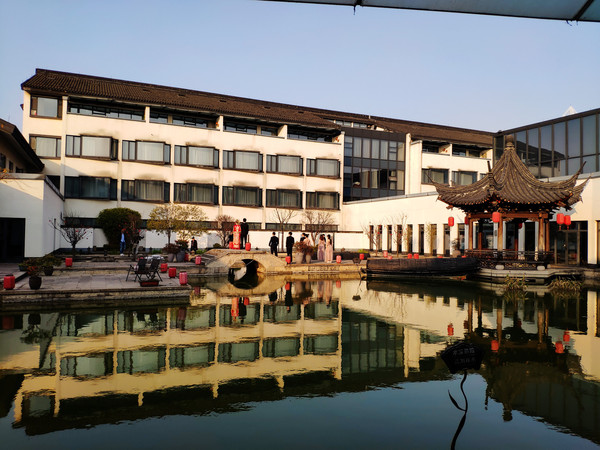
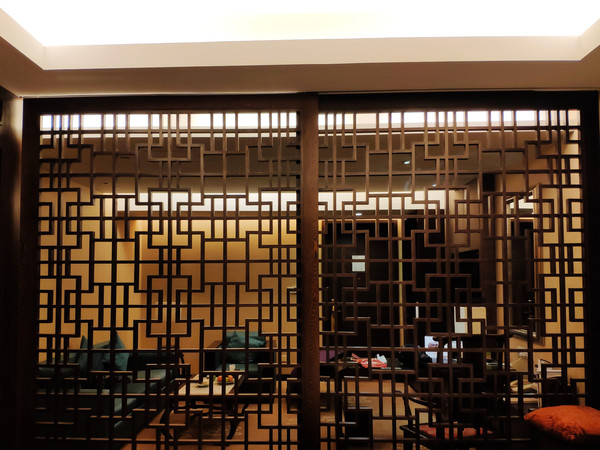
The hotel itself is lovely—there’s a small water feature with a bridge, a boat, and a pavilion, and we spotted a couple having wedding photos taken. Our suite had a lattice-screen divider, a two-meter bed, and a spacious bathroom with a dressing area.
Having had a bit of Huadiao wine with lunch, we were feeling pleasantly drowsy, so we took a short nap.
Lu Xun’s Hometown
We headed out at 3:15 PM after waking up. The route: Lu Xun’s Ancestral Residence – Three Flavor Study – Lu Xun’s Former Residence – Hundred-Plant Garden – Lu Xun’s Literary Garden – Lu Xun Memorial Hall.
Admission is free, but you need to register with your real name and show your health code. Took a while, but we eventually got our passes.
1. Lu Xun’s Ancestral Residence (Zhou Family’s Old Gatehouse)
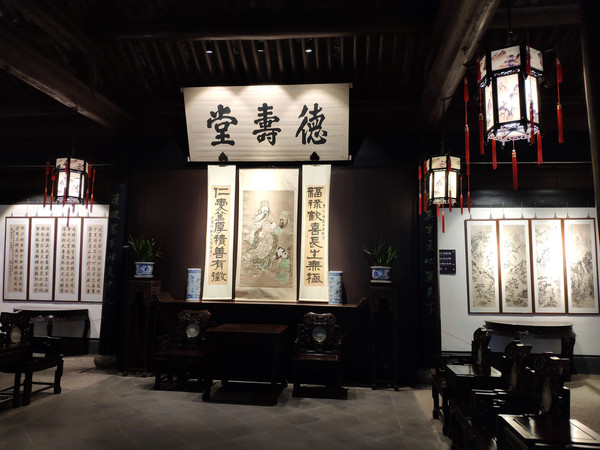
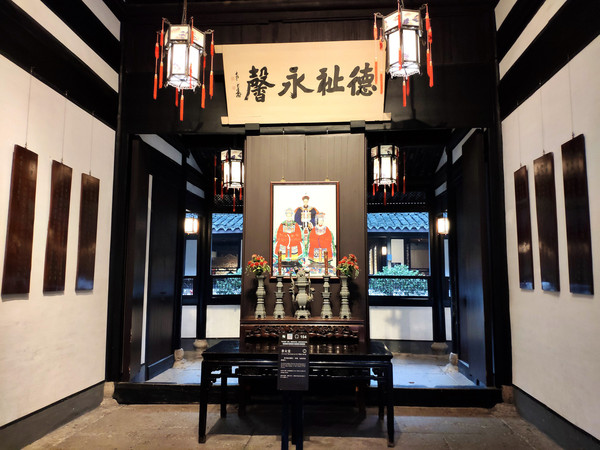
Covering 3,087 square meters, this is a classic scholar-official’s mansion with dark tiles, whitewashed walls, and brick-and-timber construction. The main hall is called “De Shou Tang,” or Hall of Virtue and Longevity—the name implying that good deeds bring blessings and long life. Lu Xun rarely came here himself; it was only used for ancestral rites or major family events. Another plaque reads “De Zhi Yong Xin,” meaning virtue and fortune endure through generations. The study is lavish, showcasing the wealth of a prominent Jiangnan family. I won’t go into every detail.
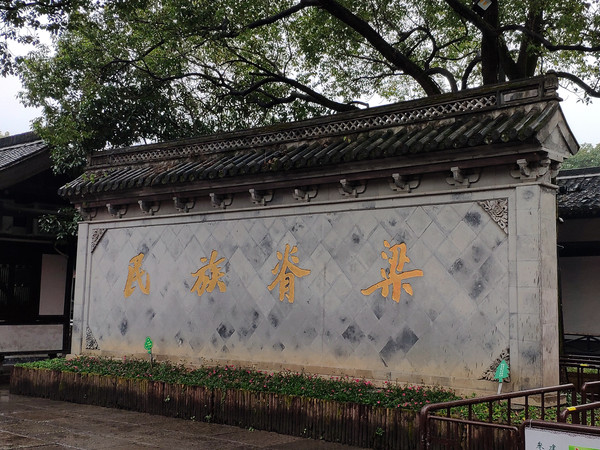
Between the ancestral residence and the Three Flavor Study stands a memorial archway bearing the words “民族脊梁”—“Backbone of the Nation.” That’s how the people remember Lu Xun.
2. Three Flavor Study (Sanwei Shuwu)
Separated from the ancestral residence by a small canal with a wupeng boat gliding beneath, the Three Flavor Study was the home of Lu Xun’s teacher, Mr. Shou Jingwu. Lu Xun studied here from age 12 for about five years.
The front hall, where guests were received, displays a plaque reading “重游泮水,” referencing Lu Xun’s visit to his teacher in 1906 after returning to Shaoxing. The second hall, known as the Great Front Hall, was for receiving distinguished guests and bears a plaque reading “思仁堂.” The teacher’s study has a plaque reading “三余斋,” drawn from the Records of the Three Kingdoms: “Study in the three leftover times—winter, the leftover of the year; night, the leftover of the day; rainy days, the leftover of sunny ones.” In other words, use every spare moment to learn.
The Three Flavor Study itself hangs a plaque with its name. “Three flavors” means: reading the classics tastes like grains, reading history tastes like fine dishes, and reading the philosophers tastes like sauces and pickles. Below the plaque hangs a painting of a pine tree and a deer. The central desk and chair are the teacher’s podium; chairs on either side are for guests, and the students’ desks line the walls. Nothing like the blackboard-and-chalk classrooms we imagine today.
Lu Xun’s own seat is still there.
3. Lu Xun’s Former Residence (Zhou Family’s New Gatehouse)
The main hall mirrors the ancestral residence with a “De Shou Tang” plaque, beneath which hangs a painting of pines and cranes. A couplet on either side reads: “With clear character and firm virtue, with reasoned understanding and a peaceful heart.”
There’s a long corridor and lovely courtyard views.
4. Hundred-Plant Garden
In truth, it’s just an ordinary vegetable garden where the family grew melons and greens. But in Lu Xun’s famous essay “From Hundred-Plant Garden to Three Flavor Study,” he wrote: “Not to mention the green vegetable beds, the smooth stone well railings, the tall locust trees, the purple mulberries; nor the cicadas singing long among the leaves, the plump wasps resting on the cauliflower, the swift skylarks suddenly darting from the grass into the clouds. Even the short mud wall at the edge held infinite delight. Crickets sang here, katydids hummed low…”
As a child, Lu Xun and his playmates would frolic here endlessly.
4. Lu Xun’s Literary Garden
A recreated space evoking the scenes from his writings.
5. Lu Xun Memorial Hall
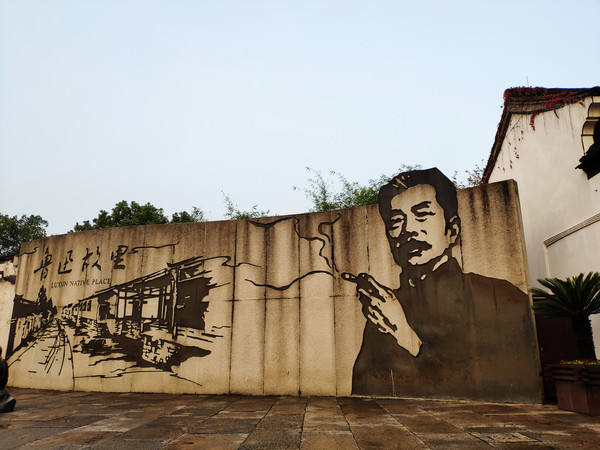
The seven characters of the signboard were written by Guo Moruo. Inside the entrance hall stands a large bronze seated statue—Lu Xun amid flowers, approachable and composed. Nearby is a large display of his autobiography.
Lu Xun was born into a typical feudal scholar-official family; his grandfather had been appointed to the Hanlin Academy during the Tongzhi era. But by his youth, the family fortunes had already declined. Falling from modest comfort to hardship left young Lu Xun scarred by the coldness and fickleness of the world—a wound that never fully healed.
Determined to leave the decaying old city, he went to study in Nanjing, then sailed to Japan, vowing to change the fate of the “Sick Man of East Asia” by studying medicine. There, alongside his teacher Mr. Fujino, he made his famous pledge: “I offer my blood to my homeland.” But reality taught him a different lesson: what China needed most was not just physical healing but a transformation of the national spirit. So he abandoned medicine for literature, taking up the pen as his weapon.
On the eve of the 1911 Revolution, he returned to China, teaching at the Zhejiang Normal School in Hangzhou, Shaoxing High School, and Shanhui Junior Normal School—training young minds while throwing himself into revolutionary work.
He stood at the forefront of his era, writing fiery manifestos against old thought, old culture, and old morality, and battling imperialism and warlords alike. He became the standard-bearer of China’s cultural revolution. His essay “In Memory of Miss Liu Hezhen” declares: “True warriors dare to face the bleakness of life and look straight at the bloodshed.”
When he died, the whole nation mourned. They called him the “Soul of the Nation.”
6. Strolling Through Lu Xun’s Hometown
The whole area took us