Climbing Huangshan to See the Jade Trees and Silver Flowers
It had been a long time since I last visited the city of Huangshan.
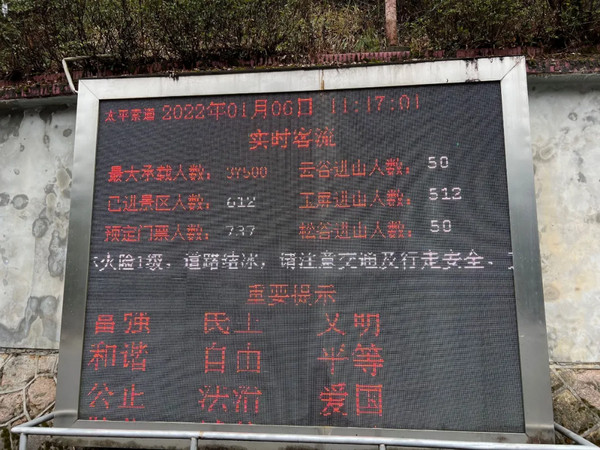
This time of year is supposed to be the off-season for tourism here, but driving through the streets, it felt eerily quiet. On the way up to the mountain, we barely saw a single person or car. When we finally reached the scenic area, it was just me and a friend making our way through the security checks before hopping on the shuttle bus. For a place as iconic as Huangshan, only about six hundred people were heading up that day.
"Ugh, when will this pandemic finally end?" I sighed to myself as I stepped onto the cable car to begin the climb.
In today's post, you'll find a winter guide to Huangshan, a rundown of prices, accommodation tips, and some honest advice.
01
A Winter Guide to Climbing Huangshan
Climbing Huangshan was a childhood dream of mine. I can't recall exactly what was in that elementary school textbook anymore, but the image of its picture-perfect scenery stuck with me from a young age. Actually climbing it, though, was a whole different story.
At first glance, Huangshan doesn't look all that intimidating—not particularly steep, not especially high, and it doesn't have any of those heart-pounding cliff-edge thrills. Yet so many people say it's exhausting to climb. Why is that?
Because Huangshan is made up of a whole bunch of peaks! It's a ring of mountains with over 200 scenic spots. If you try to rely entirely on your own two feet and hit all the major sights, you'd need at least two to three days. That said, the saying "Once you've seen Huangshan, you won't bother with other mountains" might just be because you're too tired to climb another one 😂.
What do you look at when climbing Huangshan?
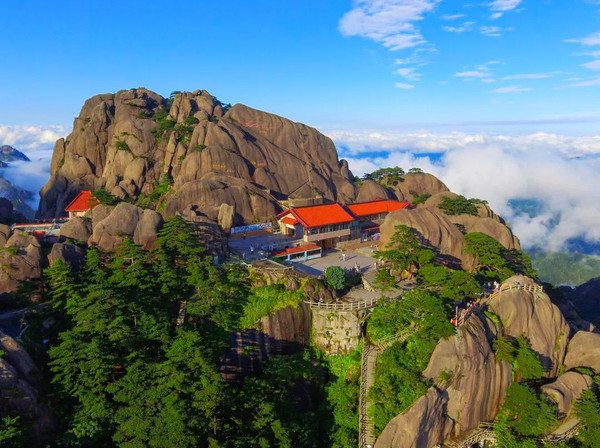
The famous five wonders of Huangshan are: the odd pines, the strange rocks, the hot springs, the sea of clouds, and the winter snow. The first three are easy enough to spot or experience—those quirky pines and bizarre rocks are scattered all over the mountain's trails and peaks. I wouldn't go out of your way to track them down; you'll stumble upon them as you wander. The last two, though, depend on the season and, frankly, on luck.
Many people assume that if a mountain is tall, it's bound to have a sea of clouds. But there's a reason and a pattern to how it forms. Huangshan's peaks are high, its valleys deep, and the forests dense. With less direct sunlight, moisture doesn't evaporate easily, so humidity stays high and water vapor accumulates, often turning into rain and fog. That's why so many people end up climbing Huangshan in a cloud, unable to see a thing.
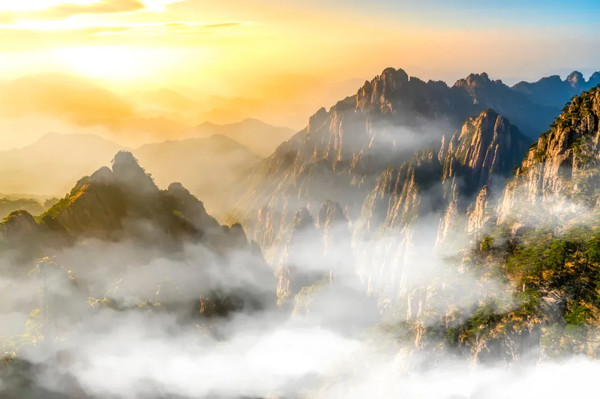
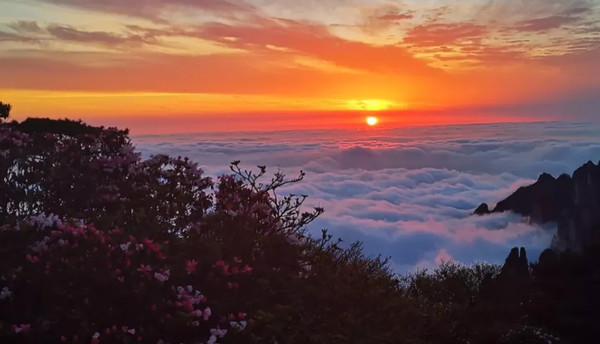
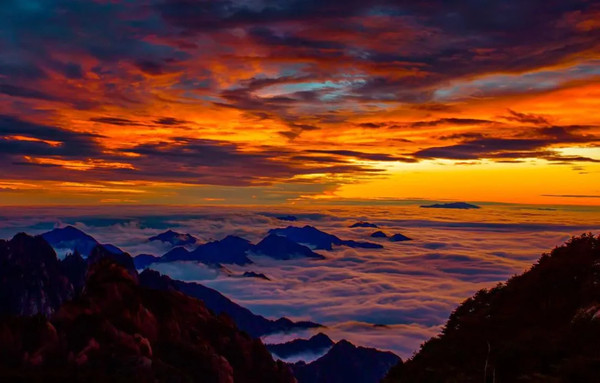
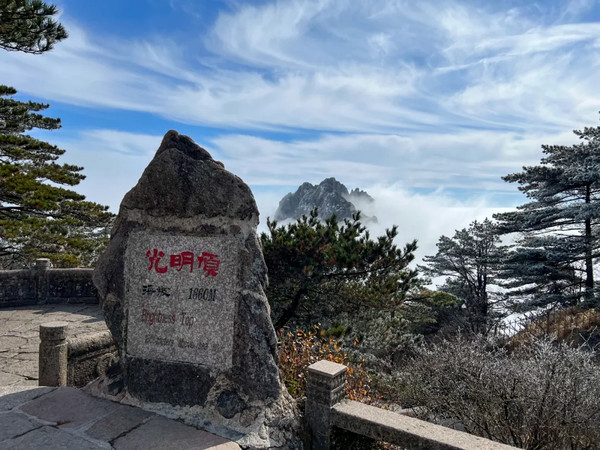
The sea of clouds over Huangshan is primarily formed by low-level clouds and ground fog. From November through May is the best time to catch it, especially after a rain or snowfall, just around sunrise or before sunset, when it's at its most spectacular. The sea of clouds appears in five main spots: Yuping Tower for the South Sea, Qingliang Terrace for the North Sea, Paiyun Pavilion's west side for the West Sea, Bai'e Ridge facing east for the East Sea, and the Guangming Peak platform for the Heavenly Sea.
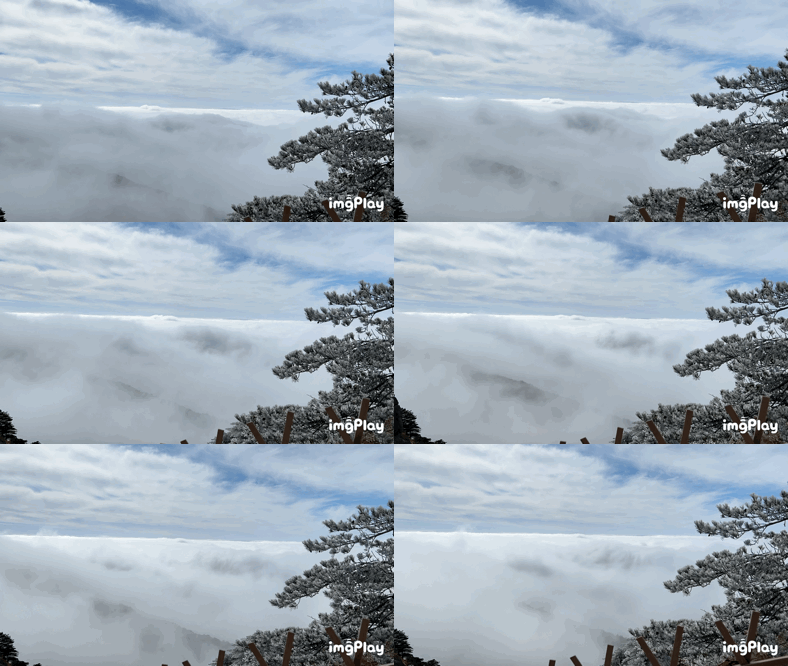
A sea of clouds shot from the roadside.
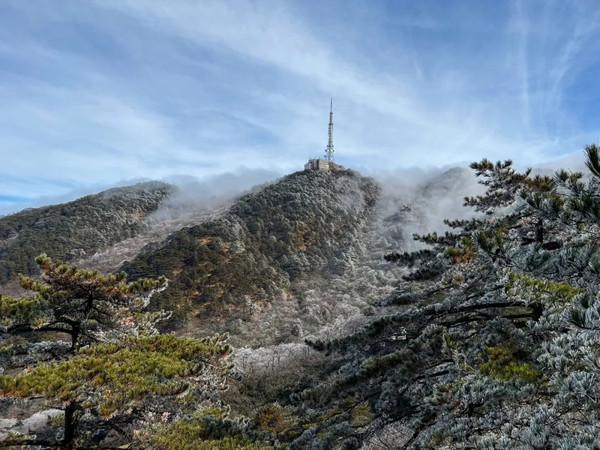
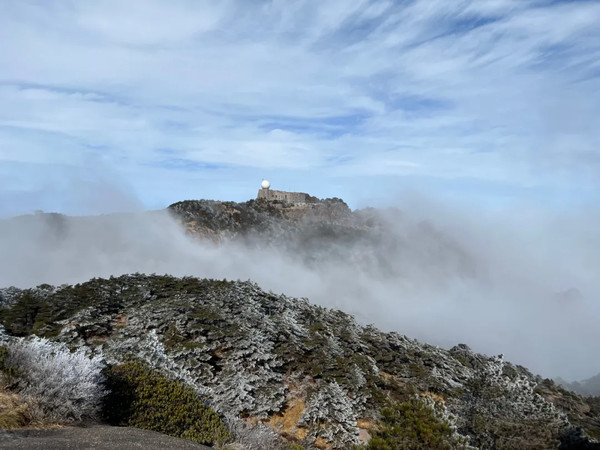
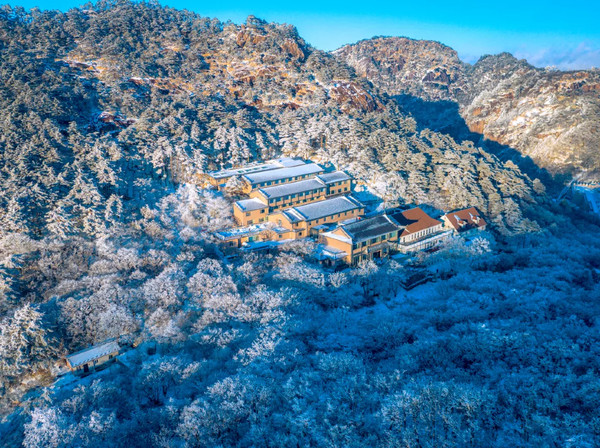
Winter visits to Huangshan wouldn't be complete without seeing the snow. From December to February is the peak snow period, when you're most likely to catch ice formations and rime ice. The best spots are Yuping Tower, Beihai, Songgu, and the hot springs area.
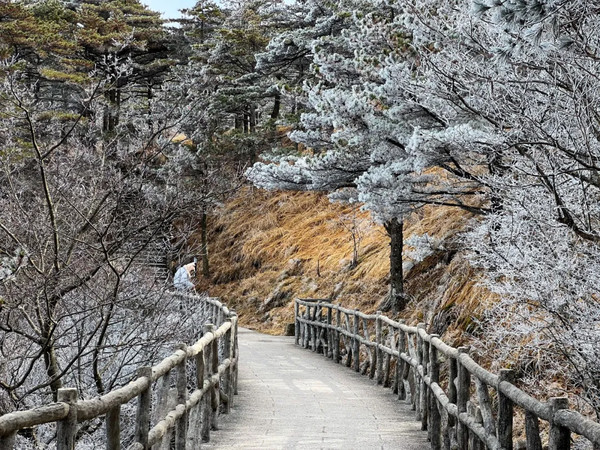
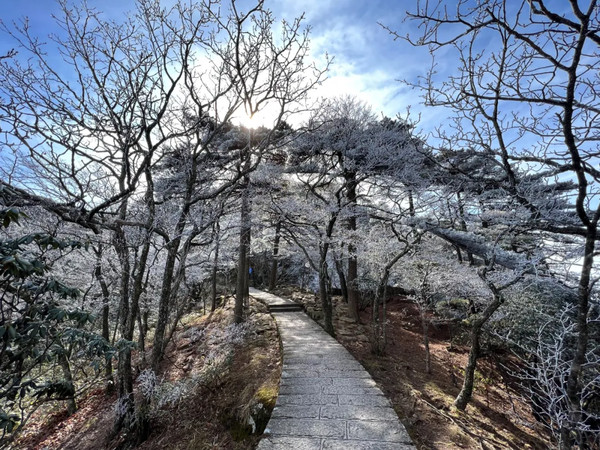
It had snowed a few days before my visit, so crystal-clear rime ice was everywhere along the trail. The sun kept peeking out, and a lady ahead of me called back to draw my attention to the glittering ice in the light—right before a shower of melting droplets landed on me.
Recommended Route
Huangshan has a front mountain and a back mountain, and online opinion is split on which side to ascend. From my own experience, if you want an easier time, go up the back and come down the front. The front has the better views, including the famous Greeting Pine, which also means it's where the tour groups flock in the morning. Starting from the back lets you avoid them. Heading up the back first and then crossing to the front means the scenery only gets better, and there's always a surprise around the corner.
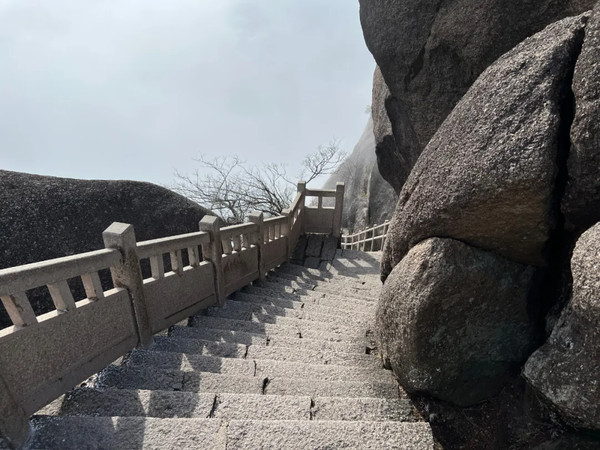
The main reason? The front is steep, the back is gentler. When I was descending the front side, the path looked like this—I honestly can't imagine climbing up that way without being wiped out. If you're afraid of heights, though, go up the front and down the back.
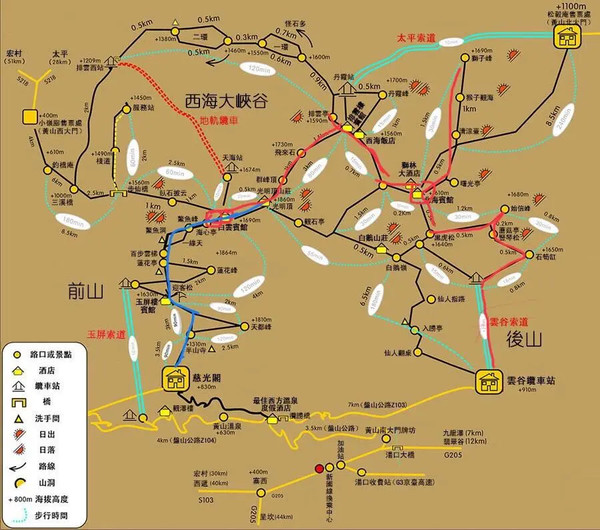
There are three cable cars on Huangshan: the Yungu Cable Car at the back, the Yuping Cable Car at the front, and the Taiping Cable Car at the north gate. You'll see the distinction when buying tickets, so keep an eye out. There's also the Xihai sightseeing tram that runs through the West Sea Grand Canyon.
Here's a one-day route that a lot of netizens have tested and recommend:
Take the Yungu Cable Car up – Shixin Peak (home to famous pines like Jieyin, Heihu, Lianli, Longzhua, Wolong, and Tanhai, plus odd rocks like Shisun Ridge and the Eighteen Arhats Facing the South Sea) – Paiyun Pavilion (great for the sea of clouds) – Guangming Peak (see the Flying Stone from afar, and catch the Heavenly Sea) – West Sea Grand Canyon (ride the trendy little train; I'd suggest buying a round-trip ticket to save time) – Lotus Peak or Tiandu Peak (they alternate opening) – Greeting Pine – Yuping Cable Car down.
In winter, the West Sea Grand Canyon and Lotus Peak are under maintenance until March 31, so both areas and the West Sea sightseeing tram are closed—don't make the trip for nothing! Also, the Yungu Cable Car was undergoing a two-week inspection recently, so we had to take a long detour up via the Taiping Cable Car at the north gate. In total, we hiked for about 4.5 hours, and since the steep front side was mostly downhill for us, it was relatively manageable. Next time, I'll go again via the Yungu Cable Car and stay for two days.
We entered the mountain at 11 a.m. and had to skip quite a few spots to make it down before the last cable car. If you're heading there soon, here's the route we took:
Taiping Cable Car up – Paiyun Pavilion – Flying Stone – Qunfeng Peak – Guangming Peak – One-Line Sky – Aoyu Peak – Hundred-Step Ladder – Greeting Pine – Yuping Cable Car down.
02
Accommodation Guide & Price Tips
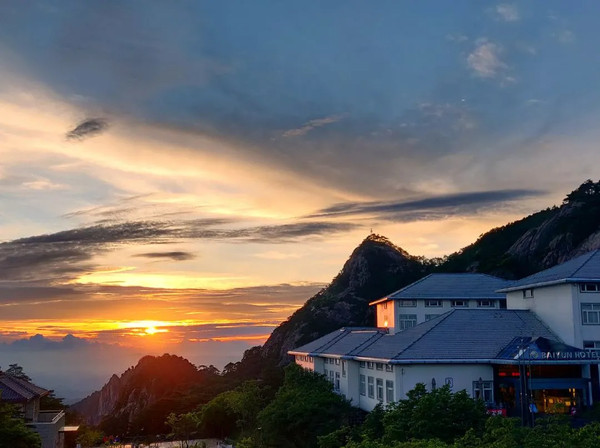
If you want to catch the sunrise or sunset, I'd strongly recommend staying overnight on the mountain. The cable cars stop running at 4:30 p.m., and hiking back down after sunset would take three to four hours on mountain paths, which is risky.
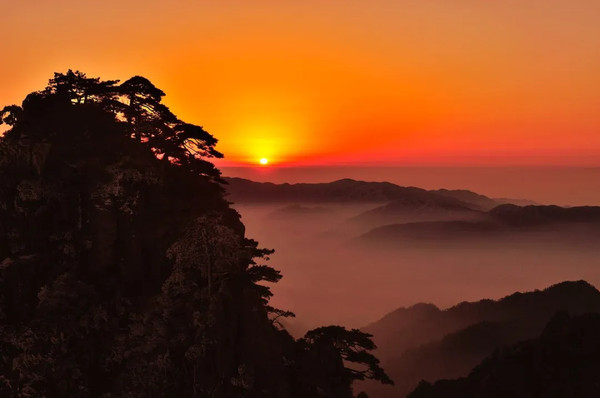
For sunrise views, these spots are well-known: Shixin Peak (Mushroom Pavilion), Gongyang Mountain (Bai'e Lodge), Shizi Peak (including Qingliang Terrace and Shuguang Pavilion), Danxia Peak, Guangming Peak (including Liandan Peak), Aoyu Peak, and Yuping Peak.
For sunset views, I'd suggest these: Paiyun Pavilion on the West Sea, Danxia Peak summit, Flying Stone, Guangming Peak, Buxian Bridge, and Lotus Peak. Of these, Paiyun Pavilion and Buxian Bridge are the most famous for watching the West Sea's evening glow.
In short, if convenience is your priority, stay near Guangming Peak. The area is open and spacious, and you can see both sunrise and sunset from there.
For a three-day weekend trip, most people choose to rest in Tangkou Town at the foot of the mountain and head up the next day. Just a heads-up: Huangshan is actually pretty far from the city center—the city is in Tunxi District, while the mountain is in Tangkou. If, like us, you figure this out too late, you end up cutting your time on the mountain short.
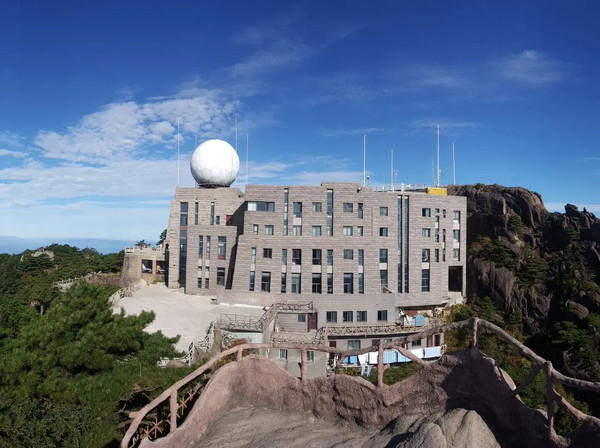
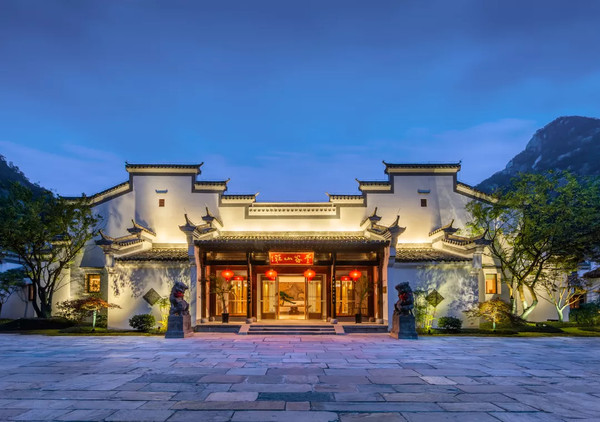
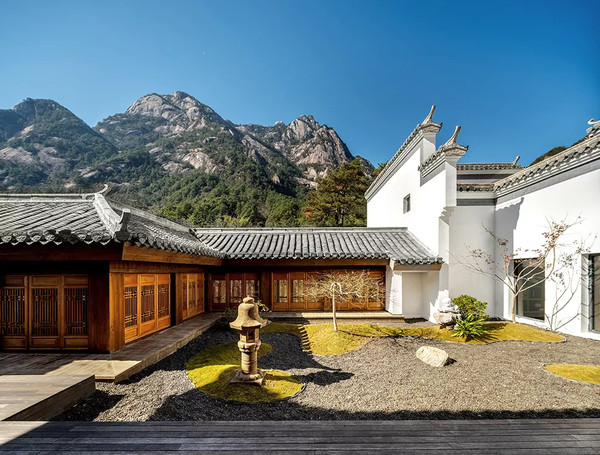
There are actually quite a few accommodation options on the summit. After doing some research, the four highest-rated ones are:
Yuping Tower Hotel: Near the Yuping Cable Car, easy if you're hauling luggage. Renovated in 2015. From here, you can head to Guangming Peak for sunrise, about a 30-minute walk. Rates start at 1,140 yuan.
Guangming Peak Mountain Villa: Right on Guangming Peak, renovated in 2015. Great views, and you can catch sunrise, sunset, and the sea of clouds nearby. Rates start at 1,260 yuan.
Baiyun Hotel: Perfectly located at the junction of Aoyu Peak, Guangming Peak, and the West Sea tram. Renovated in 2008, with slightly nicer rooms than Guangming Peak Villa. It's within a 20-minute walk to both Guangming Peak and Aoyu Peak. Rates start at 1,020 yuan.
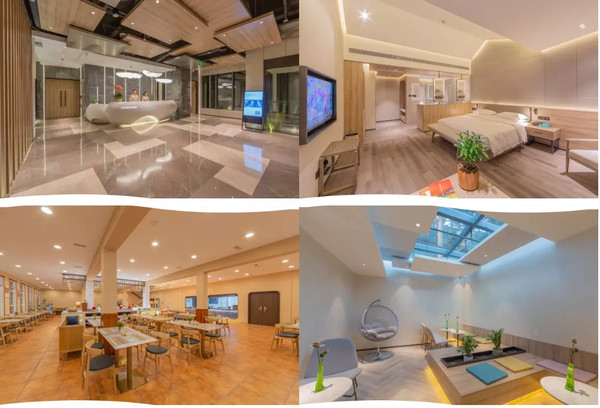
Paiyun Xinglü (top pick): Renovated in 2021, the newest facilities